- Insights This article was written by a TIA community member. Insights pieces undergo the same rigorous editorial process that newsroom-produced articles have.
 Aytekin Tank · · 5 min read
How to apply systems thinking to your startup

Photo credit: Fleur Treurniet
Four blind men came upon an elephant in the forest. They had never experienced this massive creature before. Slowly, they each reached out and touched a different part of the elephant.
“It’s like a snake,” one man said as he felt the long, supple trunk.
“No, it’s a column,” pronounced another, leaning on the muscular leg.
Another jumped back as he heard the animal’s cry. “It’s piercing like a trumpet.”
The elephant began to move. The fourth man stood frozen as the ground shook. “It’s an earthquake,” he exclaimed.
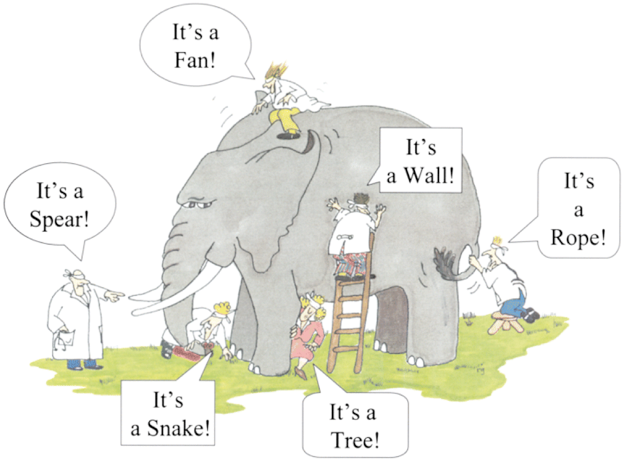
This ancient Indian parable has been passed down in many different forms, but the moral is almost always the same: We often think our own, partial experience represents the full truth, even though other people have different experiences and truths.
Everything is a system
The elephant story is a reminder to approach life with empathy and to step into other people’s shoes whenever possible.
It’s also a great way to understand the business methodology called systems thinking, which is based on the book Thinking in Systems by Donella H. Meadows.
Systems thinking isn’t just for business or manufacturing geeks. Just like the Theory of Constraints, it’s a powerful principle that can be applied to work, life, or just about anywhere you want to level up.
Before we talk about how to apply this theory, here are three core principles to understand:
- Everything is a system—a product, team, market, process, habit, personal routine, and even an elephant.
- To understand (and improve) the system, you have to understand each part and how they connect.
- If you can’t see or experience the full system, you need to create models to put it all together.
How to apply systems thinking
Never stop learning





Stay updated on the go with our mobile app.
Get latest insights with smoother, more personalized experience through TIA mobile app.








📅 Upcoming Events
22 October 2026
Payoneer x CSPN Summit 2026