- Insights This article was written by a TIA community member. Insights pieces undergo the same rigorous editorial process that newsroom-produced articles have.
 Bjorn Lee · · 6 min read
8 productivity rules to help you filter through information overload
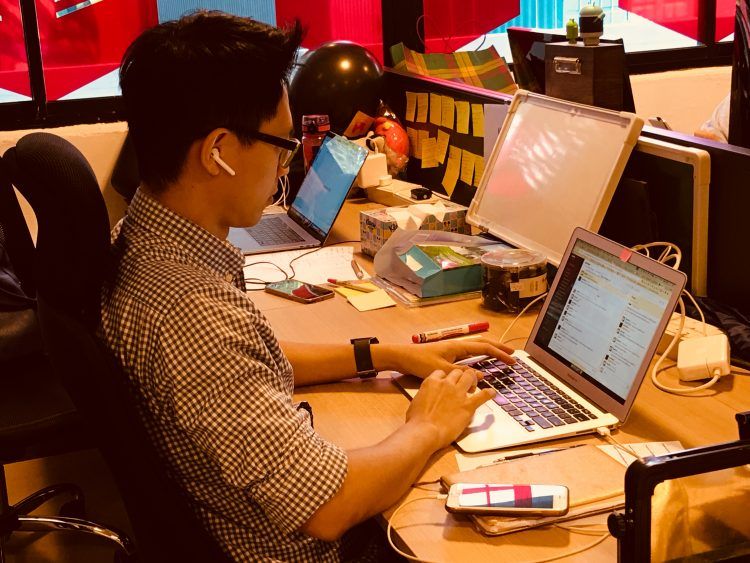
Work in an open office? Too many meetings and events? Can’t stop checking your phone?
Writing this article is ironic. I know many people, including myself, who are guilty of spending too much time reading about productivity than actually getting work done. 😉
When we are unproductive, the chief culprit is our own mind: it’s like a hungry, voracious toddler that craves distraction. While it’s hyper-productive in generating endless wants with limited stimuli, it’s unfortunately not productive in doing serious stuff. We may find ourselves with an entire hour to work, but if we see a cat video, our mind will get distracted and make us want to see more cats.
My main productivity rule is that it’s not about more time, but more attention⏤my preferred byword for discipline, willpower, focus, and concentration. For our personal productivity system, I also believe that it’s less about the tools and more about the rules. First-world problems (e.g. our productivity) stem from abundance, not scarcity. What matters is not access to more; rather, it’s how we filter the few.
Here are some ways we can prepare our brain to accept the tools that suit it best.
Watch your data diet: social media is the new sugar
The first step? Know thy enemy. I can think of no finer founder than Slack CEO Stewart Butterfield to point out the problem of cognitive diabetes⏤that infinite loop of messages, emails, and notifications that impairs our mental abilities.
Let’s call a spade a spade: Social media is the new sugar. It blocks our routines the way sugar clogs up our minds. We need to start clearing this blockage. Timebox your aimless browsing time. Move social media apps inside a folder, then hide it a few screens away. Turn off push notifications for most apps, except important ones.
(At this point, I must stress that you do this, or any of my following rules, in gradual stages. Going cold turkey, like deleting your social media apps, won’t work. Ration it. Let your body and mind adjust.)
Routine = workflow + ‘lifeflow’
Mention “routine” and you may think “boring.” But like it or not, humans are creatures of habit. If you don’t have a fixed time, place, and sequence to work, the constant change in our physical and digital worlds will eat you up.
At my last job at Zendesk, we thought a lot about workflows of customer support teams. When I did customer visits, what struck me wasn’t what they did inside our product, but what they did before, during, or after they use it.
The same applies to our work. We need to think of the surrounding membrane of life activities, or “lifeflow,” so productivity fits in naturally into our daily routine. Think about the things you do before you actually start work⏤get coffee, play music, open laptop, then work. Figure out this sequence so you fit into a seamless flow and, without much effort, comfortably land in work.
Shields up! Get into battle mode
Check in with my calendar and team to make sure no one needs me for the next hour or so. Go to the restroom. Get water. Wear earphones. Blast the same music. Turn on Pomodoro timer app. Turn on Do Not Disturb mode on phone (go Airplane Mode if you are hardcore). Put your phone facedown so you won’t see it light up.
I swear this is literally my mini-routine when I really want to get stuff done; I call it my “deep work” mode, and it feels a lot like gearing up for war. Sounds like a lot of work? Don’t be lazy. That’s how you started reading this. 😀
To-dos are baby food: shatter and downsize
Start your day feeling good
Or, deadline yourself
Train your mind: meditate
No is the new yes





Stay updated on the go with our mobile app.
Get latest insights with smoother, more personalized experience through TIA mobile app.









📅 Upcoming Events
22 October 2026
Payoneer x CSPN Summit 2026