Rule number one in any startup playbook: never try to challenge an internet giant head on, especially if it’s Google or Apple.
But if you’re in a wide open category like wearable computing, the rule doesn’t apply. Here, out-of-the-box thinking matters more than economies-of-scale, and that’s precisely what Optinvent, a French company with a presence in Singapore, is banking on.
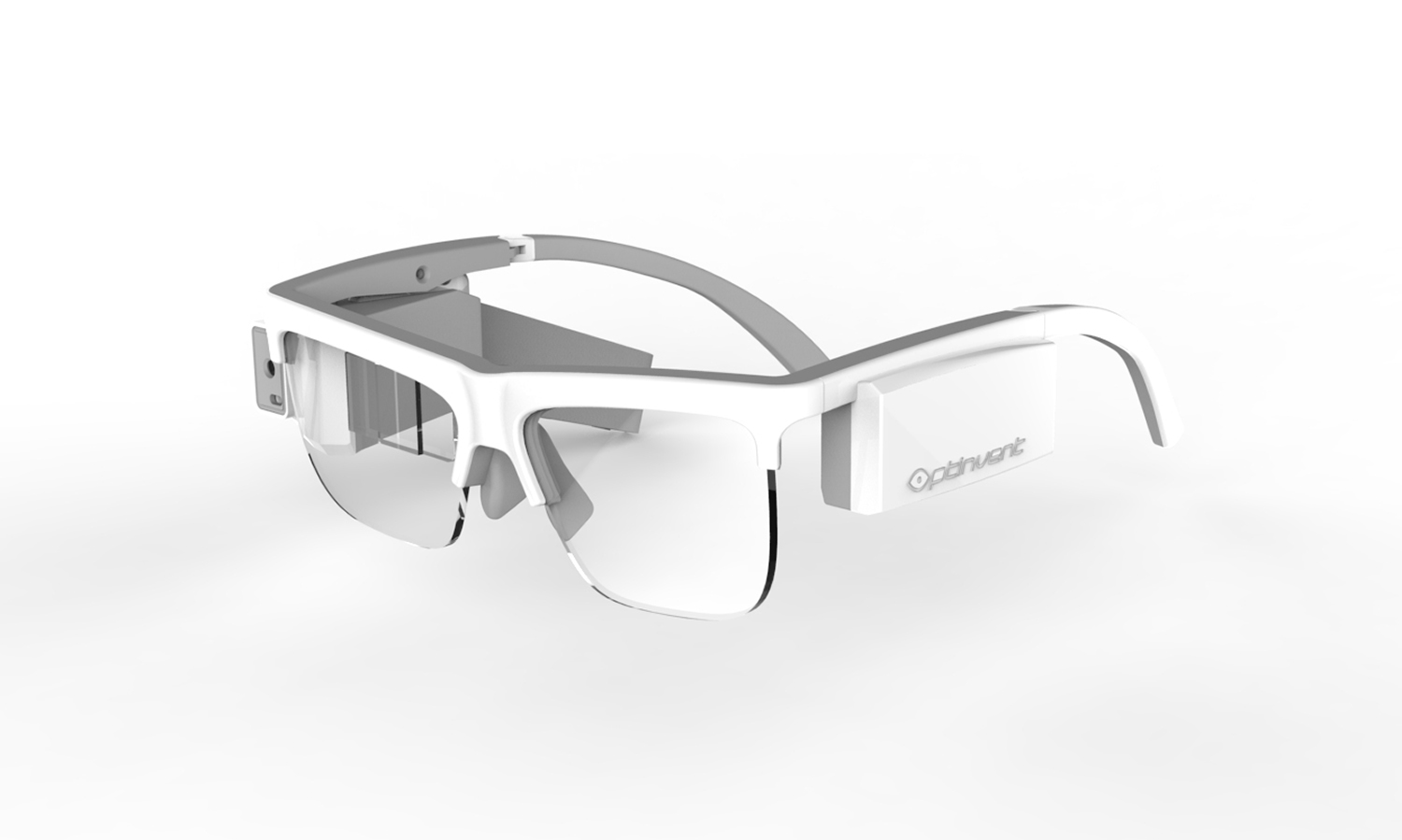
It launched a Kickstarter campaign for the ORA, a pair of heavy-duty smart glasses that’s essentially a full-featured Android device mounted on your face. It has reached the quarter mark of its US$100,000 goal, which is on top of the US$2 million it has already secured from investors.
“We think smart glasses will eventually replace your phone,” CEO Kayvan Mirza tells Tech in Asia. The company is exploring moving its headquarters to Singapore to take advantage of government grants in the country.
At first glance, the device looks unwieldy next to the sleeker Google Glass. It has thicker frames and a larger housing for its computer. If you’re short-sighted, you’ll need to slot in separate lenses – which makes you look even dorkier.
But that doesn’t matter, because the version being crowdfunded is a developer edition that’s targeted at enterprises. If you’re wearing the glasses in a surgical room or a warehouse, throw aesthetics out the window. Which means: don’t count on people wearing it to a nearby cafe as much. A less obtrusive consumer version is in the pipeline.
Besides being bulkier, ORA’s specs are inferior or identical to Glass in terms of disk space, RAM, and processing power. But it’s also far cheaper, at US$950 for a devkit versus US$1,500 for Glass.
It’s a mistake to compare both wearables on specs alone, however. ORA has some fundamental design differences. On the software end, it uses stock Android instead of a specialized one like Glass, which means users can utilize any app on Google Play. This then incentivizes developers to develop apps for ORA.
It has a viewing area that’s three times larger than Glass, and that allows users to view more data. It toggles between two states: flick the viewer up to enter an augmented reality mode to view content, or push it down when engaging in conversations or when you want an unobstructed view.
The toggle feature has another purpose: using Glass is tiresome because of the constant need to glance up. ORA lets users stare straight ahead while keeping the screen in view.
The hardware is designed with scalability in mind: the optical tech is molded from plastic, making it easy to manufacture. It’s energy-efficient too. While Glass’ prism throws away energy, ORA funnels light into your eye using precise fibre optics.
Don’t call it a toy
While the Glass seems like more of a plaything with consumer applications like snapping a photo or getting directions, ORA is more business-minded. Mirza claims that the device received significant interest from businesses from many different industries when it ran a pre-order campaign on its website.





Stay updated on the go with our mobile app.
Get latest insights with smoother, more personalized experience through TIA mobile app.