 Nadine Freischlad · · 6 min read
‘What will it take for us to go away?’ Investors discuss the state of venture capital

Tan Yinglan of Sequoia Capital, Teru Sato of Beenext, Stefan Jung of Venturra Capital, Ryu Hirayama of Yahoo Japan Capital, and Dmitry Levit of Digital Media Partners (l-r).
One of the highlights of this week’s Asia Leaders Summit 2016 was a discussion with five Asia-based venture capitalists – Tan Yinglan of Sequoia Capital, Teru Sato of Beenext, Stefan Jung of Venturra Capital, Ryu Hirayama of Yahoo Japan Capital, and Dmitry Levit of Digital Media Partners.
The conversation moderated by Kuan Hsu of KK Fund touched on many topics, from current affairs to new year’s resolutions. We also learned that venture capital – whether we like it or not – will probably not change in a big way for the next 20 years.
Does turbulence in US tech valuations matter to Asia?
I’m not worried at all.
After the boom year that was 2015, with record funding rounds everywhere in Asia, the big question on everyone’s mind right now is whether 2016 will be a tough year for startups. The global economic climate is expected to cool down. In the US, we’ve seen big tech companies stumble in the past year.
Asian VCs feel like what’s going on in the US won’t have much effect on their region this year.
“I’m not worried at all,” Stefan Jung declared. “I’d be worried if I was an investor in the US. If I look at companies here, they have healthy burn rates. They’re financed in a healthy way. Even in a severe recession I wouldn’t be worried.”

Zenefits., one of the US startups that underwent substantial devaluation late last year.
Stefan agreed that psychology plays a role in investing, so that a bad macroeconomic outlook could lead to more cautious decisions. “Profitability is on the agenda much more now than one or two years ago,” he conceded.
Tan Yinglan added that he observed growth rounds take longer to close in the more conservative climate, whereas seed rounds are not affected much.
Ryu Hirayama pointed to a possible spillover effect. “If this is happening in the US right now, it could come to the region in the coming years,” he warned, offering some solid advice to startups. “The good news is, you have time to prepare, you can adjust to avoid down rounds. Get as much capital as possible now, then go deep.”
When is the right time for a startup to expand geographically?
With the big “economic downturn” question out of the way, the conversation went deep into the specifics of supporting startups in the region after an investment. Specifically, what needs to happen for a startup to make the jump to new geographies?
Dmitry Levit had some simple advice. “There has to be a depth of management that allows the CEO to travel.”

Digital Media Partners, Dmitry Levit’s venture fund, invested in social networking app Migme. The company listed on the ASX in 2014.
Yinglan said he’d come up with a rule of thumb based on headcount which helps him decide about expansion. “Under 10 people on the team, they should handle only one country,” he said. “ A two digit headcount is ready for two countries, a three digit headcount, three countries.”
Stefan said that for him, the headcount was less important. He looks at three factors: clarity of business model, quality of founders, and existing capital or the confidence to raise capital. “With HappyFresh, we decided to launch in several cities right away,” he said. “It was like a twin study, we tested different models against each other.”
In his role at Sequoia, Yinglan helped Indian companies expand to the region. “What we learned was expanding from one city to two is hard. Once you have a scalable model, expanding is easy. Replicate the playbook,” he suggested.
The takeaway is that it’s best for startups to sufficiently prove their model in one market and have a mature team before going abroad, unless the team is very experienced. Otherwise mistakes in the model might get replicated elsewhere.

Groceries delivery startup HappyFresh. Stefan Jung’s current fund is not an investor, but he’s an active advisor to the company.
What’s the one investment thesis for Asia you believe in that no one else does?
This question with a Peter Thiel twist got each of the five VCs on stage thinking hard.
Teru Sato came up with a unique perspective: “I don’t see myself as a VC. With my entrepreneurial background, I see myself as a co-founder [in each of the startups I invest in],” he said.
“In 2010, expansion across Southeast Asia was not a common investment theme,” Dmitry began his take on the question. “That went away. Now we look at Southeast Asian companies expanding globally. But it might be to Lagos, Nairobi, Mexico City, not Tokyo and Berlin. Look at multibillion dollar businesses like Garena operating in the global south, or Migme that’s all over Africa, the Middle East, Afghanistan. I see them as green shoots of a strategy which others don’t believe in yet.”
Stefan disagreed with the “global south as next frontier” thesis. “Oliver Samwer once said that if he could go back in time he would focus on fewer countries. That was his lesson from going to Kenya and Iran. Garena worked out because it’s purely digital. If there are atoms [i.e. a physical product] involved, it’s tough.”
Are times changing for venture capital?
Spurred by Dmitry’s thoughtful response, the discussion segued into a related topic. Is venture capital itself changing?
Stefan argued the main effect he feels today that wasn’t there three years ago is the increasing competition among VC firms. “Strong founders have three to four term sheets to choose from. It’s a power shift. VCs need to reflect how they can be better and provide more value to startups.”
In the current system, we have a concentration of decision making power.
Dmitry went a step further. “I heard an underlying question here. Will venture capital be here in 10 years?”
“In the current system, we have a concentration of decision making power. A few people decide where the next couple of billions go,” he said. “What will it take for us to go away? If investors can get access to promising companies in a better, cheaper way, that would be a possibility. Things like crowdsourcing and Angellist are worth watching closely. But Angellist is not yet seriously disrupting things. We’re looking more at 20 years before that will take effect.
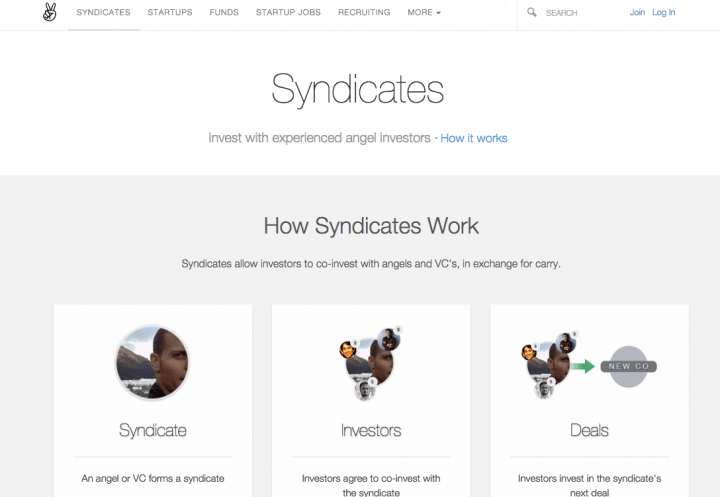
US-based Angellist is an attempt to democratize the investment process by opening it up a broader audience.
Given your global perspective what advice do you give to entrepreneurs?
So VCs for now are here to stay, but they’ll have to do more to support their companies in an ecosystem where founders have more options. What practical advice can VCs give the founders they work with, given they usually have the advantage of a broader perspective?
“Think bigger,” Stefan says. “You need one outlier that becomes a global success story, then everyone’s ambitions grow. For Europe it was Soundcloud or Skype, we haven’t seen that yet in Southeast Asia.” He encourages founders to build global companies, instead of aiming to be the national or regional champion.
Don’t be shy to be a copycat!
Ryu had a pragmatic outlook. “My advice: I think copycats are great. Yahoo Japan is a great example. We started from Yahoo, we localized from there and created our own business. Don’t be shy to be a copycat!”
Yinglan reminded everyone that startup investing remains unpredictable and defies formulas. “Don’t listen to people like us,” was his advice. “VCs are very analytical and think of all things that can go wrong. If you have a vision, execute what no one believes in.”
This story is part of Tech in Asia’s coverage of the Asia Leaders Summit 2016 in Indonesia. The summit is a yearly conference organized by Masahiko Honma of the Japanese Incubate Fund to bring together Asia’s tech community.
Stay updated on the go with our mobile app.
Get latest insights with smoother, more personalized experience through TIA mobile app.
Recommended reads
 Animoca backs $70m round of 🇹🇼 VC firm’s maiden Web3 fund
 Recession Run: Valuation cuts don’t affect Monk’s Hill Ventures’ plans
 Israeli investment platform OurCrowd banks $60m from Japan’s Orix
 Recession Run: 500 Global’s investment plan in SEA
 Profit now (and later) for BillEase
 25 rising startups in the Philippines
 Lionel Messi backs Spin co-founder’s ⚽ venture
 Solutions with teeth
 Where are the profitable tech firms in Southeast Asia?
 How valuable is VC money for Indonesia’s profitable bootstrapped startups?





Editing by Michael Tegos
(And yes, we’re serious about ethics and transparency. More information here.)







📅 Upcoming Events
22 October 2026
Payoneer x CSPN Summit 2026