 Kylee McIntyre · · 5 min read
India’s villages are crying out for doctors. This startup takes cardiologists to them
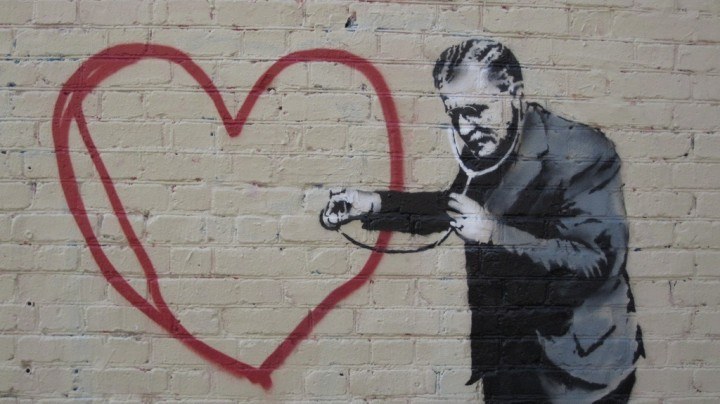
Photo credit: El Payo
“They say if the patient can get out the door of his home at the first sign of a heart attack and come to the hospital within two hours, they can save his heart. That’s a promise hospitals give,” says Manick Rajendran, co-founder of iMMi Life.
The problem is that by the time most heart attack patients step out of their homes, they’ve already waited too long since the onset of the first symptom. The average person doesn’t leave for the hospital until 300 minutes after experiencing the first symptom. The roughly 60-120 minute time window is also known as the Golden Hour, because if treated during this time, the heart doesn’t suffer possibly irreversible damage or muscle death.
“Either the patient dies or goes home in a suboptimal manner, where he is going to be a heart patient forever,” says Manick. He goes on to say that there are less than 5,000 cardiologists in India, meaning that even if the patient makes it to a hospital, the nearest cardiologist may be in a hospital further away, possibly outside the city.
iMMi Life is an initiative to provide access to cardiologists and promote good health habits among the underserved population of India, providing cost-effective and accessible options fot health and encouraging patients to go to hospitals at the first sign of heart trouble.
“We realized that even though cardiologists are of most use in a hospital, they have a wealth of knowledge and competency that they can use when they’re not in the hospital,” says Manick. For example, a cardiologist can analyze an electrocardiogram (ECG), a reading of the electrical activity of a patient’s heart, anywhere. That led to Manick and co-founder Ranga Sriraman to develop an app that takes ECGs to cardiologists all over the world for quick interpretation. An ECG reading can inform doctors of a possible impending heart attack, allowing the patient more time to get treatment. It only takes about 30 seconds for a cardiologist to read the ECG and make a determination.
“In the event of an emergency [related] to the heart,” says Manick, “an ECG is the simplest piece of information a cardiologist can look at to make an assessment of what’s happening.”
Give your heart a break

“We [err] on the side of caution […] Clinically, if two feel it’s a heart attack, we will take it into consideration,” says Manick.
Cardiologists who are registered in the iMMi network get a notification when an ECG is available for examination, which they can read at their leisure. If they’re unavailable, someone else picks up the reading, but cardiologists get paid per reading. If the consensus is “no,” then the service is free for the patient, which promotes a culture of early detection and pre-hospital stabilization. If the patient’s reading gains a “yes” consensus, then he or she pays a fee that’s less than half the fee for the same service in the hospital.
“It’s much like a Skype model,” says Manick. “The one time that you are going to call me on a landline, your local carrier will charge you US$0.02 per minute, which is still cheaper than the US$0.18 [a US carrier] would have charged.” Manick says, noting that about one out of the four readings gains a positive consensus.
While the cardiologists read the ECG without knowing any information such as age or location of the patient that could cause a bias to their reading, the app does make sure that one of the cardiologists reading the ECG is local to the patient. If the patient’s reading gains a clinical majority “yes,” then the patient is automatically referred to the local cardiologist, helping him or her gain a patient case.
“[Cardiologists] don’t need to waste their time on bogies or false positives [with iMMi Life],” says Manick. “They can get real positives that have been looked at by their peers.”
The business of health





Stay updated on the go with our mobile app.
Get latest insights with smoother, more personalized experience through TIA mobile app.











📅 Upcoming Events
22 October 2026
Payoneer x CSPN Summit 2026