Adinda Pryanka · · 4 min read
How one startup shrinks AI down to a single transistor
This article is a part of Startup Spotlight, a series that features young, up-and-coming startups.
This article is brought to you in collaboration with the Slingshot deep tech startup competition, held at the Singapore Week of Technology and Innovation.
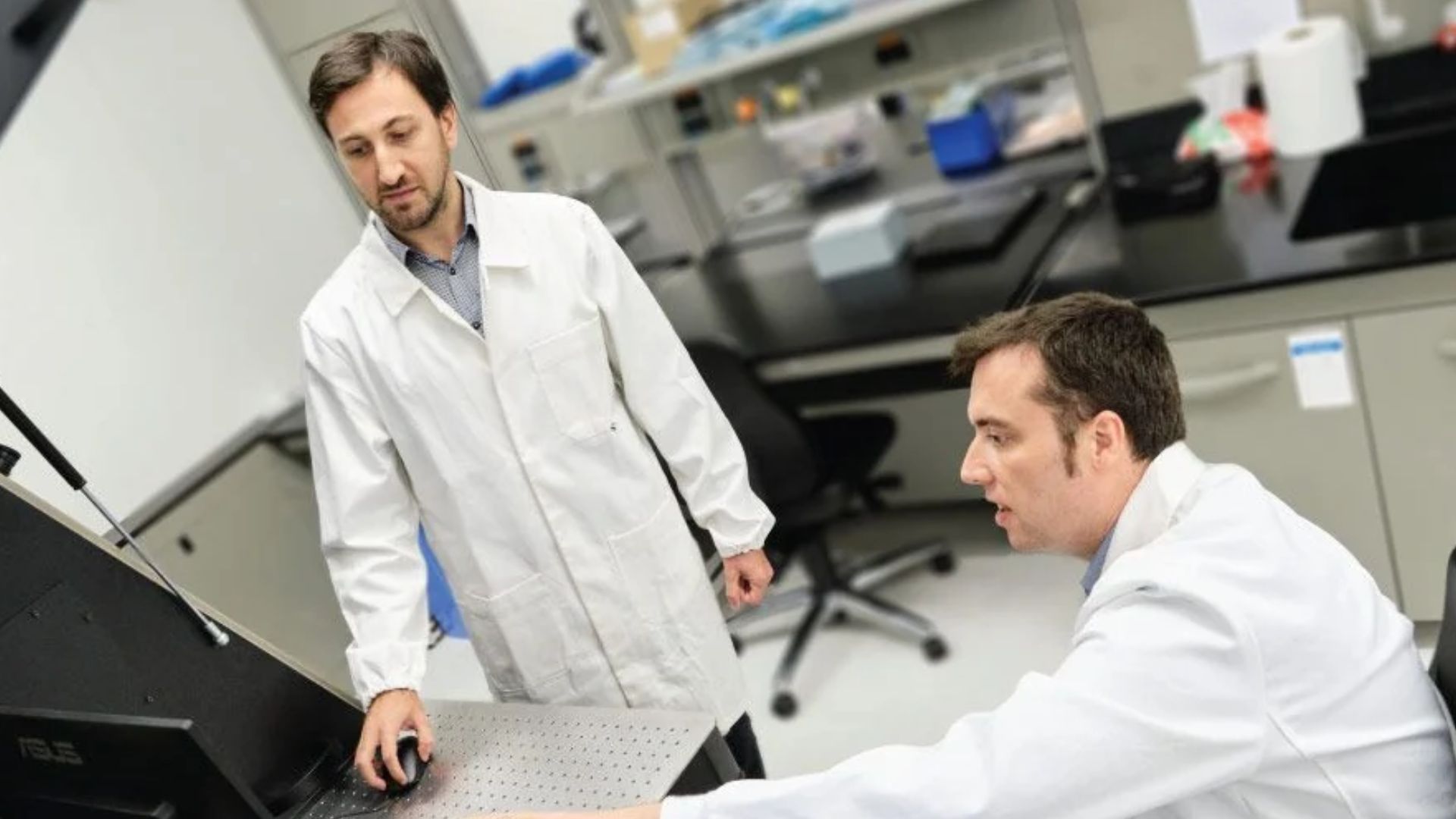
Sebastian Pazos (left) and Mario Lanza (right)/Photo credit: Sebastian Pazos
Newmorphic is building brain-inspired chips to reduce the energy demands of AI. The founders combined scientific research with commercial expertise to give the standard transistor a second use.
😟 Problem
The International Energy Agency projects global data center electricity use will double by 2030. This demand will soon surpass the total energy consumption of Japan. Current AI chips run on a fixed clock and perform full calculations for every input.
A single high-end chip can draw up to 1,000 watts of power. This high power demand keeps advanced AI off everyday battery-powered devices. Wearables and industrial sensors must send data to the cloud instead.
💡 Solution
Newmorphic developed a neuro-synaptic random access memory architecture called NS-RAM. This technology makes a single standard transistor act as an artificial neuron or a synapse depending on operating voltages.
The hardware mimics the human brain by only consuming energy when new information arrives. The system offers several key capabilities, including:
- Requires one or two transistors per neuron instead of 18 or more.
- Rewires a single cell array for diverse tasks like text generation.
- Runs on existing 130 and 180 nanometer processes at mature foundries.
- Integrates into engineering tools using standard SPICE simulation models.
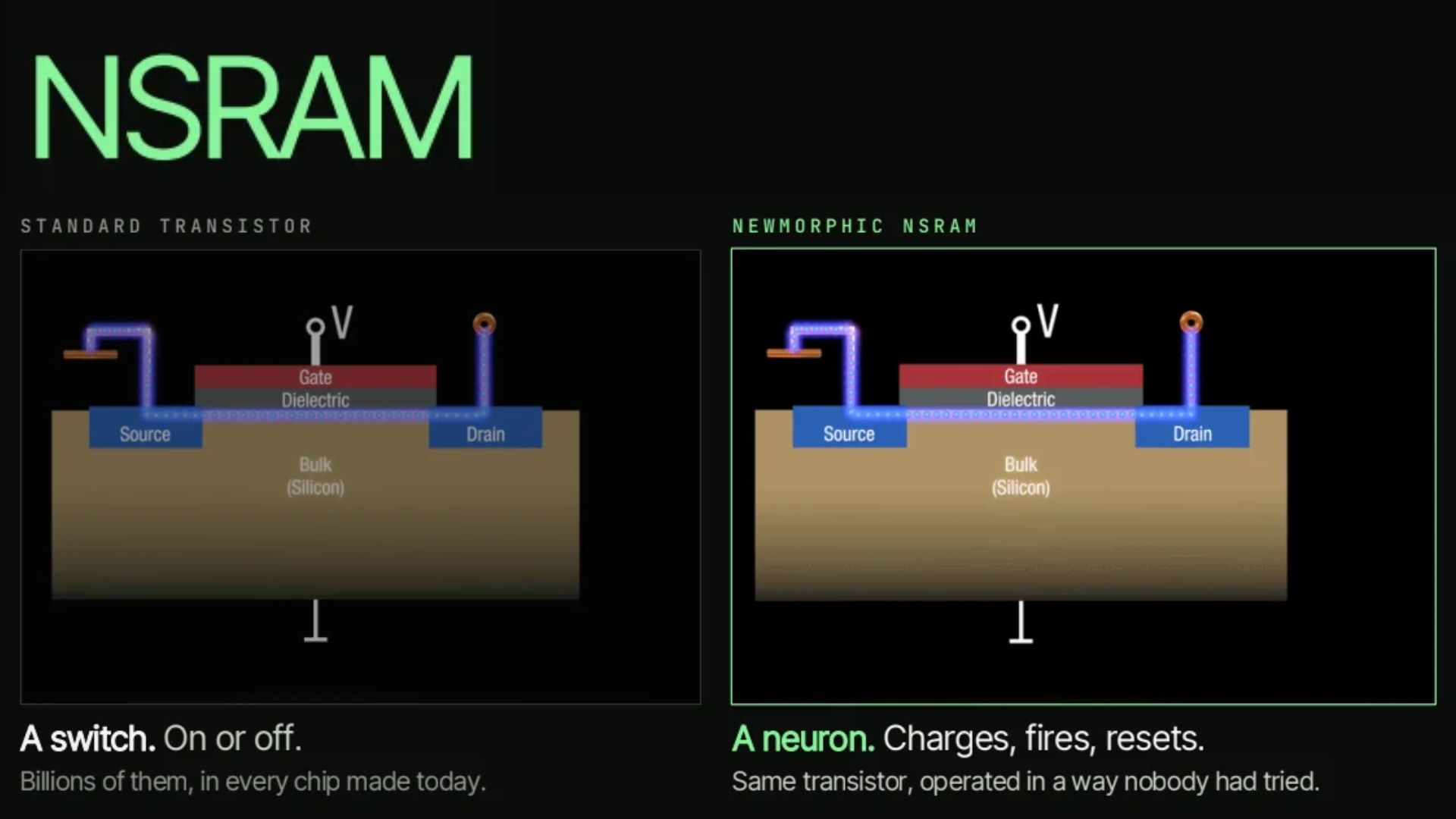
Image credit: Newmorphic
📊 Market size
Edge AI hardware, which runs AI on the device instead of in the cloud, was a US$26.14 billion market in 2025. The same forecast projects US$58.90 billion by 2030.
Ultra-low-power edge AI system-on-chips, which draw less than a milliwatt per inference and go into wearables and smart sensors, were a US$525 million market in 2025. The same forecast puts that segment at US$980 million by 2034.
🤝 Team
- Mario Lanza. Co-founder and chief scientist. He is a senior professor of materials science and engineering at the National University of Singapore.
- Alfred Chong. Co-founder and director. He previously founded and served as CEO of ASX-listed Nanoveu.
- Sebastian Pazos. Co-founder and CTO. He is the lead inventor of NS-RAM.
- David Pevcic. Co-founder. He serves as chairman of three ASX-listed technology companies.
🚀 Traction
🏆 Competition
💰 Financials
🚩 Risks











📅 Upcoming Events
30-31 March 2027
Upskill Fest