 Osman Husain · · 4 min read
This piece of wearable tech wants to make life easier for pilgrims to Mecca

Pilgrims in Mecca
Photo courtesy: Al Jazeera
Undertaking a pilgrimage to Mecca at least once in a lifetime is a mandatory requirement for each adult Muslim. Not surprisingly, every year hundreds of thousands of people descend on the holy city, located in Saudi Arabia, to perform these rites. Last year, it was estimated that approximately 2.5 million Muslims fulfilled their Hajj obligations, placing great strain on infrastructure and municipal services.
While the Saudi Arabian government does its best to fully accommodate visiting pilgrims – with some estimates that it has spent nearly US$100 billion in infrastructure and facilities – colossal problems still remain. Catering to the requirements of such a teeming mass of people is by no means an easy task. One of the biggest issues faced by pilgrims is the propensity to get lost and stray away from their group, especially during the last few days of the pilgrimage when everyone is camped on a vast stretch of land close to the holy city.
Tragedies are also a disturbingly-common occurrence during the pilgrimage. In 2006, approximately 350 pilgrims died after a stampede broke out, with similar tragedies in 1998, 2001, and 2004. One of the worst tragedies to occur during the annual pilgrimage was in 1997, when fires exacerbated by high winds broke out through the tent city of Mina, killing several hundred and displacing many more. Establishing communication links with friends and family can be difficult, as well as relaying critical information from authorities to visiting pilgrims.
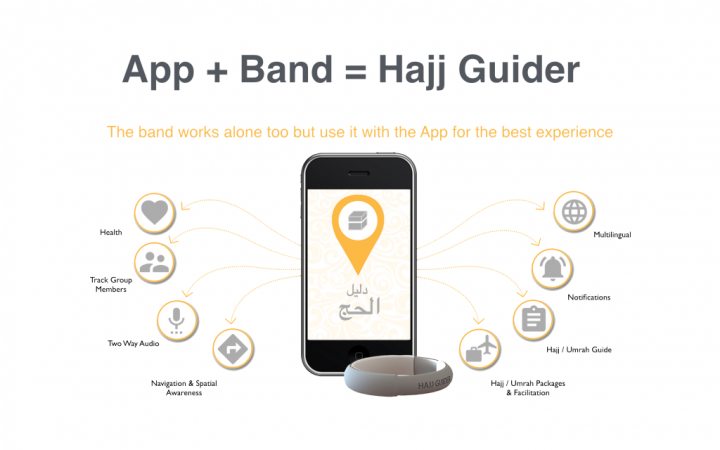
Now, a Pakistan-based startup wants to ease the concerns that pilgrims have, and allow them to concentrate on their intended purpose of worship and reflection. Established by two recent college graduates, the startup, called Hajj Guider, is building a piece of wearable technology, akin to a smart band. They claim that their product has built-in GPS and Bluetooth systems, allowing it to perform a variety of location-based tasks, such as tracking, remote monitoring, and geo-fencing. Furthermore, the band is able to relay and receive audio messages between each group member, allowing users to communicate their location and other information in case of an emergency.
“Initially we started off by working on a mobile app solution that would assist in tracking people through their smartphone,” Hajj Guider co-founder Hasam Ahmed tells Tech in Asia. “However, we tweaked our product somewhat after realizing that smartphones are still too pricey for some Muslims. We want everyone to use our service.”
While not yet in mass-market production, Ahmed claims that his smart band will retail for approximately US$60, putting it within reach for the majority of consumers. The band is projected to have a battery life of five days, and will also allow people to send audio messages to anyone wearing it, from anywhere in the world. “Even if there is a single smartphone for a group of fifty to sixty people, that is enough,” says Ahmed. “Through the mobile app embedded in the smartphone, the group leader can track, monitor, and communicate with the other members, as well as receive notifications when someone crosses the perimeter set through geo-fencing.”
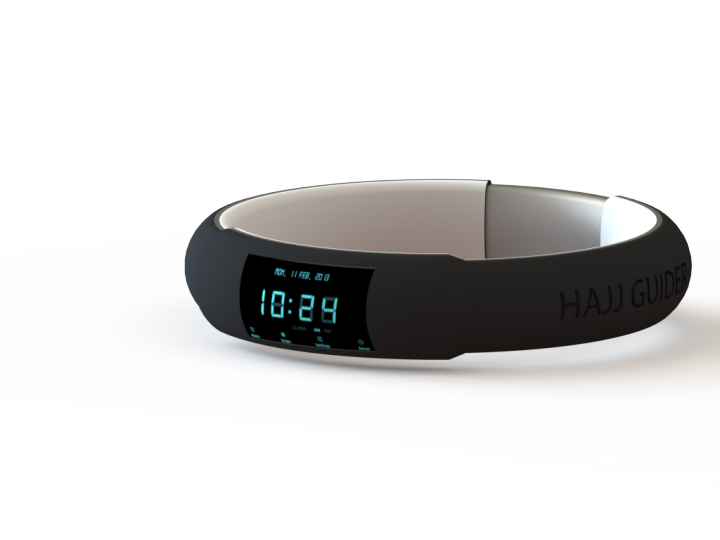
Hajj Guider prototype band
Ahmed’s startup has already been attracting significant buzz. Initially incubated at Plan 9, the startup will now be accelerated at the prestigious Oasis500 accelerator based in Jordan, where the team will be traveling shortly. Furthermore, the incubator has also invested a sum of seed capital, in the region of US$50,000, into the startup. However, Ahmed believes in the global viability of his idea, and plans on raising more cash with a crowdfunding project sometime in June this year.
If properly planned and executed, Hajj Guider could be a winning product as it aims to tackle a significant problem. With approximately 1.6 billion Muslims across the world, the number of pilgrims to Mecca is also projected to continue rising every year. Furthermore, with the recent launch of the Apple Watch, interest in wearable technology has never been higher and could very well provide the impetus that this product needs to gain scale.





Stay updated on the go with our mobile app.
Get latest insights with smoother, more personalized experience through TIA mobile app.









