 Grace Priscilla Teo · · 4 min read
What a delayed promotion taught an OpenAI lead about teamwork
This article summarizes an episode of Ryan Peterman’s video series featuring Michael Bolin, a tech lead of the Codex open source repository at OpenAI.
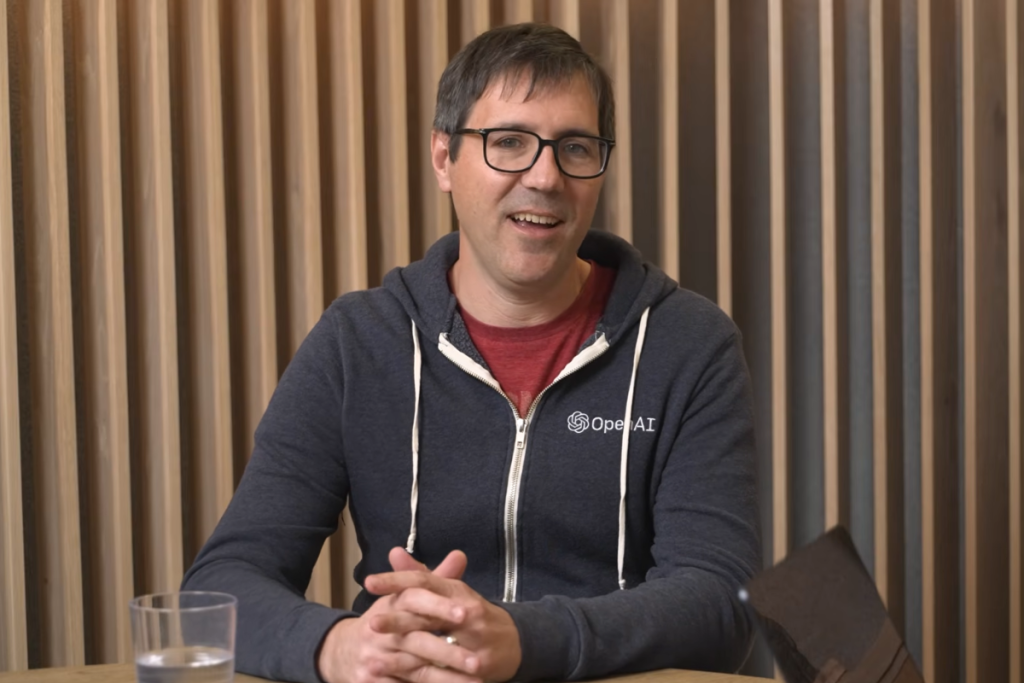
Michael Bolin, tech lead for Codex at OpenAI/ Photo credit: Ryan Peterman
As a tech lead for Codex at OpenAI, Michael Bolin has seen how engineers can slow themselves down. He argues that focusing only on being technically right often fails because it ignores how people work together and what it takes to get new ideas used.
Bolin finds the balance by thinking about how the team will feel about technical choices: understanding how people react to change is as important as writing good code. By focusing on both, engineers can get work done without upsetting the people they work with.
Rethinking the default
Early in his career, slow compiling times created a big delay and held everyone back. The difficulty of his daily work pushed Bolin to question the tools his team had to use.
“It was so painful to get anything done that I was like, I need to fix the build system,” Bolin says. “I know it is not fundamentally this slow to iteratively build this sort of thing.”
Proving the value
His decision to stop using the company’s official tools was met with doubt. His coworkers questioned the change, and Bolin said their main worry was, “If we deviate from the standard thing, we are not going to be on the standard thing… What if [it] gets a hundred times better next week?”
To convince them, he looked at how the old compiler worked and found it was slow with small changes, often rebuilding everything from the start.
So he built an alternative that saved parts that did not change, which made the process clearly faster and showed its benefit once people tried it. Changing a tool was one thing, but changing people’s minds about security proved to be much harder.
Learning that being right is not enough
Later in his career, Bolin learned that finding a problem was not enough. When Microsoft bought GitHub, he worried about the security of his company’s private systems and tried to make everyone deal with it.
“I was very anxious that this was now a risk and I was pushing people,” he recalls, “but I did not really account for the fact that people were happy with what they were doing at the moment.”
Being right about the risk did not save him from the trouble he caused by communicating badly. “Sometimes you are just so confident in some insights you have that I would just come down way too hard,” Bolin admits. “That did not go well for me and my promo got delayed.” This career setback forced him to reevaluate his entire approach to leadership.
A new way to communicate
Not getting the promotion made him look at his own actions. He realized that to lead a team, he had to control his emotions and find better ways to handle arguments.
Bolin said this change meant he had to become “more aware of things that trigger me, like technical decisions, and recognize when that is happening and be like, okay, let’s not act in that moment.”
Matching your work to company needs





Stay updated on the go with our mobile app.
Get latest insights with smoother, more personalized experience through TIA mobile app.











📅 Upcoming Events
22 October 2026
Payoneer x CSPN Summit 2026