 Avanish Tiwary · · 5 min read
This startup wants to compete with Google through GIFs
At the end of 2015, when Android scrapped an application program interface that allowed software developers to run their service on the foreground of another app, Gurugram-based content company Bobble lost around 6 million users within a month.
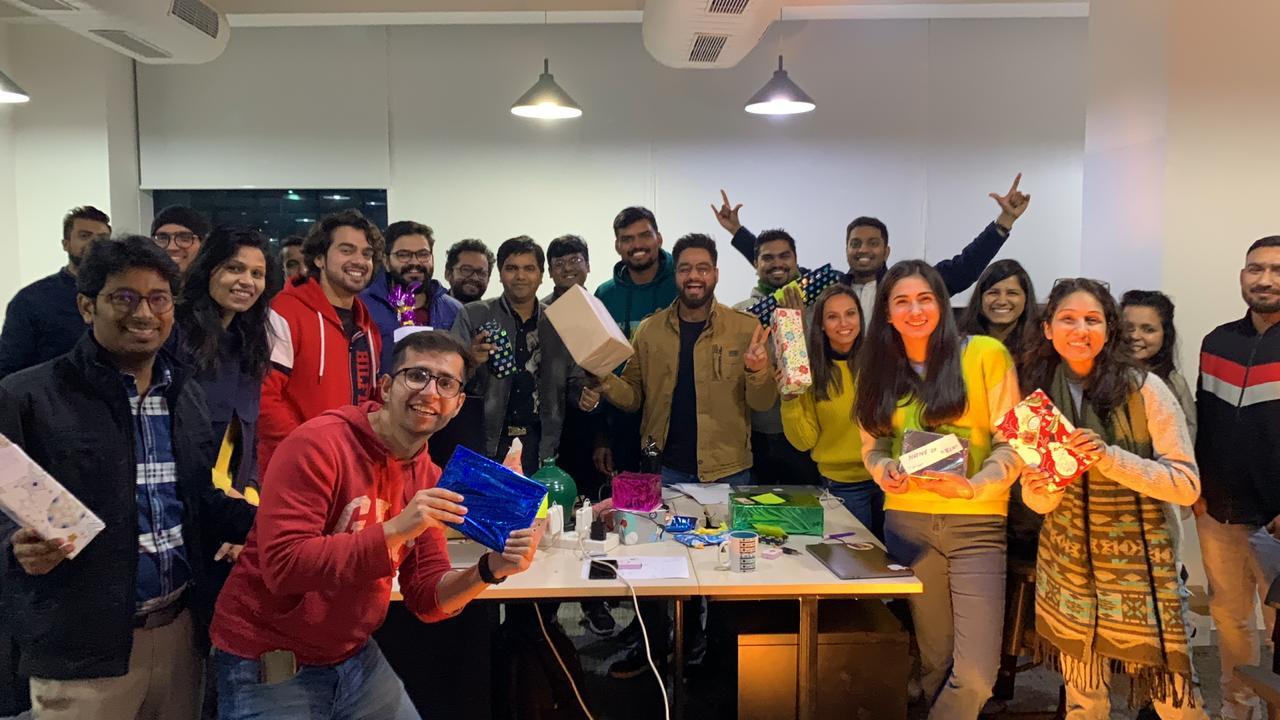
Photo credit: Bobble
For about a year in 2015, Bobble operated a widget on top of WhatsApp, letting users take a selfie, turn it into a comic avatar to be used as a sticker or GIF, and share it with their contacts. “This really worked for us. By March 2015, we had a million users, and every two months we were adding another million users. It continued like this till late 2015 when we had over 7 million users,” said Ankit Prasad, co-founder of Bobble.
But everything changed for Prasad when Android removed the API tool later that year. “We went back to around 1.5 million users from 7 million. This was a big blow to our plan, which was to get deeper into creating innovative content,” Prasad said.
In early 2016, Bobble’s team – spearheaded by Prasad and his elder brother Rahul, the company’s co-founder and chief technology officer – started working on a virtual keyboard, as Android had introduced a new API that let third parties create their own character-input systems, giving users choices beyond pre-loaded options.
By mid-2016, the company launched its virtual keyboard, which Prasad said coincided with Google’s launch of G Board. “We had an early-mover advantage, plus we were the first ones with the feature of sharing visual content like personalized GIFs right from the keyboard,” he said.
Bobble creates a caricature version of a user’s face to make personalized GIFs and stickers, which often revolve around a trend or festival, such as major cricket tournaments, New Year celebrations, or national elections. “People love to share emojis and GIFs. What we did was one step ahead, as we personalized it with their face and identity, which multiplied the impact of the message,” Prasad said.
By 2017, Prasad claims Bobble became one of the most widely adopted smartphone keyboards in the world. He conceded that while users liked Bobble’s content-sharing function, they were not happy with the typing feature, as it didn’t have auto-correct, word suggestions, or similar elements. It took Bobble another year before it incorporated all the features that a smart keyboard should have, Prasad said.
The company also monetizes its emoticons and GIFs by strategically placing brands on them. For example, when someone messages their friend to go for a beer and sends a GIF with a beer mug in their hand, Bobble would put a beer partner’s brand name on the mug. Prasad said the company has partnerships with around 50 brands, which are mostly FMCG companies.
Keyboards for everything
According to Prasad, keyboards help companies understand users in greater depth, as “conversations have now moved online.” He said people discuss a myriad of things with their friends over chat applications. Think of your last conversation about a smartphone you wanted to buy or plans for a vacation – chances are you fired off a few messages to friends or family about the matter.
“As every input on a digital device goes through a keyboard, we can have a better understanding of users than Google, therefore have the greater power to influence them, and in the future stop them from going to Google,” Prasad said.
There is strong support for Prasad’s belief. In 2017, Japanese ecommerce platform Rakuten acquired Chatter Commerce, a startup that created a keyboard for mobile commerce, which let users shop online without leaving their messaging application and go to an ecommerce platform. “Brands are trying to provide their services within the chatting experience of users. Now we are seeing payment-specific keyboards, where users can directly transact without having to go to the bank’s app,” Prasad said.
Realizing that the virtual keyboard was a much bigger market than content – which until 2018 was still Bobble’s core product – Prasad and his team started making virtual keyboards for other companies.
However, in late 2017, it forged a deal with Indus OS, an Indian smartphone operating system, to make virtual keyboards. A year later, Bobble was creating personalized input devices for other brands in a full-fledged manner. “Since we realized the power of keyboards and that it can actually capture a significant percentage of Google’s market, we started approaching larger players with a large consumer base, like telcos, banks, and phone manufacturers,” Prasad said.
Connecting all devices





Stay updated on the go with our mobile app.
Get latest insights with smoother, more personalized experience through TIA mobile app.










📅 Upcoming Events
22 October 2026
Payoneer x CSPN Summit 2026