 Stefanie Yeo · · 4 min read
How being spun off from its parent firm helped this deep-tech startup reach new heights

Residents of Singapore would be familiar with the country’s Light Fire Attack Vehicles, known affectionately as the Red Rhinos. They’re essentially lighter, more compact fire trucks that can access narrower spaces and be deployed closer to fire and rescue incidents.
These vehicles were a product of one of the many projects undertaken by Singapore-based engineering firm Hope Technik, which has also created automatic inspection vehicles and automated temperature screening stations, among others.
Founded in 2006, Hope Technik also developed Sesto, a sub-unit focused on creating autonomous robots that can make moving heavy objects in confined spaces easier. The product was invented after the firm’s founders saw a demand for such devices in the logistics sector.
In 2018, Sesto came into its own and was spun off as Sesto Robotics.
Since then, the startup has expanded to designing autonomous mobile robots that can be used in the manufacturing and healthcare industries.
These robots can carry out repetitive and time-consuming tasks, such as loading or transporting items. They also use laser-guided, intelligent systems to avoid obstacles and map out routes.
Spin off
Spinoffs are common in the tech space, which companies do for various reasons, such as targeting key propositions or attracting more investments. Some of these offshoot enterprises have also gone on to become incredibly successful. For instance, Microsoft established its Expedia division in 1999 as a separate entity, which has since seen the rise of a travel-booking giant.
Sesto Robotics is looking to achieve the same kind of success by getting the right investors on board and developing its products further.
The move could help the company raise more funds, as it has a very different approach compared to its parent firm. Although Hope Technik works to deliver customized solutions to its clients, Sesto Robotics focuses specifically on developing its own products, as a mobile robotics manufacturer.
“Investors prefer to invest in a company with a clear product and market strategy,” explains Ang Chor Chen, CEO of Sesto Robotics. “If we remained a part of Hope, we would have been part of a different business with different markets.”
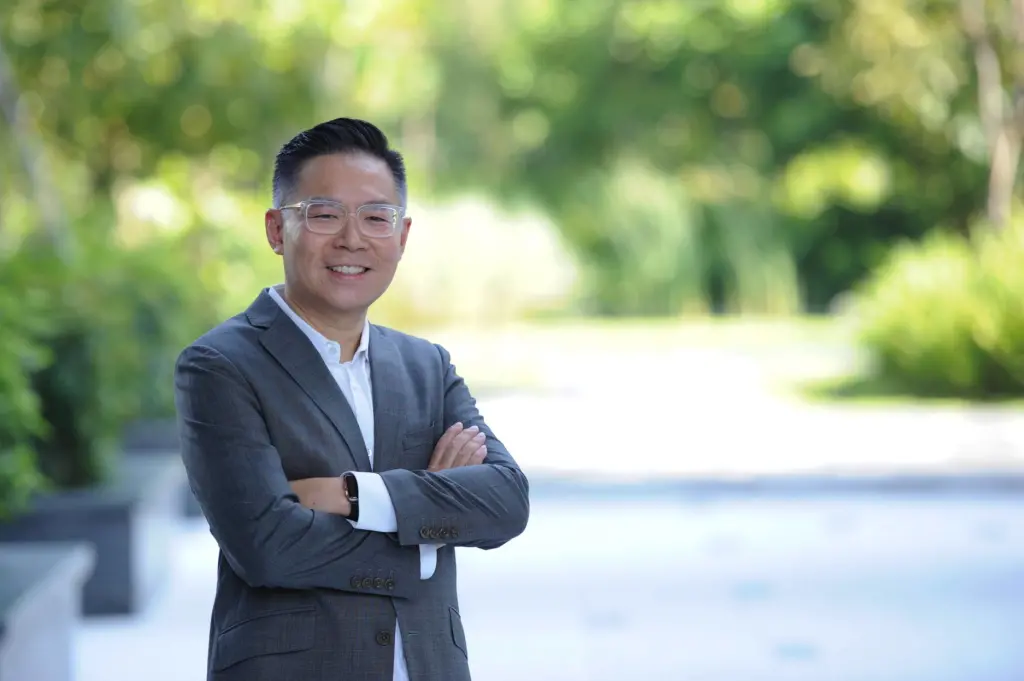
Ang Chor Chen, CEO of Sesto Robotics / Photo credit: Sesto Robotics
Additionally, Sesto Robotics is a deep-tech startup, which often struggle to get funding due to their status as being “high risk, high reward.” As such, reaching the right investors is extremely vital for these firms.
“Deep tech is not a category many venture capitalists focus on, so we have to be very targeted in approaching the right investors to ensure a fit between us and their investment mandates,” says Ang.
So far, the decision to split has paid off. In 2018, Sesto Robotics secured US$2.9 million in series A funding and received additional investment from Trive Ventures through the Singapore government’s Startup SG Equity program.
Seeing success
Earlier this year, Micron Singapore, one of Sesto Robotics’ oldest clients, was announced as a member of the World Economic Forum’s Global Lighthouse Network, a community of manufacturers that apply cutting-edge technology to drive impact. The network’s roster includes names like Unilever, Siemens, and GlaxoSmithKline.
“[Micron Singapore] was selected, and our robots were featured,” says Ang. “[The company] acknowledged through an email that we have been a very key part of them winning this accolade, which was very affirming.”
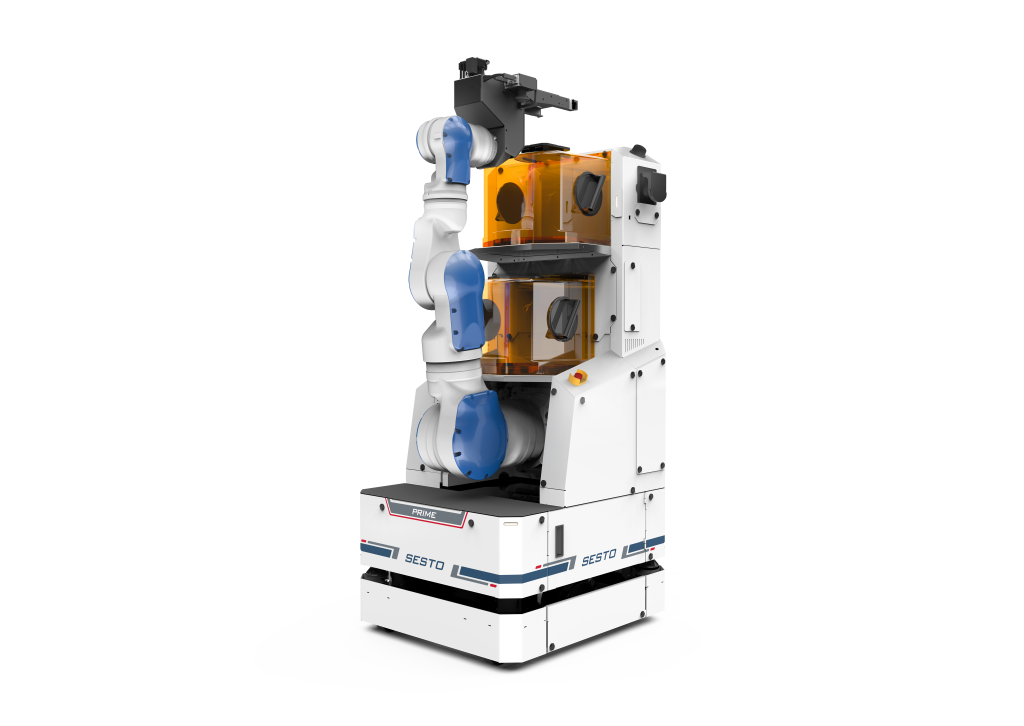
One of Sesto Robotics’ products, the Sesto Prime / Photo credit: Sesto Robotics
Other than the media coverage of the network, which got Sesto Robotics’ name out into the wider market, the recognition also shows that the startup is operating at a global standard and is heading in the right direction.
“Our customers are really reaping the benefits of automation and robotics,” the CEO remarks. “That’s the real satisfaction.”
Looking to the future
As many industries turn to automation, Sesto Robotics is exploring better solutions for its customers. Some of the improvements it aims to make include reducing the time it takes to set up its robots in a new location, as well as making the interface user-friendly.
“We want to make the robots as easy as possible to use so that even regular factory operators with minimal training will be able to utilize robots effectively,” says Ang.
This will increase the adoption rate of the company’s robots and support its efforts to scale its solutions, he adds, especially since Sesto Robotics plans to enter Europe in the latter half of 2020.
In the future, Ang envisions that the company’s robots will be self-dispatching – able to anticipate needs on the factory floor and deploy themselves in the most efficient way.
While many believe robots will end up displacing humans, Ang thinks this view is pessimistic.
“Automation will enable workers to be more productive and create smarter, safer environments for humans,” he says.
Sesto Robotics is a leading solutions provider of autonomous mobile robot technology with real-world applications. It enables companies to derive the benefits of Industry 4.0 by achieving efficiency through automation.
Find out more about Sesto Robotics on its website.
Stay updated on the go with our mobile app.
Get latest insights with smoother, more personalized experience through TIA mobile app.
Recommended reads
 EFishery acquihires Indonesian AI-powered IoT startup, to launch AI brand
 Baidu’s AI pivot helps drive revenue, despite overall sluggish growth
 Indian AI startup banks $5.5m seed round to help salespeople sell better
 Tin Men Capital injects $2.7m in AI software startup’s pre-series A round
 Ex-AWS exec launches startup to power enterprise systems with AI
 BaniQL raises $1.6m to make nickel mining in Indonesia greener
 Indian SaaS startup bags $20m to help businesses manage genAI models
 Peak XV’s Surge leads $2.75m seed round of Indian log analytics firm
 Automated risk monitoring platform lands $10m to expand to North America, Europe
 The $16t blind spot VCs ignored for decades





Editing by Nathaniel Fetalvero, Jaclyn Teng, and Eileen C. Ang.
(And yes, we’re serious about ethics and transparency. More information here.)



📅 Upcoming Events
22 October 2026
Payoneer x CSPN Summit 2026