- Insights This article was written by a TIA community member. Insights pieces undergo the same rigorous editorial process that newsroom-produced articles have.
 Christopher Quek · · 8 min read
How we bootstrapped an incubator in Singapore to champion the pay-it-forward culture

Photo credit: GLady
Paying-it-forward, an ideal that was relatively unknown to the Singapore startup community in 2011, was met with much scepticism, and even mockery, by many people.
I recall a few mercenary VCs telling me then, “In this startup industry, it is all about squeezing and making as much money as we can from the entrepreneurs. I cannot imagine helping entrepreneurs for free when it doesn’t benefit us. Anyway, why should you teach others for free? They won’t bother to help others after you have helped them. Nobody is grateful.”
Nobody is grateful.
Despite the naysayers who’ve said that it was an unsustainable concept in a dog-eat-dog environment, the founders of Angels Gate Advisory (AGA) proved that not only would it work, but paying-it-forward will become infectious and an integral part of the ecosystem’s DNA.
The Singapore startup landscape of 2011
In 2011, Singapore’s tech startup ecosystem was still considered a cowboy landscape. It was grants galore, and had an abundance of grantepreneurs.
Grantepreneurship is the art of taking government grants for the sake of taking grants, without any sustainable business idea because it was regarded as free money and an entitlement. This was an unintended effect of there being abundance of government grants.
Incubators, who were appointed to administrate these schemes, used these grants to prey on and squeeze startups. In a Business Times article, our co-founder, Ko Tze-Shen described an example of predatory incubation, “For instance, an investor values a startup at S$200,000. He invests S$10,000 and helps the startup get S$50,000 in government grants. Normally, he would get only 5 percent of the company, but a deal is struck such that the investor gets S$60,000, or 30 percent, worth of equity. The investor is basically leveraging government grants to get additional equity out of the startup.”
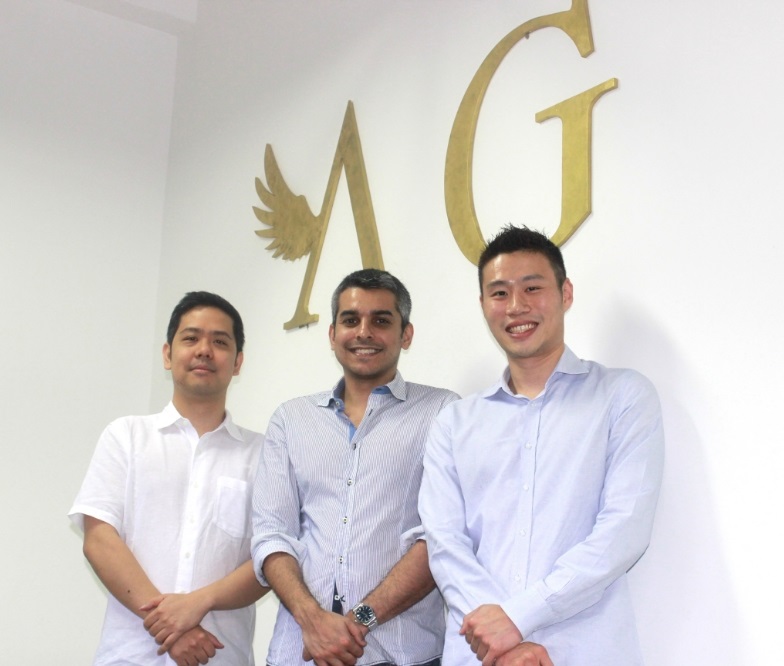
Left to right: AGA Founders Ko Tze-Shen, Arvind Khattar and Christopher Quek.
“Entrepreneurs building entrepreneurs” was the answer to address these two issues. The guiding principle was to pay-it-forward and expect nothing in return, to a point of not benefitting and even sacrificing time and opportunities, just to mentor, nurture and pass our experiences and business skills on, so that this valuable IP will be retained and built upon across generations.
But where could we find funds to sustain such an ideal? We needed space and a small team to oversee and coordinate its implementation. We approached various private investors, but their responses were lukewarm. No one was keen to support the idea.
When opportunity met sheer luck
Soon after, opportunity struck.
The Media Development Authority of Singapore (MDA) called for a second round of incubators in 2011 for the iJAM program.
Humble beginnings to growing success
From iJAM incubator to advocate of the startup community
Expanding to address a national-level agenda
Being evangelists for the Singapore ecosystem
Closing down AGA and celebrating a historic milestone





Stay updated on the go with our mobile app.
Get latest insights with smoother, more personalized experience through TIA mobile app.












📅 Upcoming Events
22 October 2026
Payoneer x CSPN Summit 2026