Terence Lee · · 5 min read
As space industry democratizes, tiny Singapore could play a leading role
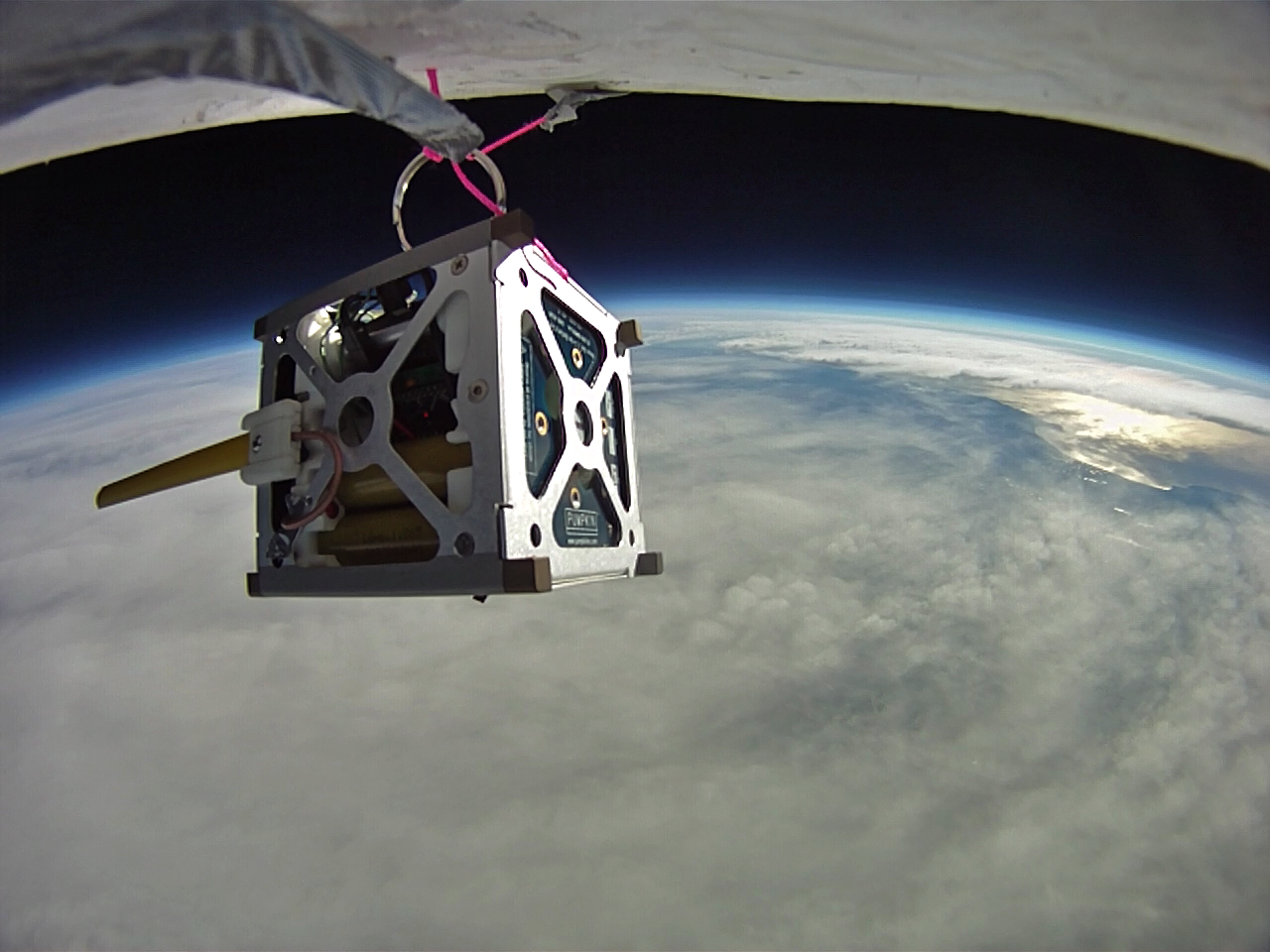
A cubesat satellite in space.
The software industry is nurtured by a stream of shared knowledge. The snazziest apps rely on open-source programming languages and frameworks. There’s an unspoken credo in Silicon Valley about giving back to the community. This distribution of free intellectual property led to the growth of the internet industry, and we’re seeing the same movement (embodied through Arduino) starting to impact hardware creation.
The space industry has also caught on to the philosophy. Thanks to an open-source satellite design called Cubesat and the growing ecosystem of open source designs for Cubesat ground stations, network protocols, and other supporting technologies, building a satellite has never been easier.
The small size and low cost of these satellites has led to faster development cycles that mimic the software industry. The flowering of commercial space enterprises means that launching a satellite has become more accessible and cheaper too.
Once in orbit, these space cubes can fulfil many purposes depending on what you mount on it. They can take photos of specific locations on earth, detect maritime and aerospace movements, or even sense earthquakes. The keyword is ubiquity – because it’s cheap, companies can launch many of them into space, providing blanket coverage over the planet. And they burn up in the atmosphere after a certain time, especially if they’re launched in low orbit. That takes care of the space debris problem, vividly captured in the movie Gravity.
Previously the domain of superpowers, the space industry is being democratized. Now, even Singapore can partake in its benefits and engineer its own vessel in the space race. Especially Singapore, which already houses a strong electronics manufacturing industry that makes up 5.2 percent of the country’s GDP.
“Satellites are actually just computers with radios and solar panels. They’re just like any computer. A lot of the key components are electronics and precision-manufactured parts. So these are all things Singapore already has over the years in our experience making semiconductors, in making consumer electronics, in making handphones and parts,” Yi-Hsen Gian, chief information officer of the Singapore Economic Development Board (EDB), told Tech in Asia on the sidelines of the EmTech Singapore conference.
“Not only do we have the manufacturing expertise, we have the design expertise. All of these now actually can be used in developing new products, components, or payloads in space,” he continued. Given how much of a “profitable niche” the space industry can be, the EDB even set up an Office for Space Technology and Industry in 2013 to coordinate activities in that arena, be it in the universities or the government agencies.
Playing to its strengths
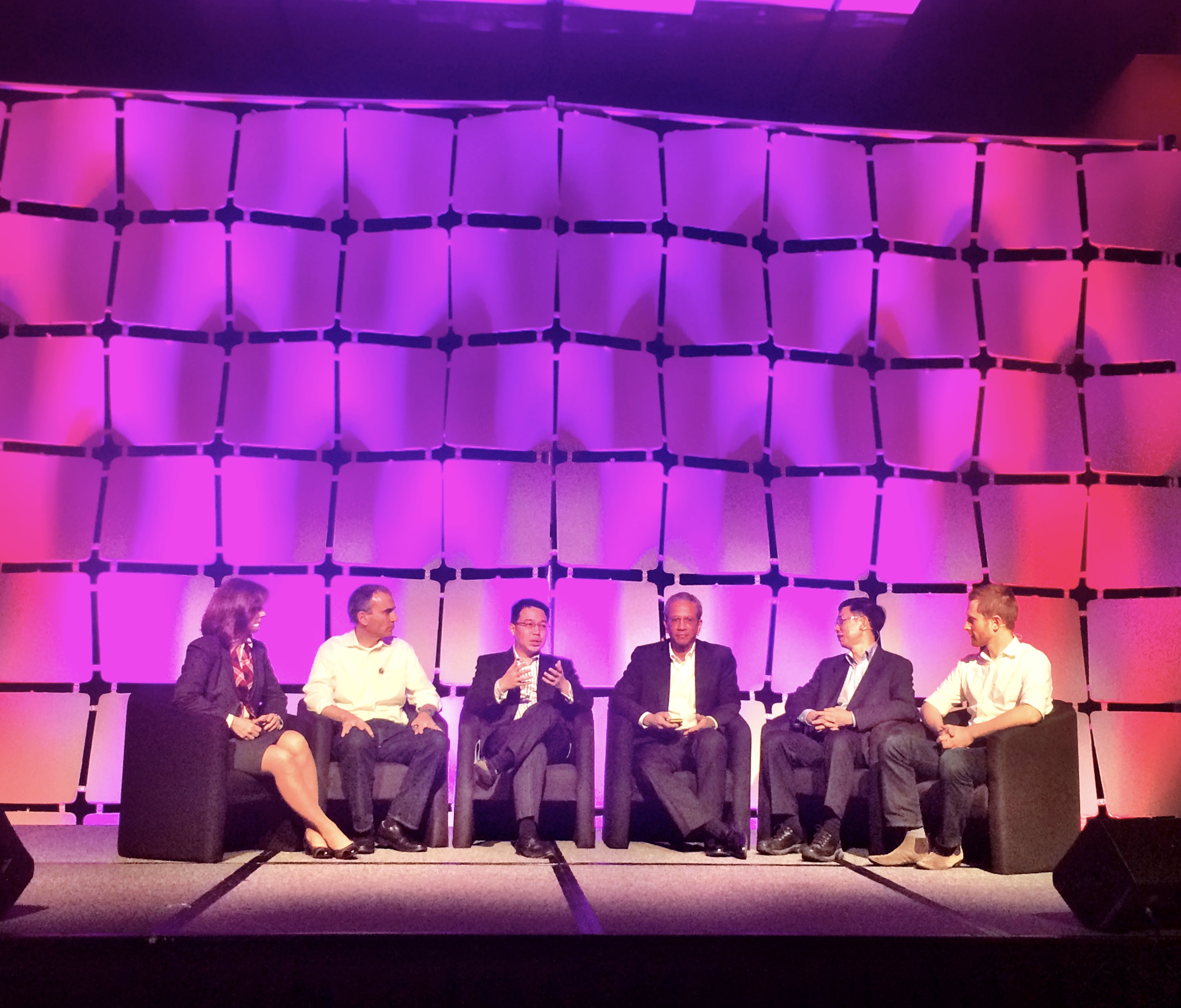
From left: former astronaut Bonnie Dunbar, Virgin Galactic’s Steve Isakowitz, Gian Yi-Hsen of EDB, Daniel E. Hastings of SMART, Kay Soon Low of Nanyang Technological University, and Chris Boshuizen from Planet Labs
In a speech during the Space 3.0 segment in EmTech, Kay Soon Low, director of the Satellite Research Center in Singapore’s Nanyang Technological University, broke down a satellite launch mission into three components: the space segment involving the building of the satellite, the launch segment where the satellite is mounted onto the rocket, and a ground segment where an earth-bound station communicates with the satellite.
Singapore can play a major role in everything but the launch bit, which Gian says would require a safety buffer of at least a 30 kilometer radius (Singapore is only 50 kilometers long from East to West). Everything else is fair play, from the research and manufacturing of satellite components to its operation to the creation of services that leverage on data streaming from these space computers.
“I think a lot of the value will be found through the services [derived from satellites and their data]. That said, the hardware manufacturing is also very exciting because it is also a relatively high-value industry. A lithium-ion battery may cost you $5 in the shop for your handphone but it may cost you $5,000 for something of equivalent capacity but put in space because of all the rigorous testing and more stringent requirements,” said Gian.





Stay updated on the go with our mobile app.
Get latest insights with smoother, more personalized experience through TIA mobile app.