 Peter Cowan · · 6 min read
Why solar-powered water pumps may be doing more harm than good
Welcome to The Offset! Delivered once a month via email and through the Tech in Asia website, this free newsletter breaks down the biggest stories and trends in greentech. Get it in your email inbox by registering here.
Hi there,
One of my favorite sayings is “You can’t see the forest for the trees.”
It encapsulates the problem with short-sighted thinking that all humans face, from the biggest decisions down to the smallest. A fifth beer for the night won’t hurt until your alarm goes off at 7 a.m. the next morning.
Hangovers are one thing, but short-sighted thinking on large-scale environmental decisions is another kettle of fish. Just look at today’s Deep Read, which dives into the solar-powered water pumps being used in India and elsewhere.
While cheap irrigation water may seem like a great thing, the long-term consequence appears to be the depletion of groundwater wherever these pumps are used. That’s the type of short-sighted thinking that has lasting repercussions.
— Peter
THE BIG STORY
Vietnamese battery startups eye more green financing to power renewables push
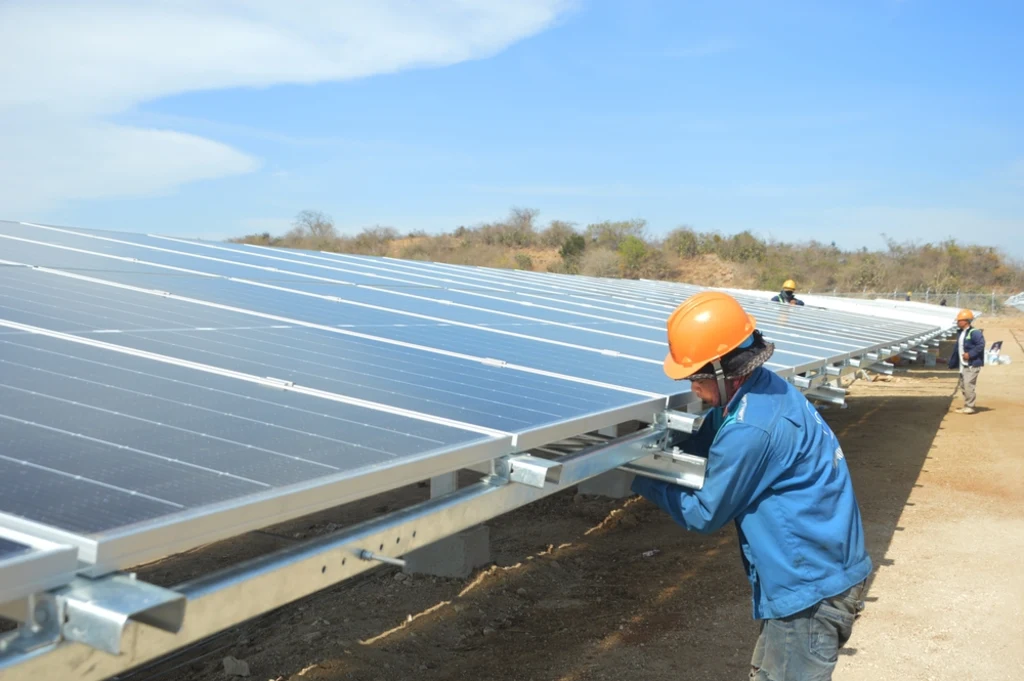
Solar panel installation in Vietnam / Photo credit: thelamephotographer / Shutterstock
Vietnam wants to push its energy mix away from fossil fuels like coal and toward renewables like hydrogen and ammonia. One obstacle to that goal is the high cost of importing batteries.
The solution could be homegrown battery technologies, particularly as government incentives are lacking, which makes it tough for businesses to pay the high upfront costs to import large battery systems.
DEEP READ
Solar-powered farming is quickly depleting the world’s groundwater supply

Image credit: Timmy Loen
Solar-powered pumps may seem like the perfect solution to the parched farmlands of places like Rajasthan in India. The tech helps bring irrigation water from beneath the ground to farmers’ fields, and by 2026, more than 3 million farmers in the country will be employing the technique.
But what happens when the groundwater runs out? That’s a question facing communities across India and Africa, as the success of solar pumps is quickly depleting the water supply beneath the ground.
Ironically, groundwater depletion will threaten food security, something the solar pumps were meant to help tackle. Yet in the short term at least, there appears to be little desire from policymakers, farmers, or development agencies to slow the pumps – even if groundwater depletion severely harms water resources.
TRENDING NEWS
Also check out Tech in Asia’s coverage of Asia’s ecommerce scene here.
1️⃣ China’s solar billionaire feels the heat as sector faces upheaval
A global supply glut of solar panels has pushed prices down, forcing Chinese solar panel billionaire Li Zhenguo – the founder of Longi Green Energy Technology – to lay off thousands of employees. A production boom in China resulted in an oversupply.
Why it matters:
Analysts fear mass job cuts across the solar energy sector as it faces a bust cycle after focusing on output rather than sustainable profits. While cheap solar panels sound like a good thing in theory, in the long run, the industry needs to find sustainable economics to make a lasting impact on the climate crisis.
2️⃣AI likely to increase energy use and accelerate climate misinformation – report
Environmental groups have warned that AI tech will likely hinder, not help, the fight against climate change. The Climate Action Against Disinformation coalition says that the tech will cause energy use to rise due to the data centers needed to power it. The coalition also warns that climate disinformation will proliferate due to the technology.
Why it matters:
Reports like this are a reminder that if AI is to be used as a tool to fight climate change, as many believe it can be, careful development and regulation of the tech are likely needed.
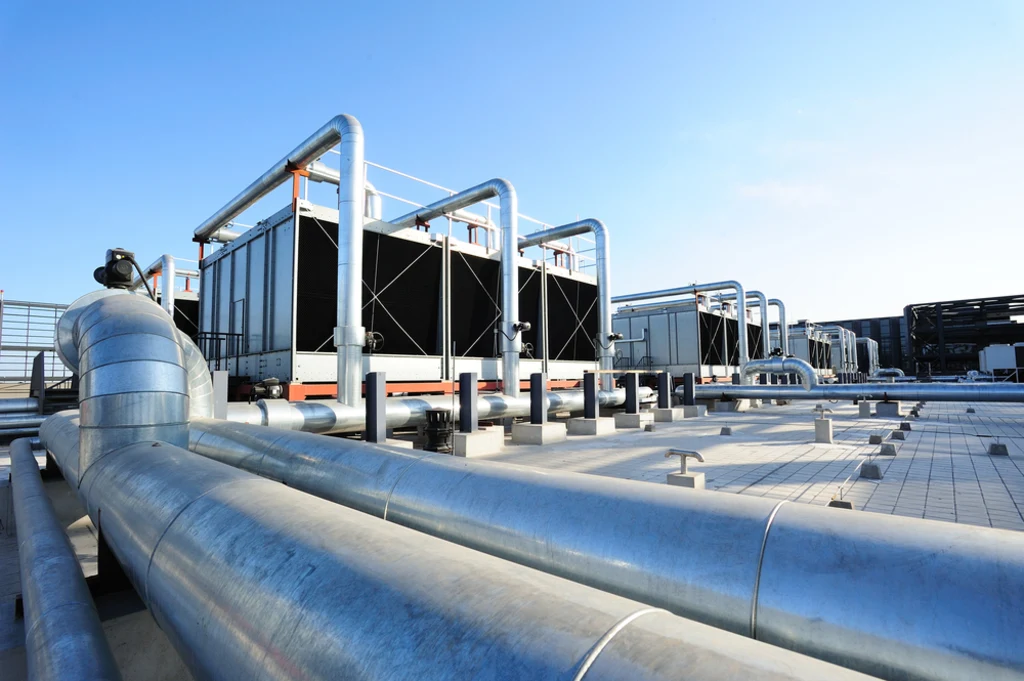
Data center cooling towers / Photo credit: WaitForLight / Shutterstock
3️⃣Xiaomi jots down 50,000 orders in 30 minutes in maiden EV’s launch
Chinese tech player Xiaomi has expanded its product lines beyond smartphones and electronics by joining the electric vehicle race. Its first model, the SU7, sold 50,000 units within the first half hour of release.
Why it matters:
More competition in the EV market will likely help keep pushing prices down and quality up, spurring adoption.
4️⃣VinFast founder to invest $404m in new EV charging venture
Pham Nhat Vuong, founder of Vietnamese EV maker VinFast, has launched a new venture called V-Green to develop and deploy an EV charging station ecosystem. V-Green will invest nearly US$404 million over the next two years on the effort.
Why it matters:
Replacing internal combustion engines with EVs means also replacing the fuel pumps. It’s a monumental undertaking the world over, and US$404 million is a drop in the ocean but a welcome one.
5️⃣China doubles down on greentech, energy transition
China’s Premier Li Qiang has announced that the country plans to accelerate investment in clean energy projects. The government is aiming for the solar panel, EV, and lithium battery industries to spur economic growth and replace the clothing, furniture, and appliances sectors.
Why it matters:
More spending by the world’s second-biggest economy on energy transition signals to the rest of the planet that they better catch up.
STARTUP WATCH
1️⃣ Openspace leads SG carbon project startup’s $2.6m seed round
Thryve.Earth is a carbon project developer that uses a tech stack to assess, design, and implement carbon projects. The Singapore-based firm has scored US$2.6 million in a seed funding round led by Temasek-backed VC firm Openspace.
2️⃣ Vietnam’s Alternō secures $1.5m in funding
The Radical Fund and Touchstone Partners have co-led a US$1.5 million round in Vietnamese battery startup Alternō. The firm provides thermal energy storage using sand battery technology.
3️⃣ Sustainable packaging firm bags $7.2m to make India’s F&B industry greener
India-based sustainable packaging firm Bambrew has secured US$7.2 million in a series A funding round led by Blume Ventures. According to founder Vaibhav Anant, Bambrew has saved more than 60,000 tons of single-use plastic and over 125,000 tons of CO2 emissions by creating materials that are more functional and cost-efficient than plastic.

Photo credit: Shutterstock
4️⃣ Climate tech startup Sprih raises US$3 million for global expansion
Sprih, a startup based in India that provides a carbon emissions management platform, has raised US$3 million in seed funding in a round led by Leo Capital. The firm plans to use the funds to expand in key markets like the US and Europe.
5️⃣ SG alt-meat makers Shiok Meats, Umami Bioworks set to merge
Singapore-based cultivated seafood startups Shiok Meats and Umami Bioworks are set to merge. The new entity will use the Umami Bioworks name while retaining the Shiok Meats brand.
That’s it for this edition – we hope you liked it! Do subscribe to continue receiving The Offset.
See you next month!
The Offset is made possible thanks to Taiwan Mobile.
The company recently earned its fourth “A” grade from the Carbon Disclosure Project.
Taiwan Mobile is on a mission to transition to 100% green energy by 2040.
Stay updated on the go with our mobile app.
Get latest insights with smoother, more personalized experience through TIA mobile app.
Recommended reads
 Indonesian AI startup goes global
 Forrest Li on scaling Sea, building smarter bots, and founder grit
 An AI assistant that joins sales calls and scores team skills
 SGX’s CEO says it doesn’t need a unicorn to win
 SMEs want AI too, but not the kind Big Tech is selling
 Oatside’s alt-milk rise hits a profitable gear
 Alibaba’s financial health in 12 charts
 Asia’s telcos bundle AI into mobile plans. Will it pay off?
 M-Daq chases bigger clients as revenue falls, losses grow
 VC tracker: Accel raises US$3.5b, including US$550m for India





Editing by Collin Furtado and Lorenzo Kyle Subido
(And yes, we’re serious about ethics and transparency. More information here.)




