- Insights This article was written by a TIA community member. Insights pieces undergo the same rigorous editorial process that newsroom-produced articles have.
 Sau Sheong Chang · · 6 min read
Will AI image generators kill the artist?
I was young when I first listened to Video Killed the Radio Star by the Buggles. I thought it was a fun and catchy song, but I had no idea what it was all about. That was fine, I was just a young boy listening to the radio and watching videos on VCR machines. I didn’t pay much attention to the title or the lyrics.
It was much later that I realized what the lyrics actually meant.
Video killed the radio star
Video killed the radio star
In my mind and in my car
We can’t rewind, we’ve gone too far
Pictures came and broke your heart
Put the blame on VCR
The song was part of the Age of Plastic album, which explored nostalgia and anxiety over the effects of modern technology. While the album was released more than 40 years ago, these themes still ring true, especially in the world of AI text-to-image generators.
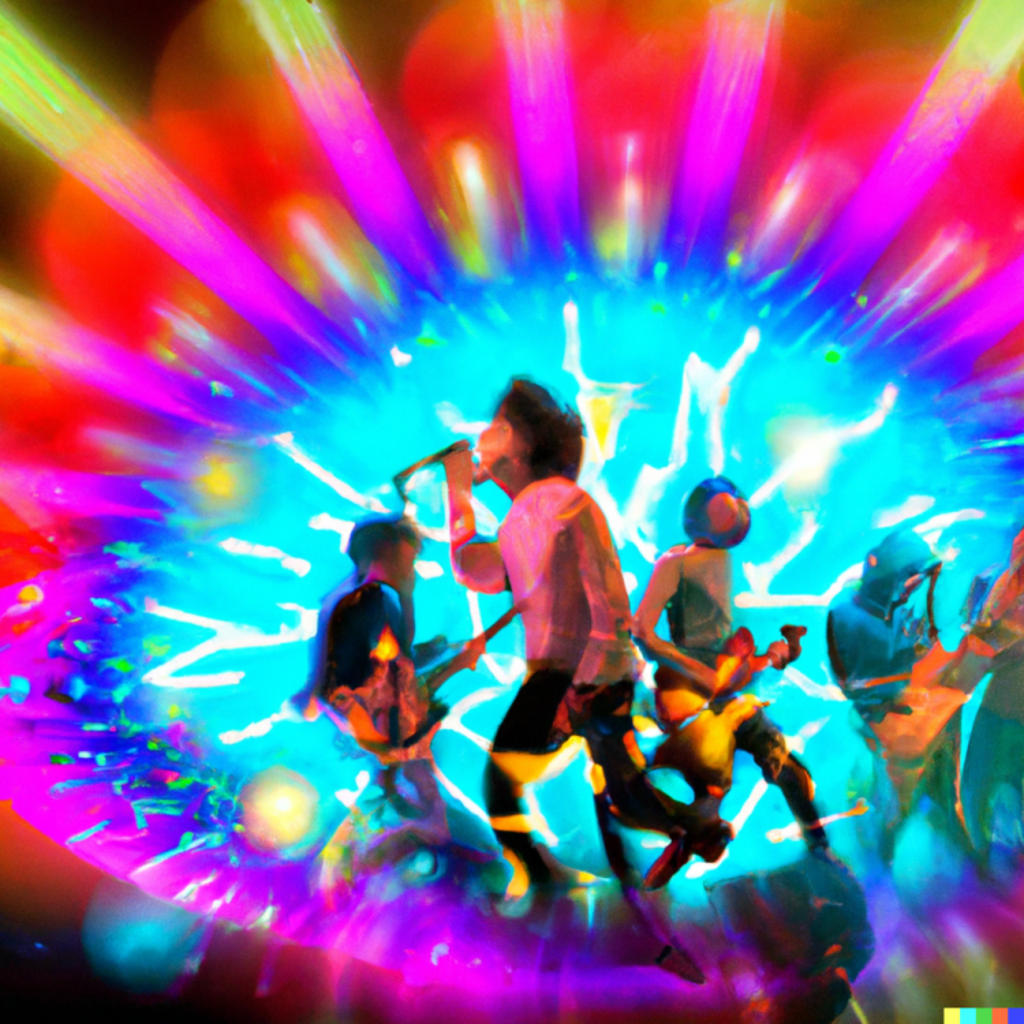
Image created by Dall-E 2 using the text prompt “video killed the radio star, playing in a band singing with psychedelic lights in the style of an 80s pop song” / Photo credit: Sau Sheong Chang
How text-to-image tech stands today
You know a technology has made it to the big leagues when TikTok starts rolling it out in its app. AI text-to-image generators are blisteringly hot. Models and startups are mushrooming overnight, and entire ways of thinking are being overthrown every other week.
The most well-known text-to-image AI model is OpenAI’s Dall-E, which was released in January 2021. OpenAI launched another model, GLIDE, in December 2021, and not long after, Dall-E 2 was announced in April 2022. The pace of these releases is dizzying.
Google, for its part, announced its highly anticipated Imagen model in June 2022. Even though it’s not released yet, reports have started extolling how it has completely outperformed the king-of-the-hill Dall-E 2.
Joining in the wave, Meta announced its text-to-image tool, Make-A-Scene, in July this year. This is a bit different from the others, as it allows users to supplement text prompts with a simple sketch if they wish. Even Microsoft has jumped on the bandwagon with its VQ-Diffusion AI model.
The big companies don’t have a monopoly over the text-to-image gold rush either. There are plenty of small startups in the same space.
Midjourney, a startup/research lab with fewer than 10 employees, has a popular following. In fact its Discord server has more than 4 million members, even though it just started open beta in July 2022. NightCafe is another well-known player in the text-to-image generation scene. It’s based in Sydney and has just six employees, including the founder and his girlfriend.
However, the new darling of AI text-to-image startups is Stability AI. Gushing write-ups have been written on the company, and the hype is massive. It went open beta in August 2022 and is closely tied to the new and powerful stable diffusion text-to-image AI model that it sponsored, which was developed by the Ludwig Maximillian University of Munich.
Stability AI took a step further from other startups by not only having its own powerful AI model but by releasing the model as open source.
Fake art, real consequences
A revolution, not evolution





Stay updated on the go with our mobile app.
Get latest insights with smoother, more personalized experience through TIA mobile app.