 J.T. Quigley · · 7 min read
Fujitsu’s new wearables might not be sexy, but they could save your life
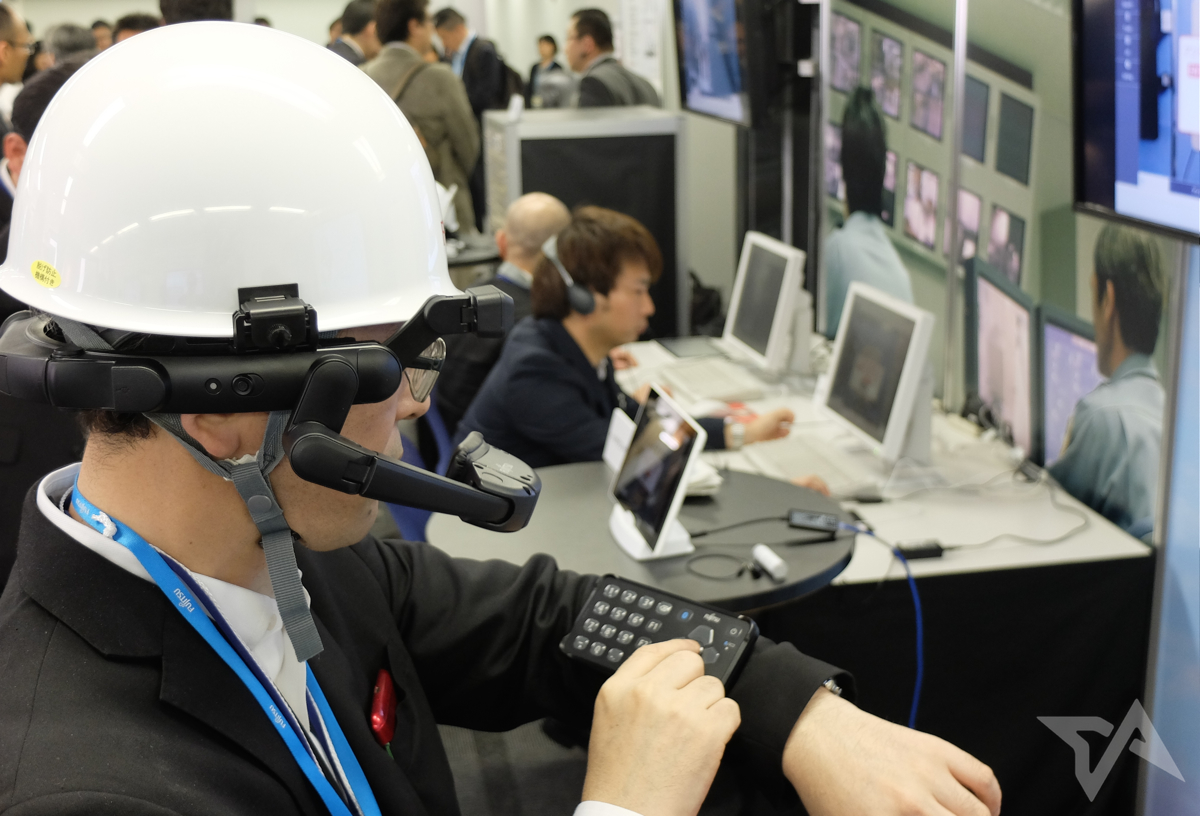
When people think about the term wearable tech, many probably conjure up images of Google Glass and Apple Watch. These kinds of wearables understandably steal headlines – they’re often made by some of the biggest names in tech and are perceived as fashion statements. It’s only a matter of time before US Weekly puts together an exposé on how many celebrities are wearing the gold Apple Watch Edition.
Love them or hate them, consumer wearables are sexy – especially for those of us in the media. But it’s the decidedly un-sexy enterprise wearables that may become the unsung heroes of the smart gadget movement. Sure, you might not be able to use them for Instragramming, but enterprise wearables could help maintain all of that behind-the-scenes infrastructure that keeps the world spinning – all while potentially saving lives (perhaps even jobs) in the process.
Japanese tech giant Fujitsu had four of its latest enterprise wearables on display in Tokyo yesterday. Here’s how they’re going to change the world, even if you never see them in person.
FEELythm
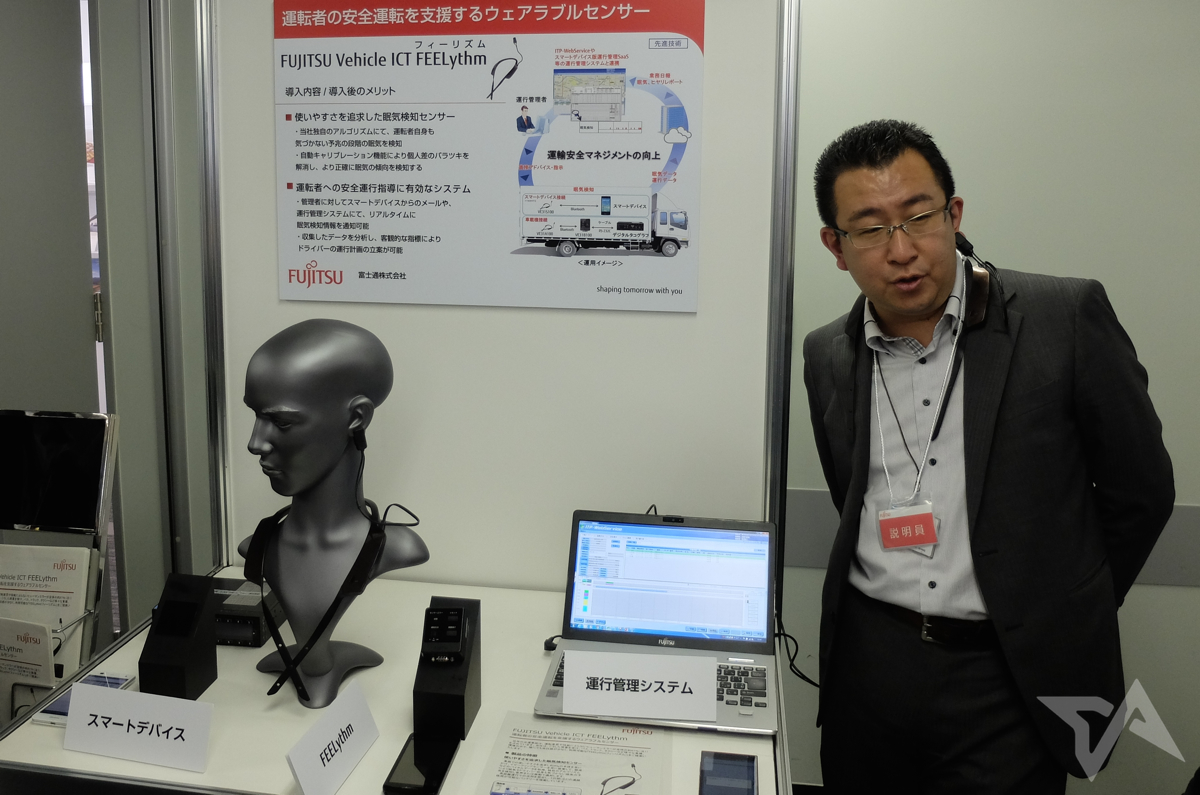
First announced back in January, FEELthym is a unique wearable device for long-haul truck, bus, and taxi drivers. It features two main parts: the wearable itself and a receiver unit that can be mounted inside the vehicle’s cabin.
Worn around the neck and shoulders, FEELthym utilizes a pulse sensor that clips to a driver’s earlobe. Using an algorithm developed by Fujitsu Laboratories, the pulse sensor can gauge drowsiness. If it detects that a wearer is on the verge of falling asleep, it can trigger a gentle vibration in the neck unit or initiate an audio warning. The data is also transmitted to the fleet’s dispatch personnel, who can preemptively radio in with the driver and check on their condition if the pulse data indicates that they’re feeling fatigued.
FEELthym is also equipped with a learning function that allows it to improve the accuracy of drowsiness detection on a per-driver basis. Information is stored in the cloud and shared with fleet management, allowing them to analyze potentially dangerous routes or at-risk drivers. The device’s battery lasts for five days on a single charge.
According to Fujitsu – citing data from Japan’s Ministry of Land, Infrastructure, and Transport – nearly 70 percent of motor vehicle accidents in recent years have been the result of human error not attributable to driving violations or skill. FEELthym has real potential to save the lives of professional drivers and the ordinary people who share the road with them. The device went on sale in March.
Ubiquitousware HMD





Stay updated on the go with our mobile app.
Get latest insights with smoother, more personalized experience through TIA mobile app.











📅 Upcoming Events
22 October 2026
Payoneer x CSPN Summit 2026