Leighton Cosseboom · · 3 min read
Indonesia turns to satellite internet to fix broadband holes

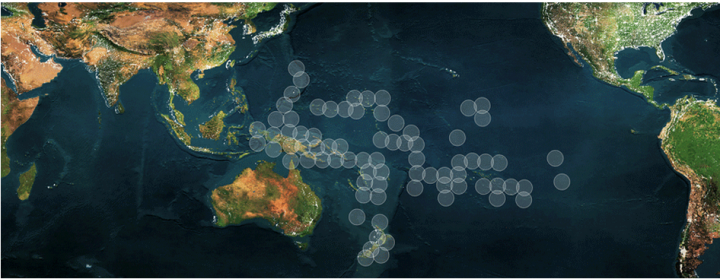
Indonesian satellite service provider BigNet announced today that it signed a US$78 million, long-term agreement with Singapore-based Kacific Broadband Satellites. The goal is to bring a new form of high-speed broadband service to Indonesia starting in 2017. Kacific aims to beam signals from its satellites to cover the entire archipelago, with emphasis on providing good quality, affordable internet to developing areas in East Indonesia.
Indonesia is comprised of more than 17,000 islands. Kacific is encouraged by the nation’s large land area combined with its roughly 250 million inhabitants, which both present a big opportunity for the satellite internet business.
While a number of operators provide broadband to the most densely populated areas in Indonesia, the nation is developing an ambitious national broadband plan, in which new broadband internet satellite operators like Kacific will play a key role in providing connectivity to secondary cities and villages. According to the firm, satellite internet can be particularly useful for schools, government buildings, enterprises, and public internet access points.
Kacific and BigNet say customers will get affordable high speed internet by installing a small, inexpensive satellite dish (VSAT), even in isolated islands and remote rural locations.
“This is a key milestone for Kacific, and a great promise for Indonesia,” says Kacific CEO, Christian Patouraux. “Bringing connectivity with disruptively low cost can unlock tremendous untapped demand in the Southeast Asian and Pacific countries.”
See: Fiber-optics and smart cities: Indonesia gets aggressive with infrastructure modernization
Fast and cheap internet for all
In large parts of Indonesia, internet connectivity, sometimes only available through 2G and 3G networks, operates well below the expectations of modern enterprises.
“People living in areas where forestry and fishing are the predominant industries have some buying power, but not enough for most internet service providers to make a business case to serve them using fixed line networks,” says Zoel Gandhi, business development director of BigNet.
Nicolas Tannady, CEO of BigNet says that service would open up opportunities for important services to regions that would otherwise be underserved. He says:
Hospitals and clinics can get advice on the diagnosis and treatment of patients from experts. Students can connect to lessons from the best teachers and access quality resources online. Project execution and emergency planning and disaster recovery programs will be more effective. The service will also create opportunities for the wider public to do ecommerce and access affordable bandwidth, which can subsequently increase wealth of communities.
According to Patouraux, both companies believe that if they can lower the price of broadband sufficiently, they will generate demand and create a market where others thought none existed in countries like Indonesia.
Editing by Osman Husain and Steven Millward; lead image from NOAA Photo Library.
Stay updated on the go with our mobile app.
Get latest insights with smoother, more personalized experience through TIA mobile app.
Recommended reads
 Bolt seeks country manager for Malaysia launch
 Jaya Grocer teams up with earned-wage access firm to boost productivity
 Tesla to build Indian EV factory
 VinFast sets up first EV dealership in Indonesia
 Nvidia co-invests $200m in Indonesian AI center amid SEA push
 Carro enters Hong Kong with Beyond Cars acquisition
 Weixin makes ‘strategic’ tie-ups in Singapore as China reopens
 Razer ordered to refund $1.1m for misleading mask marketing
 Grab to close cloud kitchen ops in Indonesia, lays off employees
 VinFast charges into Thailand with 15 dealer partnerships