 Elaine Ramirez · · 4 min read
Jandi, the Korean Slack, raises $2.5m to double workforce for Asia expansion
The makers of Jandi, a workplace productivity platform, have raised US$2.5 million in convertible bonds to double its workforce this year to over 100 in its aim to become the Slack of Asia.

Toss Lab, based in South Korea, said Thursday that the pre-series A round led by Qualcomm Ventures and Korea’s HnAP in December 2015 will be used to expand its developer, accounting, and customer relations teams as it eyes new geographies, especially in Southeast Asia.
Adding to the US$2 million angel round it raised in 2014 from Softbank Ventures, Cherubic Ventures, and others, the startup’s pre-series A funding totals US$4.5 million.
The 2-year-old startup, which claims to have over 45,000 teams and companies using Jandi, believes its software can dominate the enterprise communication space in Asia because it knows the continent best.
“Our vision is to become the leading enterprise social software business in Asia. We know the Asian work culture and how to make the Asian workplace better than other competitors as our team has [years of collective] experience and knows how to solve the problem accordingly,” Harry Yeo, Toss Lab’s public relations officer, tells Tech in Asia.
Emojis in the workplace
Jandi’s offerings are not very different from Slack, Flowdock, and the like – its popular features include archived and searchable messages and files, @mention alerts, and collaborative file management. But the startup realized that over 90 percent of teams, at least in Korea, do not even use enterprise platforms.
Workers opt for consumer chat apps once their current work tools become archaic due to the lack of a good alternative – Slack doesn’t cater to Asian workplaces, the startup claims.
“Many small and medium-sized businesses, which are our target customers, use personal messaging platforms such as LINE and KakaoTalk at their workplace and still have no idea why an enterprise communication tool is necessary for teamwork,” Harry explains.
To break through that barrier, Toss Lab strived to localize the product for Asian teams. On top of language support in English and four Asian languages (Korean, Japanese, and traditional and simpified Chinese), the user experience includes all-important emoji sets, and a feel familiar to users of LINE, KakaoTalk, and WeChat.
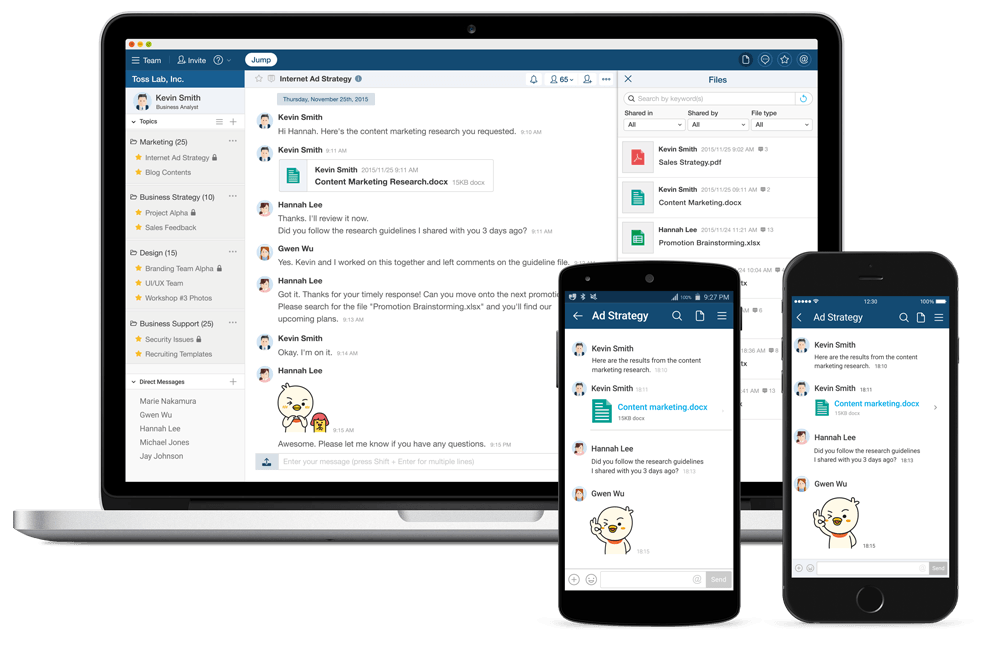
One more reason that globally popular platforms like Slack have failed to gain a foothold in Asia, Harry adds, is their grassroots approach to gaining traction, which isn’t very effective for hierarchical Asian teams.
“Slack chose a bottom-up approach to promote its service by distributing press releases and being active on Twitter to reach their target audience. That worked well in the States, but the Asian market is different and needs a top-down approach to convince decision-makers to adopt the use of business-to-business software,” he says.
Sharks in a red ocean
Sailing into Southeast Asia





Stay updated on the go with our mobile app.
Get latest insights with smoother, more personalized experience through TIA mobile app.












📅 Upcoming Events
22 October 2026
Payoneer x CSPN Summit 2026