- Premium Content It takes our newsroom weeks - if not months - to investigate and produce stories for our premium content. You can’t find them anywhere else.
 Theodora Sarah Abigail · · 8 min read
How Singapore can be 100% powered by geothermal energy
A global energy crisis is looming. In response, a four-year-old startup from Canada has set itself an ambitious goal: to deliver endless clean energy on demand from anywhere in the world.
Eavor Technologies believes its Eavor-Loop system is the answer to energy shortages. The Calgary-based geothermal startup raised US$40 million earlier this year from investors such as Singapore state investment firm Temasek, global venture capital firm Vickers Venture Partners, and oil majors BP and Chevron.
“It’s literally a giant loop deep in the ground, which certainly does sound like a concept out of a science fiction novel,” Eavor CEO and co-founder John Redfern told Tech in Asia. “But it’s very real, and we have plans to open our first commercial plant in Germany by 2022.”
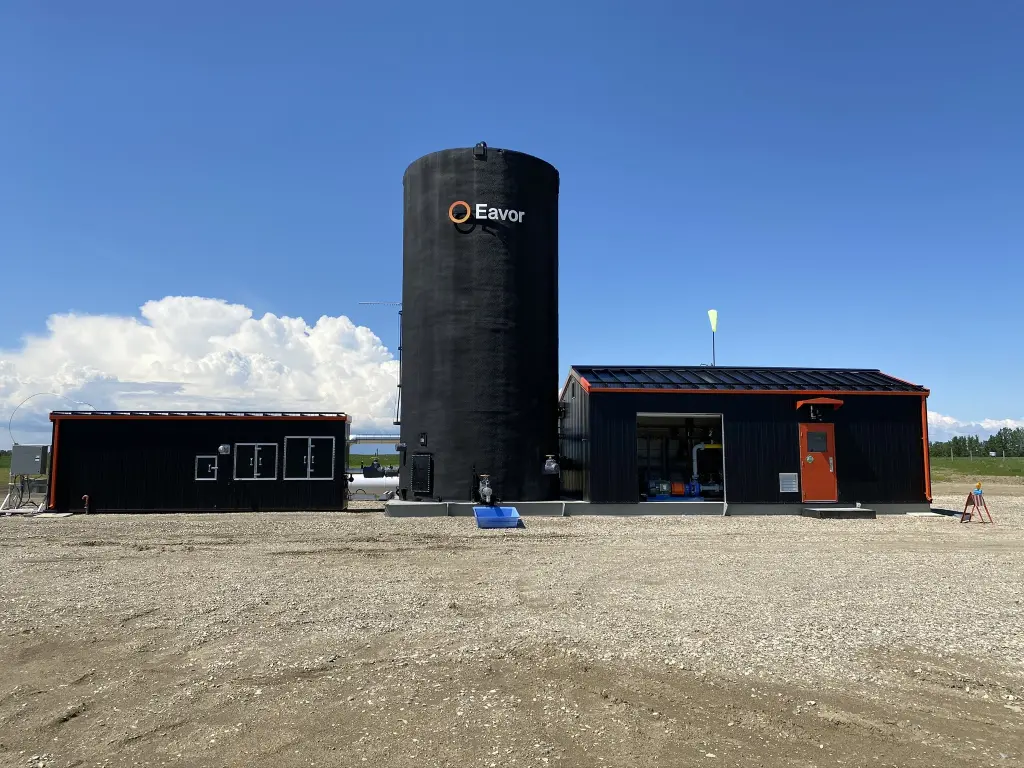
Eavor’s prototype plant / Photo credit: Eavor
All currently available sources of energy have their shortcomings: Fossil fuels aren’t sustainable, solar and wind energy is unreliable and difficult to adopt globally, hydroelectric power is ecologically disruptive, and fission produces nuclear waste.
In small countries like Singapore, there isn’t enough space to install fields of solar panels or wind turbines. Moreover, solar energy generally requires a significant investment in storage capacity such as batteries, resulting in higher overall costs.
And then there’s geothermal energy, generated from the heat under the Earth’s surface. Even though the planet’s core is always hot, harnessing its power is still an incredibly demanding task.
Before Eavor entered the picture, companies looking to produce geothermal energy had two options: They could either spend millions searching for underground hot water reservoirs (traditional geothermal power) or increase the availability of hot water by injecting huge amounts of fluid into the ground (via an enhanced geothermal system, or EGS).
The downside? Not all regions have hot underground aquifers. Even if they do, locating them isn’t always easy and overuse could result in the depletion of the water source.
Meanwhile, EGS solutions that pump water to the surface can themselves consume between 50% to 80% of the energy generated, according to Redfern. This “parasitic pump load” reduces efficiency.
EGS solutions can also increase the risk of seismic activity, contaminate aquifers, and produce brine or fluids, which require even more energy to be filtered.
What’s so special about an Eavor-Loop?
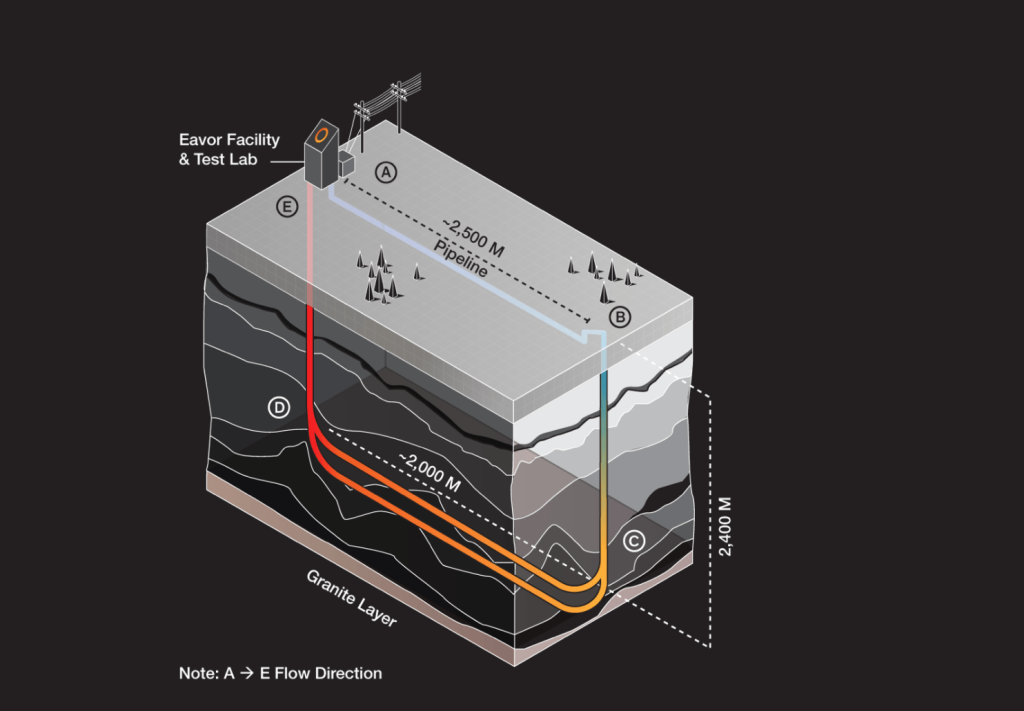
Unlike its predecessors, the Eavor-Loop is a closed-loop, conduction-based system. The company lays a series of pipes several kilometers down to form a loop. A fixed amount of fluid is then circulated through the sealed pipes. As this liquid travels around the loop, it picks up heat from the Earth’s core. Finally, this heat is harvested to generate electricity.
The Eavor-Loop doesn’t need a pump to function. Instead, denser, colder fluid at the surface pushes down on hot fluid nearer the Earth’s core, causing the liquid to circulate continually. This “thermosiphon” method is already used in smaller devices such as furnaces, boilers, and water heaters.
Why wasn’t the Eavor-Loop concept realized sooner?
From fiction to fact
A matter of national security
Stay ahead in Asia’s tech landscape
This is premium content. Subscribe to read the full story.
If everything goes to plan, this Temasek-backed technology could be game-changing.
We know this is not ideal. ⌛ Sign up in 20 seconds. Cancel anytime.
Our subscriber community includes professionals from these companies:





Stay updated on the go with our mobile app.
Get latest insights with smoother, more personalized experience through TIA mobile app.










📅 Upcoming Events
22 October 2026
Payoneer x CSPN Summit 2026