 Malavika Velayanikal · · 5 min read
Meet the blind ultra marathon runner pushing boundaries with tech
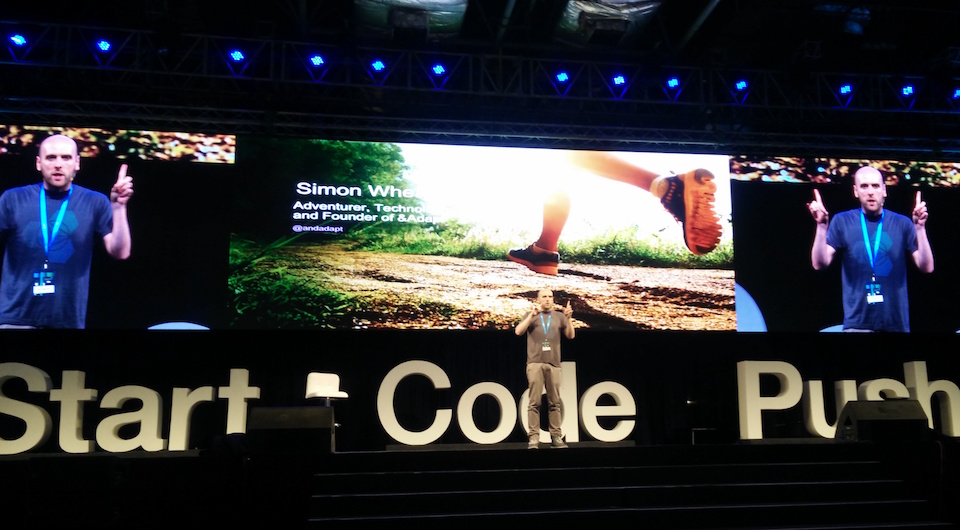
Simon Wheatcroft at the IBM conference in Bangalore. Photo credit: Tech in Asia.
When I saw him sitting on the front row staring intently at a video about his marathon runs playing on stage, it was hard to imagine he is blind. Later, he explained how he uses sounds and bright lights, which he can still faintly discern, as markers. But now he’s pushing the boundaries of what he can do with the help of a smartphone app IBM is helping him develop.
Simon Wheatcroft tested the app at the Boston marathon this year. He had a couple of guides running with him there, but later he ran solo in a 250-kilometer desert race. “I never thought I could run solo. But technology allowed me do something never done before,” Simon says.
It wasn’t tech, however, that got him started in exploring new possibilities. It was an idea.
A dream to climb a mountain
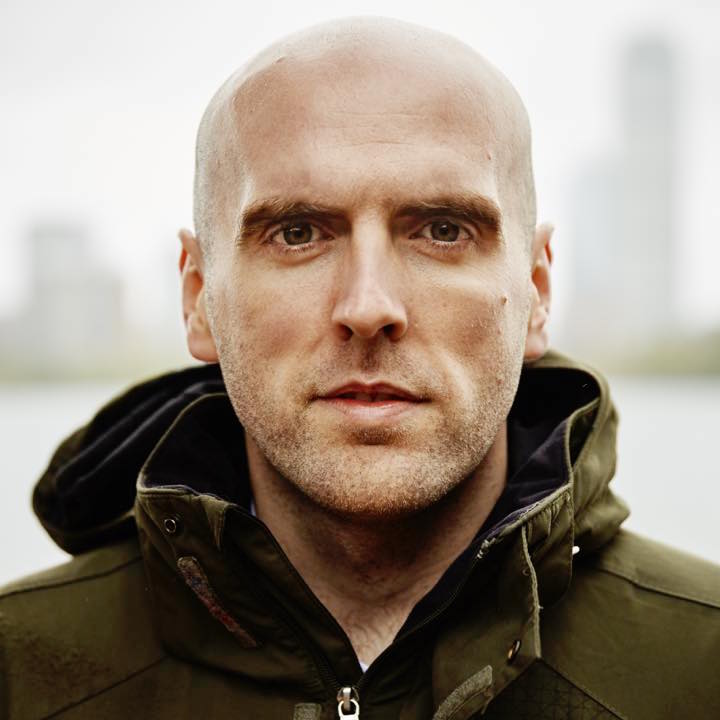
Simon Wheatcroft. Photo credit: &Adapt.
Simon has a genetic disorder that degenerates the retina. He became aware of it when he was 13 and by age 17 he was blind.
To overcome his depression, he decided to get out of the confines of his everyday life and climb the Half Dome, a granite mountain in the Yosemite National Park, California. He had a ring in his pocket and wanted to propose to his girlfriend at the top of the mountain. “How far can the top be,” he thought. “I will just keep climbing.”
Neither he nor his girlfriend had ever climbed a mountain before. When he came up against sheer granite faces, he was forced to stop. He had carried on as far as he could, but it was depressing to think he could not climb a mountain because he couldn’t see.
Then he decided to take up running – again to push the boundaries of mobility that blindness had imposed on him.
‘I ran until I could no longer stand’

Photo credit: Pixabay.
He began on an empty football ground at night, running up and down from one end to another. The he moved to a closed road, without cars or pedestrians, where he used Runkeeper, a GPS-powered fitness app with IBM cloud-based data support. It gave him audio cues to stay on track.
When he was confident enough in using the app to navigate his way, Simon began pounding pavements on the open road. He ran into lamp posts and other obstacles, but gradually learned to avoid them. “Pain is a great teacher,” he says.
Adapting an app to a blind runner
The desert run and new possibilities





Stay updated on the go with our mobile app.
Get latest insights with smoother, more personalized experience through TIA mobile app.








📅 Upcoming Events
22 October 2026
Payoneer x CSPN Summit 2026