 Sharanya Pillai · · 3 min read
SG’s platform worker protections to kick in from January 2025
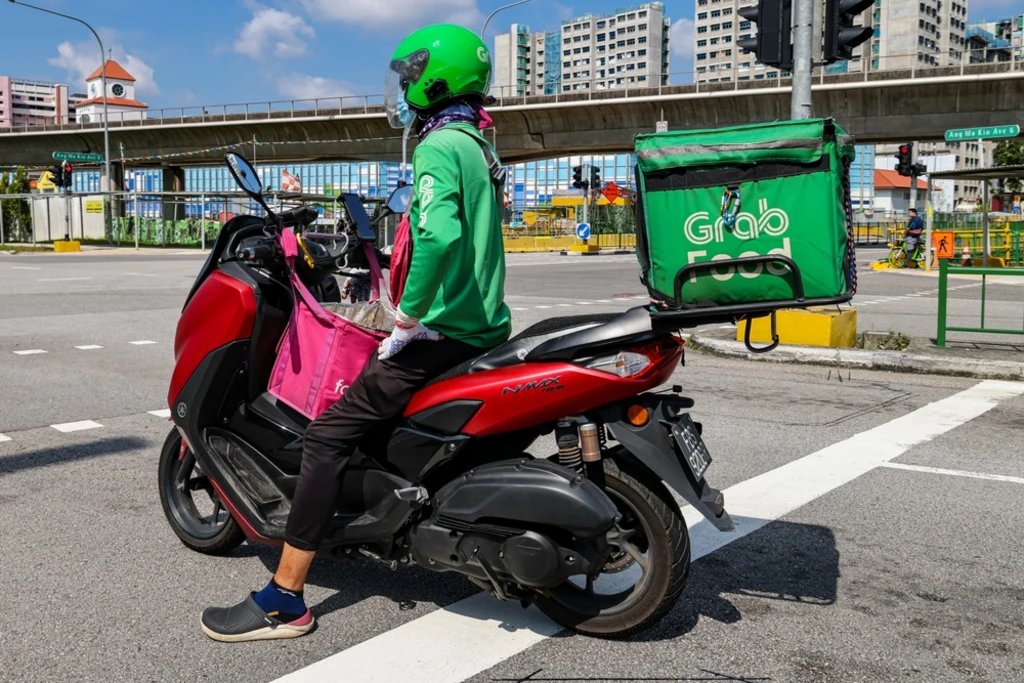
Photo credit: Dr David Sing / Shutterstock
Singapore’s previously announced labor protections for ride-hailing and on-demand delivery workers – otherwise known as platform workers – will kick in from January 1, 2025.
From that date, on-demand service operators such as Grab and Foodpanda must provide platform workers with work injury compensation aligned with that of employees. Operators will have to contribute to the Central Provident Fund (CPF) savings scheme, while workers’ required contribution rates will rise.
The companies must also allow platform workers – who numbered at 70,500 in 2023 – to be represented by bodies with similar powers to unions.
The implementation date was announced by Senior Minister of State for Manpower Koh Poh Koon on August 22 during a visit to Foodpanda’s Robinson Road office. This comes two weeks after a bill was tabled in Parliament to implement the protections.
“The fundamental thing that we want to do is to make sure that the platform economy continues to develop sustainably, and to make sure there is a level playing field for all the operators in this space to also treat all working persons equally,” Koh told reporters.
Separately, the government will enhance its previously announced CPF transition support scheme for low-wage platform workers to ease them into making higher CPF contributions.
Announced in Budget 2023, the Platform Workers CPF Transition Support (PCTS) scheme gives monthly cash payouts to low-wage platform workers to offset part of their increase in CPF contributions.
The scheme is being enhanced in two ways. First, the payouts will cover 100% of the increase in platform workers’ CPF Ordinary and Special Account contributions in 2025 – up from the previously announced offset of 75%.
“This means that the government is paying fully for platform workers’ CPF contributions in 2025. Platform workers will not see a drop in their take-home pay and, at the same time, will see more contributions into their CPF [next year],” said the Ministry of Manpower in a statement.
The offset for 2026 will be increased to 75%, up from the previously announced 50%. The offsets will taper off from that year and cease in 2029.
The second enhancement is to the PCTS’ qualifying monthly income cap. This will be raised to S$3,000 (US$2,300), up from the previously announced S$2,500 (US$1,900), so that more workers can benefit from the scheme.
This corresponds with a similar enhancement to the Workfare Income Supplement (WIS) scheme, a separate initiative that tops up the salaries of lower-income workers. From January 2025, the WIS’ qualifying monthly income cap will also be raised to US$2,300, from around US$1,900 before.
Under the upcoming protections, platform workers and companies will need to make CPF contributions at the same rate as employees and employers, as long as the worker is aged below 30 in 2024. Those aged 30 and above that year are not obliged but can choose to opt into this full CPF regime.





Stay updated on the go with our mobile app.
Get latest insights with smoother, more personalized experience through TIA mobile app.








📅 Upcoming Events
22 October 2026
Payoneer x CSPN Summit 2026