Bernard Leong · · 5 min read
Thoughts on Setting up in China from an SG Entrepreneur in Beijing
Setting up an enterprise in China is a relatively challenging task. While traveling across from Shanghai to Beijing, I met up with my friend Boon, a Singaporean entrepreneur who set up shop in China. He runs the Eden Juice bar, located somewhere in Sanlitun North Road, Chaoyang District (an area that is reminiscent of Holland Village in Singapore). While following him across Beijing, here are some thoughts that I extracted out from him which may be of help to those who might be thinking about setting up in China:
Thoughts for SG Entrepreneurs before setting up in China
- Networking and Importance of Local Partners: It is not advisable to go into China without working with someone local there. The important thing to note when talking to local people there is not to make a quick assessment but rather take some time to build the relationship. You should also find ways to test the person who you might be interested to get as a local partner so that you can roughly know if the person really know what he or she is doing. Of course, be careful that everyone does name-dropping in Beijing and it would be better if you slowly sieve your way through. Being able to speak Chinese makes a lot of difference to get the first impression. If you can’t speak the language properly, the Chinese will like you, similar to the French who prefer you speak broken French to English to them.
- Sales lead can be tedious and ardous for many: If you are talking to a potential customer or client particularly in the realm of sales, it is not so straightforward that you can get them on board after a while. Don’t take too long in following one lead. Oftentimes, you will have to go through many iterations to find the customer. Hence, it is frustrating but it is part of the process. It is also good to speak to people who are in your relevant industry so that they can offer you leads and help along the way. Of course, the rule of doing due diligence on that person is important. One advice is to hire a local who you have properly checked out to do sales for you.
- Check Currency Transactions: If you are setting up retail or F&B businesses, it is important to make sure that you have a device which most shops in China used to sieve out fake Chinese RMB notes. I observe a lot of shops doing checks on the currencies from Shanghai to Beijing. You should try making purchases in retail stores and you should be able to check out how the cashier checks the RMB notes.
- Following up with people in Shanghai and Beijing: In Shanghai, the follow up procedure after meetings is closer to the West, i.e. you send a follow up email in Mandarin and then with the action points required for both parties. While in Beijing, you may find yourself caught in many discussion points and you have to really restrict what your follow up points are with the people there. Beijing is more representative of the rest of China while Shanghai is a hub where most foreigner expats set up their shops first before their entry into the rest of the Chinese domestic market.
From a SG Entrepreneur in Beijing – Eden Juice Bar
My friend, Boon is a serial entrepreneur and while running his tech company for 9 years and making the transition from Singapore to Beijing for about 2-3 years ago, he went back to basics and started a juice bar in Sanlitun North Road, Chaoyang District. He ran it with some partners, and the most distinct feature you will find out about the juice bar are the chairs based on an unique European design. If one needs a comparison to Singapore, Sanlitun North Road is reminiscent of Holland Village in Singapore where most expats will hang out. In fact, for the Apple fans, the Beijing Apple store is right next to the the juice bar. For one, he picked that place because he knows that the foreign expats prefer the healthy juicebar type of drinks. In fact, if you think that it’s easy to set up such a business, there are a few challenges that he has faced in running this enterprise for a year:
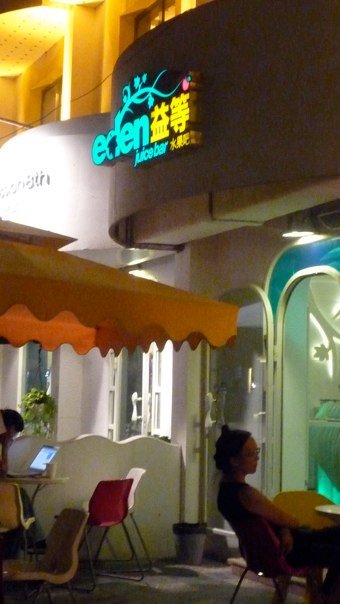
- Getting the proper ingredients: While China is plagued with quality problems on certain dairy products, one of the challenges Boon and his team faced is to find a good source of milk that is imported directly from outside China. The reason is clear, the juice bar focussed on quality drinks and is a luxury which the foreign expats can afford. Once he has established which ingredients he can buy (which is directly imported to China) and which ones he can get it fresh from the market, it is straightforward to work out the prices.
- Location, Location and Location: It is important to stress that location is an important issue for the Eden juice bar. If you have a niche product which only a certain group of people can afford, your natural response is to position the store right in the middle where that group of people hang out. In fact, through his juice bar, Boon has encountered the most interesting people who are passing by China to set up big multi-national companies. Just when I was there, I bumped into a senior executive from Norvatis and people who I may not be able to have access if I am in Singapore.
- Four seasons can make life complicated: So, the Juice bar sells cold healthy fruit juices and does relatively well in summer. In fact, business according to Boon, during the Beijing Olympics 2008, was amazing. What happens when Beijing hits winter? In fact, they have to go back to the drawing board and worked out how to bring people into the juice bar. Perhaps, such circumstances will push people to think about how to deal with various situations.
It’s actually an interesting time to visit my business partner and checking out how a Singaporean entrepreneur does business in China. If you are a Singaporean doing business in Beijing or making a social visit, do pop by the Eden Juice Bar, and perhaps, you will learn more about how a Singaporean entrepreneur have to deal with just to run a business in China.
Some photos from the Eden Juice Bar in the Night
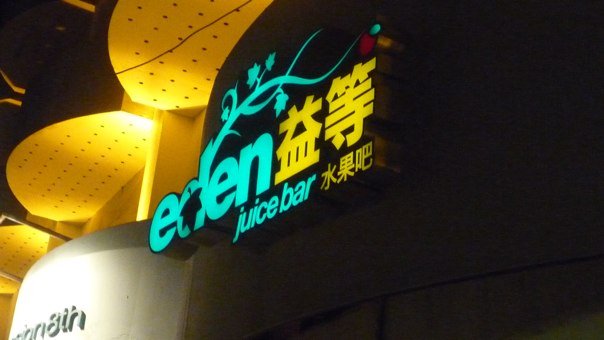
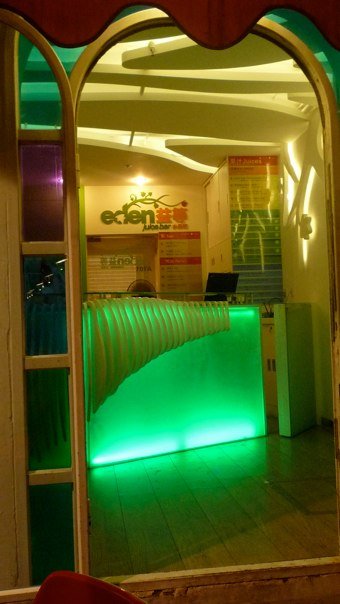
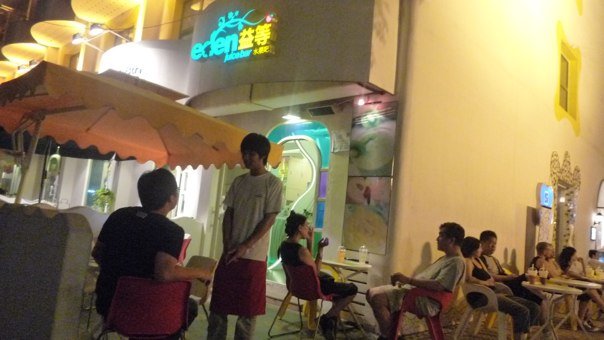





Stay updated on the go with our mobile app.
Get latest insights with smoother, more personalized experience through TIA mobile app.