 Winston Zhang · · 5 min read
Is ASEAN’s next generation of talent prepared to take on the digital economy of tomorrow?

Southeast Asia’s economy is one of the fastest growing in the world, and it is expected to be the fourth largest by 2030, behind only the United States, China, and the European Union.
A significant part of this growth is driven by the region’s digital economy, which is on an impressive upward trajectory. It has tripled in size over the last four years to reach US$100 billion and is projected to expand to US$300 billion by 2025.
This leads to all kinds of trickle-down effects, particularly in the job market. Physical labor and roles that consist of repetitive tasks are likely to see less demand, and possessing digital and interpersonal skills will become increasingly important.
And with innovation happening faster than ever, recruiters no longer look at what you know now but how you adapt to new developments as they occur over the course of your career.
“We live in an age where the lifespan of knowledge is becoming shorter while humans live longer,” says Santitarn Sathirathai, group chief economist at Sea.

Santitarn Sathirathai, group chief economist at Sea / Photo credit: Sea
The research and public policy team at Sea collaborated with the World Economic Forum to put together the ASEAN Youth Technology, Skills and the Future of Work report, which analyzes how young Southeast Asians are facing the new reality of work and whether they’re prepared to take on the new paradigm.
The report, which surveyed 56,000 people aged between 15 to 35 years old from six countries across the region, found that a majority are aware of the current and future technology-based disruptions and have adopted ways to prepare themselves.
Skills that pay the bills
Instead of shying away from the rapidly evolving landscape, the young are leaning into it and are happy to contribute to the change. The report found that 31.4% of respondents are either already entrepreneurs or working for a startup, while 33.1% aspire to work in an entrepreneurial setting.
As you might expect, this also means that there is a predilection for jobs in the tech sector. Among the respondents, 7% currently have roles in tech while 16% aim to do so in the future.
According to Sathirathai, this has potentially far-reaching effects for the region’s overall economy. “Technology is not an isolated sector; it provides important inputs into all industries – be it retail, financial services, manufacturing, or agriculture,” he says. “The future entrepreneurs could bring about new innovations in products and services to meet rising consumption demand, buoyed by an expanding middle class and urbanization in ASEAN.”
Underlying this interest in entrepreneurship and tech is an understanding that lifelong learning and a growth mindset are indispensable in the new working environment. Over half of respondents believe that they have to upgrade their skills constantly.
As it turns out, the pursuit of learning opportunities is also the primary reason that young Southeast Asians change jobs – a sign that organizations should invest more in human capital development.
“The youth are increasingly aware that formal education is only the beginning,” says Sathirathai. According to the report, 81.4% of those surveyed value internships, believing that the experience is as important – or even more so – than training in school.
The young are also aware of the exact competencies that are now sought after by recruiters – soft skills such as creativity, language skills, and resilience are held in high regard. Sathirathai points out that these “cannot easily be automated” and that they play a critical role in real-world problem solving.
Prep work
As an organization that is deeply involved in the digital economy, Sea actively works to help prepare the youth for this new reality.
“The way we approach education and learning must change,” Sathirathai asserts. “The industry will have a greater role to play in collaborating with academic institutions and the governments in educating our talents.”
That’s why the company launched the Sea 10 in 10 initiative in June this year, which aims to provide at least 10 million people across the region with the skills and training they need to succeed in the digital economy over the next decade.
The firm is also spearheading a series of youth-focused training and education programs across Southeast Asia, from organizing the National Data Science Challenge in Singapore to offering scholarships in Indonesia and internship programs in Thailand.
This emphasis on constant learning is something that the company practices as well. “At Sea, we also provide young employees with the opportunity and platform to grow and develop their passions,” Sathirathai says.
One example is Sea employee Nguyen Dac Ba Nhat, who’s also known as Bu.
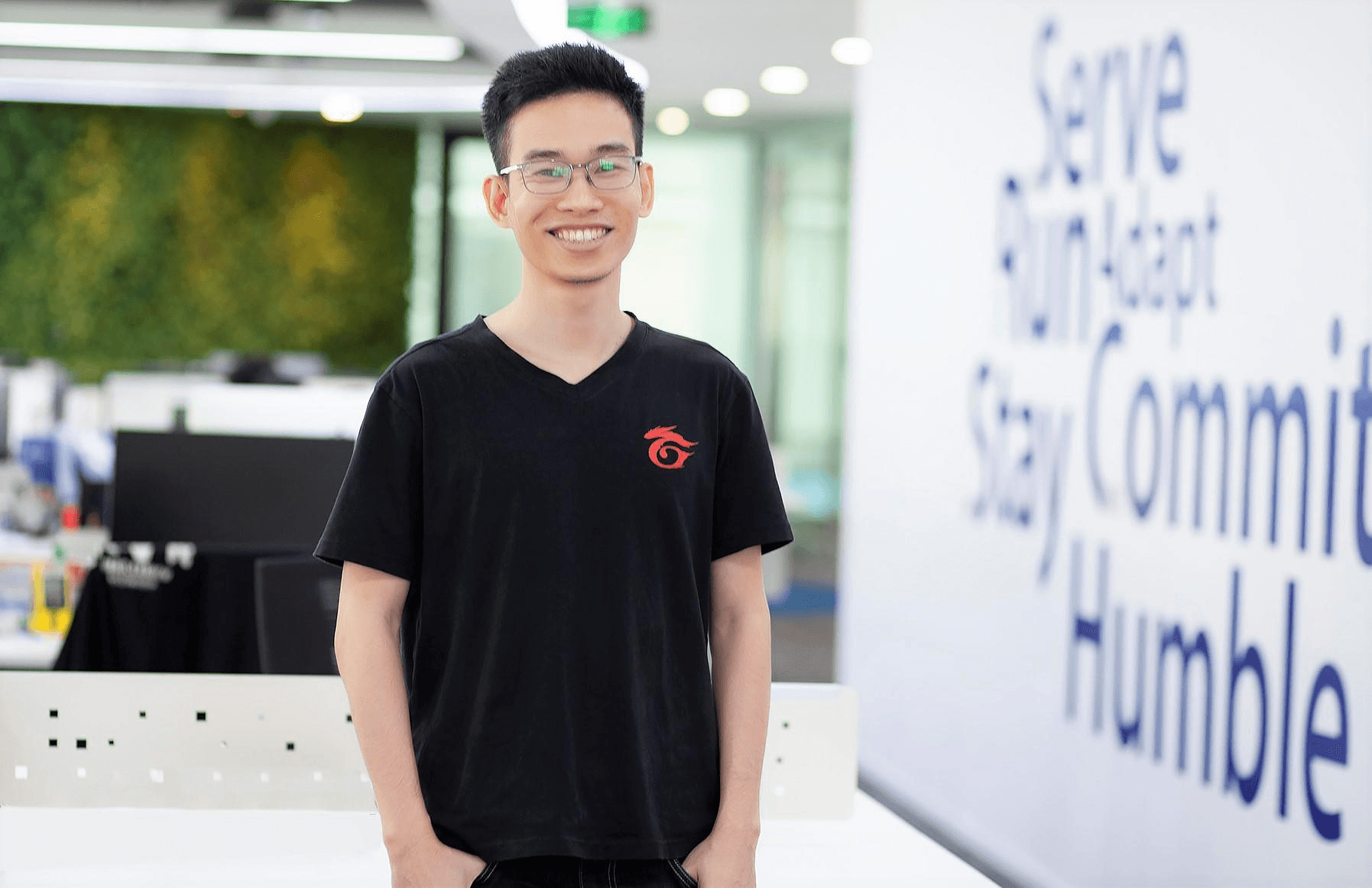
Nguyen Dac Ba Nhat (Bu) / Photo credit: Sea
The one-time professional esports player joined Garena – Sea’s gaming and esports arm – in 2010 to explore opportunities beyond the competitive scene. Bu was given the opportunity to take on various roles – from being a shoutcaster to a product specialist. Bu now serves as a producer in Vietnam, managing the operations of one of the region’s most popular multiplayer games, Arena of Valor.
Reinvesting in the region
Ultimately, Sea is leveraging its position as a prominent organization in the region to give back to the people of Southeast Asia.
“Our efforts will help to shape the digital economy in which our businesses thrive in,” Sathirathai shares. “The more committed we are to ensuring that the young people in ASEAN are prepared for this evolving landscape and that we, as an organisation, are ready for them, the more Sea will be able to grow as a leading consumer internet company.”
Sea is also working with various government departments to support small and medium-sized enterprises, indicating its commitment to help shape the future digital economy.
“Looking forward, we believe that it is more important than ever that people across the region have access to the opportunities that the digital economy is creating and that, crucially, they have the skills to fully capture the potential benefits of these opportunities,” concludes Sathirathai.
Find out more about the evolving job landscape and what the ASEAN youth think about it by viewing the full report.
Stay updated on the go with our mobile app.
Get latest insights with smoother, more personalized experience through TIA mobile app.
Recommended reads
 Building a human capital operating system for students
 Indonesian edtech’s unexploited opportunities
 Corporate learning platform Codemi secures seed funding from Bukalapak founder’s Init 6
 Singapore prime minister clarifies details on new work pass for global tech talent
 Indonesian edtech’s biggest challenges
 The AI talent war in Asia: who’s winning, who’s losing, and why
 Hiring locally, overseas, or via work pass: The ultimate hiring cost comparison
 Singapore’s 4-month-old diversity hiring startup bags $200k in pre-seed round
 What we learned at Ovo on how to stay afloat in a post-pandemic world
 How CFOs can balance their duties in driving startup growth





Editing by Jaclyn Teng and Eileen C. Ang
(And yes, we’re serious about ethics and transparency. More information here.)



📅 Upcoming Events
22 October 2026
Payoneer x CSPN Summit 2026