 Peter Rothenberg · · 6 min read
He’s steering Japan’s newest unicorn into battle in the US
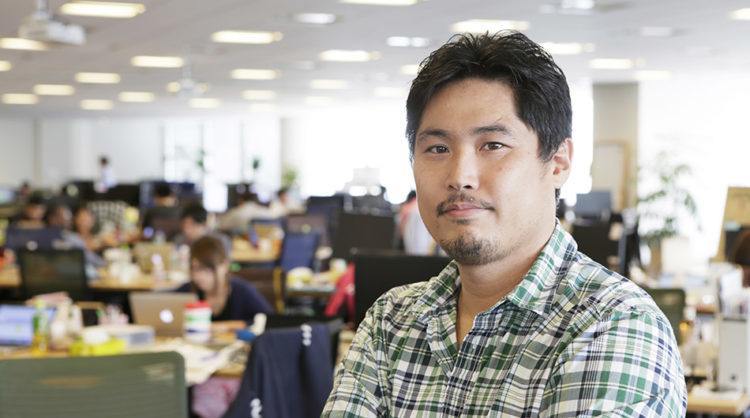
Co-founder and US CEO of Mercari Ryo Ishizuka.
Ryo Ishizuka’s family moved to the US when he was 14. His father worked for Panasonic and upper management wanted him to go to business school at MIT. Uprooted and separated from his friends, Ryo nervously set foot on the plane.
It was the first step on his journey to ride a unicorn.
“I was going to a public school which had an English as a second language program,” remembers Ryo. “In the beginning I had no idea what to expect. It was my first time going to the US. I couldn’t speak English or communicate well with anyone.”
“The original plan was that we would move back after my father graduated,” says Ryo. But he started to appreciate the difference in Japanese and American education. “I felt that I had the freedom of what I wanted to study and what I wanted to pursue. In Japan they try to build well-rounded students. A good student is someone who scores above average on all subjects. In the US, if the kid shines in a subject, they try to grow that. For example if someone is strong in math but not social studies, schools would focus on math, but in Japan they would probably focus on social studies.”
Ryo was one of those struggling students. With the language barrier he couldn’t keep up in subjects like history, but was doing extremely well in math and science. He is eternally grateful to the teacher who hired a private translator for him.
“They didn’t ask me to work on my English, they just asked me to work on my science. I could write the assignments in Japanese and the translator would translate it for me and turn it in. It was unthinkable at Japanese schools. It was eye opening.”
Ryo wanted to stay.
In for the long haul
His family went back to Japan but Ryo stayed for high school and afterwards went to John Hopkins University. “I was an econ and poly-sci major,” he says, “I wasn’t planning on being a tech guy.”
Technology is the future. This is what is going to drive the economy and business.
His computer science suitemate, Jia Shen, had other ideas. This was 1997. AOL had just switched from charging its internet users per hour to a monthly billing cycle. The dawn of the internet was truly here.
“Jia showed me all the things of the internet, Yahoo and everything. I was hooked.” The fact that Yahoo was a highlight really puts a date on things.
“I started taking CS classes myself and launched some programs.” Ryo graduated and then felt, as he puts it, that technology is the future. “This is what is going to drive the economy and business.”
Ryo moved back to Japan and started his career as an engineer. He joined a company but left after three years because it wasn’t the startup feel he was looking for. That’s when Jia called.
We will, we will, RockYou
A fateful meeting





Stay updated on the go with our mobile app.
Get latest insights with smoother, more personalized experience through TIA mobile app.












📅 Upcoming Events
22 October 2026
Payoneer x CSPN Summit 2026