 Stefanie Yeo · · 7 min read
QuickBytes: Breaking through barriers with Tessa Wijaya, Xendit’s COO
As part of Tech in Asia’s 2022 International Women’s Day campaign “Break The Bias,” we conducted a survey of female founders in Southeast Asia to learn more about their experiences. We also sat down with some founders from the region to dive deeper into their stories. Here’s one of them.
Tessa Wijaya is the COO and co-founder of Indonesian payment gateway startup Xendit. In September last year, the company joined the unicorn club after raising US$150 million in series C funding.
In this interview, Wijaya shares how her entrepreneurial journey unfolded, the challenges she faced along the way, and her aspirations for the future of Southeast Asia’s female founders.
The following interview has been edited for clarity and brevity.
Did you always want to be an entrepreneur? How did you get started on this journey?
I’ve always been fascinated by the idea of being an entrepreneur. There are a lot of people in my family who are entrepreneurs who ran small canteens and hawker stalls. I thought it was quite interesting and a much more exciting thing to do rather than going to work as a regular worker.
I did start a few side businesses before Xendit. I started a restaurant, which failed, and a batik brand with one of my closest friends, but we had to discontinue it to focus on our full-time jobs. I started a jewellery business as well with some friends, where I’m a silent partner right now. So when Xendit came around, I thought, “This is the time to really take the plunge into the world of entrepreneurship, and while I’m at it, why not do something in tech?”
What are the best and worst things about being an entrepreneur?
The best thing would be having our hard work – not just the founding team, but that of everybody at Xendit – appreciated by the investors who have put their trust in us to allow us to expand to where we are now. When we first started out, we were extremely nervous and excited to process US$10,000. To process 100 transactions a day, we were like, “Yes, we’re winning!” And now we process more than 150 million transactions per year to the tune of US$12 billion dollars a year. Looking at the company and what we’ve built today – that’s really one of the most exciting parts of the journey.
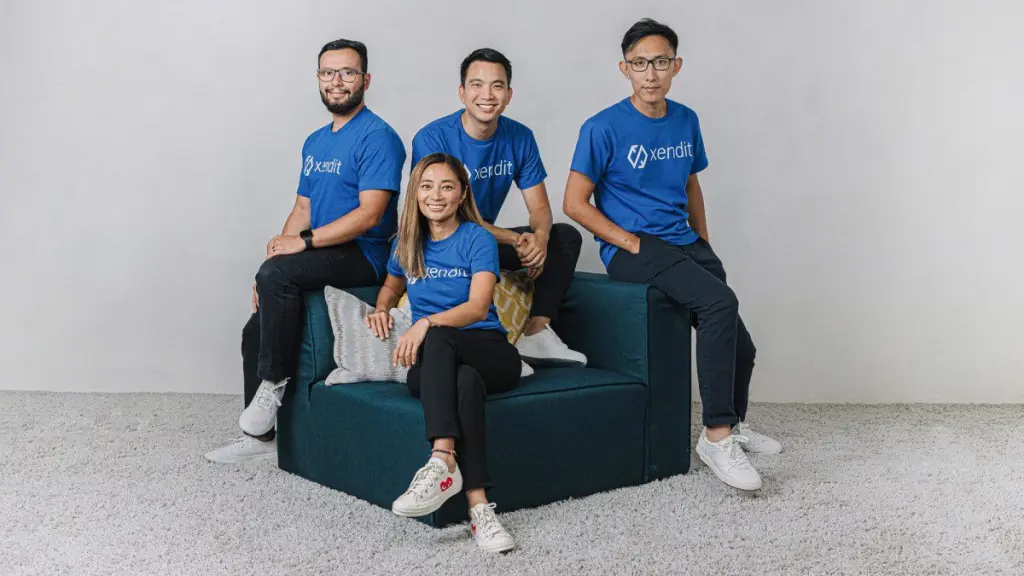
The co-founders of Xendit / Photo credit: Xendit
For the worst thing… I wouldn’t say they were bad parts of the journey. I think it all comes as a package. Obviously, building something from scratch, all the things we have to go through, the growing pains – everything from finding the right people to all the fires we’ve had to face and having to get through so many hurdles in our lifetime as a startup – that’s been tough.
What’s the biggest challenge you’ve faced on your journey so far?
The most challenging aspect has been for me to scale as a manager, as a leader. I think what people often don’t realize is a startup with that much pressure to grow reinvents itself every six months, every year. They say when you hit 50 people you become a totally different company. 100, 500, 1,000 – with each milestone, you become a whole different company. And for me, this is a first – I’ve never run a company before, I’ve never even been a manager, I’ve never built and run big operation teams before. There have been a lot of firsts, and it’s been extremely challenging to keep up as the company grows and changes.
Have you faced any biases on your journey, be it from yourself or others?
As a woman, whenever you want to jump into something new, people are going to be a lot more skeptical. What I realized is that for my male counterparts, whatever it is that they want to jump into, everyone’s like, “Yeah, of course you can do it.” For me, I’ve experienced a ton of “nos” in my lifetime, and a lot of doubt gets sown in your mind.
I’ve also been underestimated at times or not been taken seriously. There have been meetings where I say something, and I have to call in Moses, our CEO, and be like, “Hey, can you say the same thing again?” And then people listen. There was also one incident when someone told me, “Oh, you’re running operations, so you’re not a Sheryl Sandberg.” And I was a little insulted – I may not be a commercial COO, I may not run the sales organization, but at the same time, I don’t think he would have told someone like Moses, “Oh, you’re not a Mark Zuckerberg.”
Has being a female founder made a difference to your entrepreneurial journey? How so?
What’s been the most rewarding part of being a female founder?
What’s your advice for aspiring female founders?
What is the future you hope to see for female entrepreneurship in Southeast Asia?





Stay updated on the go with our mobile app.
Get latest insights with smoother, more personalized experience through TIA mobile app.












📅 Upcoming Events
22 October 2026
Payoneer x CSPN Summit 2026