Photo credit: Alamy
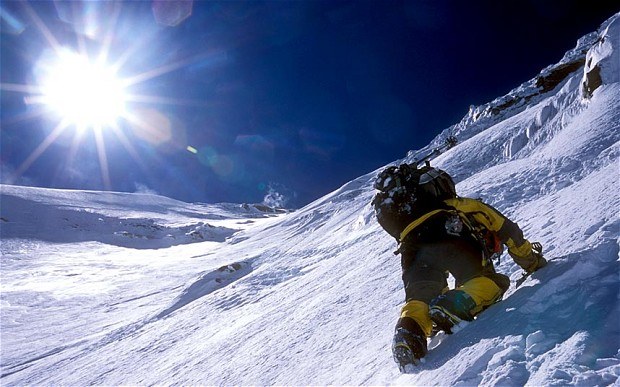
At 10am on May 16 2002, I stood on the summit of Mount Everest, the highest point on this planet. This was a journey that started in 1997, when I read the book “Into Thin Air” and realised that mere mortals could achieve the impossible if they dedicated themselves to a goal and took a risk.
Achieving that goal after 5 lonely years of working, saving, training, suffering, and a failure in 2001 was the happiest moment of my life.
Now, after 10 months working on my startup Exam, I can see a lot of similarities between starting a company and climbing Mount Everest, including the planning, the sacrifices, and the kind of people who succeed.
Risk assessment
Start by analysing the failure statistics from those who went before you, and working out your chance of failure.
Start by working out your chance of failure.
When I climbed Everest, I looked at historical stats, and worked out there was a 5 percent probability of death. I considered that an acceptable risk to achieve the impossible, but I didn’t want my family worrying, so I only told them afterwards.
I have seen startup death rates listed at 90 percent, and while this won’t usually lead to the death of a founder, they are still risking years of income, promotions, holidays, time with family, and social progress in their attempt.
I hope my skills, resources, and work ethic will put me in the small percentage of successes, but I accept that I may fail, and anyone starting a business should consider carefully if they can accept the high probability of failure and loss.
Planning
Choose the route that has the highest probability of success.
There are multiple routes up Mount Everest, but historical statistics showed the highest probability of reaching the summit was to climb from the South side of the mountain in Nepal. The route on the South side is more expensive due to higher climbing permit fees, and more crowded, but has the most dangerous route sections low down where there is more oxygen.
The route up the North side of the mountain from Tibet is cheaper, but has the difficult sections higher up where there is less oxygen, so is higher risk.
I chose the more expensive route to increase my chances of success, but if I had less money saved, I would have been forced to climb from the Tibet side at higher risk of failure and death.
Similarly when running a startup, you should identify different routes to achieve your goals, and evaluate the cost/benefit of each one. Cheaper options reduce burn rates, but will probably increase risk.
Resources
Practice reduces risk
Learn from other people’s mistakes
Contingency planning
Find a good guide
Masochists win





Stay updated on the go with our mobile app.
Get latest insights with smoother, more personalized experience through TIA mobile app.