- Premium Content It takes our newsroom weeks - if not months - to investigate and produce stories for our premium content. You can’t find them anywhere else.
 Vincent Fernando, CFA · · 8 min read
A primer on how eSIMs can change the telco game
On July 21, the Singapore-headquartered Circles Life launched its eSIM service that allows users to sign up and activate their mobile plans without the need for a physical SIM card.
The product is the latest initiative by the digital telco to make customer onboarding easier and safer in a time of social distancing. With eSIMs, consumers can activate and use their mobile plan within three minutes of signing up, removing the step of having the physical SIM card delivered to their doorstep.

Photo credit: Circle.Life
“Users can easily activate their accounts in the comfort of their homes, without going out or needing a physical third person verification,” Rameez Ansar, co-founder of Circles Life, tells Tech in Asia.
Notably, users can toggle between their physical SIM and their eSIM anytime, allowing them to switch between two lines even if their phone doesn’t support a second physical SIM card. This kind of convenience echoes the big shift that happened in the software and video industries, where the internet has replaced DVDs as the main mode of delivering content.
What are eSIMs?
ESIMs are just like physical SIM cards, except they are directly embedded into the phone’s hardware. Physical SIMs are a relic of a past – they were also meant to store messages and contact information, but those functions have been taken over by the phone itself.
ESIMs have a smaller form factor that provides phone manufacturers extra space for other components or even the option of producing a thinner device.
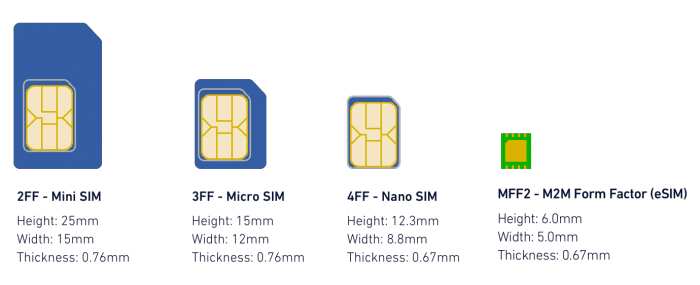
Image credit: US Mobile
ESIMs promise consumers more freedom, convenience, and choice. Once adopted by the industry, they can directly connect and switch to any carrier via software, making it easier for users to try a wide variety of telco products offered by different providers since they would no longer have to insert a small plastic card into their devices every time they switch to a new mobile network.
For travelers, this means doing away with waiting in line at the airport to get a tourist SIM.
Telcos’ resistance to adoption of eSIMs
ESIMs are relatively new. NanoSims were first introduced in phones in 2012, while eSIMs hit the consumer market four years later.
But eSIMs have now been introduced in most new smartphones today. In fact, by 2025, about 2 billion newly shipped smartphones are expected to be eSIM-compatible – that’s nearly all the smartphones in the world.
The primary reason for the slow adoption of eSIM technology is the reluctance of many telco providers to support it, given that the ease of switching carriers could increase customer churn rates and reduce roaming revenue.
1. Travel roaming
2. Instant switching between different types of telco services
3. Trial services
Caveats
eSIMs could bridge the gap to the 5G era
Stay ahead in Asia’s tech landscape
This is premium content. Subscribe to read the full story.
Singapore’s Circles Life has launched an eSIM plan. We look at how eSIMs could be the wave of the future.
We know this is not ideal. ⌛ Sign up in 20 seconds. Cancel anytime.
Our subscriber community includes professionals from these companies:





Stay updated on the go with our mobile app.
Get latest insights with smoother, more personalized experience through TIA mobile app.








📅 Upcoming Events
22 October 2026
Payoneer x CSPN Summit 2026