- Premium Content It takes our newsroom weeks - if not months - to investigate and produce stories for our premium content. You can’t find them anywhere else.
 Glenn Kaonang · · 6 min read
Game developers embrace AI, but not for reasons you’d expect
On November 14, players in Where Winds Meet – a highly anticipated role-playing game from NetEase – will be able to talk to AI-powered characters that react in real time. It’s a glimpse of how AI is steadily seeping into big-budget games, not just as a behind-the-scenes tool but as part of the actual experience.
Like it or not, players are going to see more video games that include AI-generated content. Some are worried that studios will use the tech to cut corners, resulting in experiences that feel “soulless.”
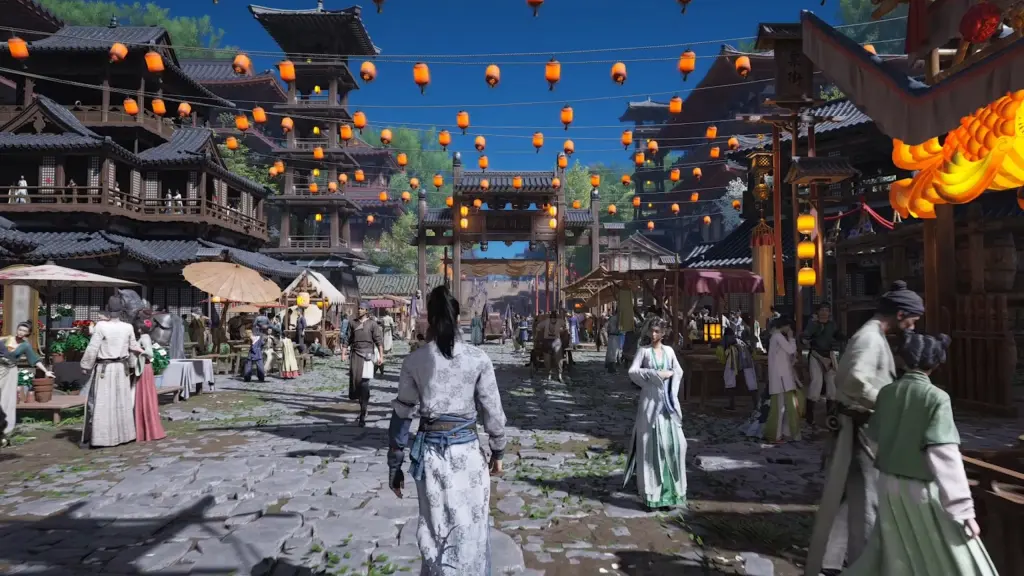
In Where Winds Meet, players can interact with non-playable characters as if they were AI chatbots. / Image credit: NetEase
In January 2024, digital platform Steam began requiring studios and developers to disclose AI use in their games, including for “any kind of content created with the help of AI tools during development.” As of July, there were close to 8,000 games sold on Steam that use generative AI – about 7% of the platform’s catalog, up from 1% as of April 2024.
These include titles from major publishers like Activision’s Call of Duty: Black Ops 7, whose Steam page explicitly states the use of genAI tools to develop some in-game assets. This comes despite previous backlash against the publisher’s AI use.
The trend is also seen in Asia, with studios in South Korea, China, and Indonesia using AI tools across their game development pipelines.
This represents a big shift from how the technology was seen as a threat just two years ago. Back then, developers and players feared AI would put artists out of work.
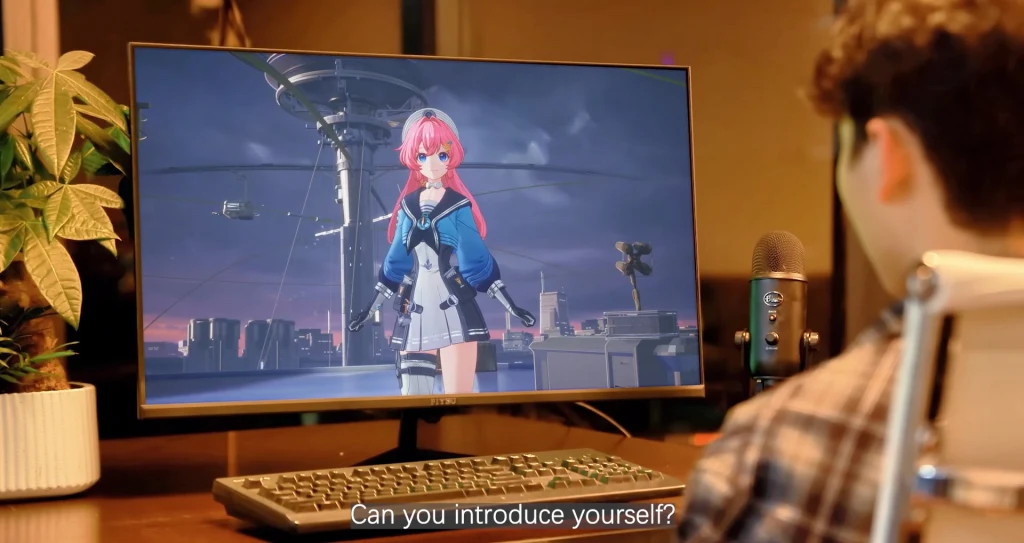
Fate Trigger uses Nvidia’s AI tech to generate real-time facial animations and natural lip-sync for character dialogues. / Photo credit: Nvidia
While many people might think this shift is driven by AI’s improved capabilities, the reality is that studios are just becoming more receptive to using the tech as a tool for game development.
But players beg to differ. Any traces of AI in games can spur strong reactions. Even when studios don’t use the tech, they might still get scrutinized over how some elements look and feel like AI.
It doesn’t help that low-quality games created with AI fill up PlayStation’s digital store.
This is the inevitability of any piece of technology that democratizes the creation process. However, Shieny Aprilia, CEO of Indonesia-based Agate, argues that it’s unfair to blame AI for the declining quality of video games.
“We already have bad games even without AI, so it all comes down to how each studio is using the technology,” she says.
AI helps, though “imperfections” persist
Just another tool?
Stay ahead in Asia’s tech landscape
This is premium content. Subscribe to read the full story.
Once seen as a threat, genAI is now being used across the game development process in Asian studios. What’s changed, and what’s next?
We know this is not ideal. ⌛ Sign up in 20 seconds. Cancel anytime.
Our subscriber community includes professionals from these companies:





Stay updated on the go with our mobile app.
Get latest insights with smoother, more personalized experience through TIA mobile app.