 Nadine Freischlad · · 4 min read
Not waiting for Google, an Indonesian startup has its own Project Loon
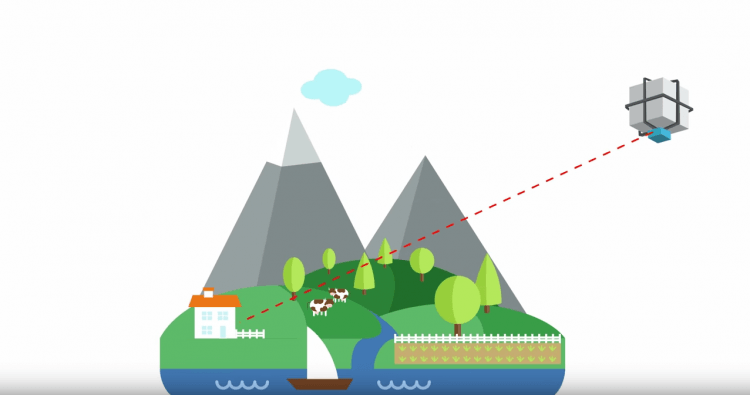
Helion, a tethered balloon that can deliver a wifi signal to remote areas. Image credit: Helion
At Indonesia’s Bandung Institute of Technology (ITB), a team of former students is working on an idea to beat Google at its own game.
The balloons are tethered, not free floating.
Google’s Project Loon plans to introduce a fleet of high-altitude balloons to the stratosphere, from where they will beam down internet signals to remote areas. It has chosen Indonesia as one of its test sites.
The ITB grads’ idea is called Helion. It’s basically a low-tech version of Loon. Helion floats its balloons at a maximum height of a couple of hundred meters. The balloons are tethered, not free floating, and carry solar-powered electronic equipment that enables them to distribute a wifi signal to the surrounding area.
The group is spearheaded by Hagorly Hutasuhut, who holds a bachelor in aeronautics and astronautics from ITB and a master’s in space science and engineering from University College London.
Helion is funded through a grant from Indonesia’s technology and research ministry. While initial trials around the ITB campus have proven the concept, there are still many kinks to work out.
Cheaper than a telco tower
In one of their recent test flights, the balloon was raised to an altitude of 80 meters and was able to deliver a wifi signal to a 300-meter radius on the ground.
Raising the electronics above ground, Hagorly says, delivers a stronger signal than terrestrial wifi because there are fewer physical obstructions. The system works best outdoors, in a flat environment. A balloon can stay up for about a week before it needs a refill – the helium it contains slowly seeps out.
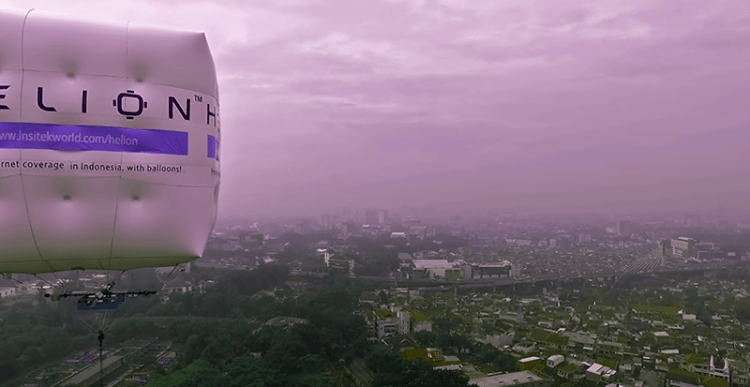
Test flight above the Bandung Institute of Technology campus. Photo credit Helion
Raising and lowering the balloon is simple, so it doesn’t take much manpower to maintain it and the electronics attached.
The startup needs a strategy to prevent theft.
The cost remains an issue, however: the 3x3x3-meter polyethylene skin – the team uses standard industry balloons that are manufactured locally – swallows about US$380 worth of helium per filling.
Wifi for concerts
Could the government pay for this?





Stay updated on the go with our mobile app.
Get latest insights with smoother, more personalized experience through TIA mobile app.










📅 Upcoming Events
22 October 2026
Payoneer x CSPN Summit 2026