- Premium Content It takes our newsroom weeks - if not months - to investigate and produce stories for our premium content. You can’t find them anywhere else.
 Samreen Ahmad · · 7 min read
Flipkart’s costly late push into quick commerce and food delivery
For much of its first decade, Flipkart changed the way Indians shopped online. It offered cash-on-delivery payments and flexible returns that made ecommerce more accessible, and its flagship Big Billion Days sale turned online shopping into an event.
Not only did these moves help the Walmart-owned firm become India’s largest ecommerce business, they also gave it a reputation for being an industry innovator.

Image credit: Ulla
Although its business model was inspired by Amazon, Flipkart “introduced innovations tailored to Indian consumers, which helped build customer trust and encouraged more Indians to shop online,” an executive from a rival firm tells Tech in Asia.
However, that pioneer reputation has eroded “over the last six to seven years,” according to an industry insider who requested anonymity. “Innovation in ecommerce has not been coming from Flipkart,” and it lost ground at both ends of the market, the source adds.
While Meesho has emerged as a major force in value commerce and captured price-sensitive consumers, quick commerce players Blinkit, Zepto, and Swiggy Instamart have created a market around the promise of delivering everyday products within minutes.
These verticals are among the fastest-growing in the industry, significantly outpacing conventional ecommerce.
Because of this, Flipkart faces a question that is as much about its identity as its market share: If the next phase of online shopping is being shaped elsewhere, how is it innovating?
That is the backdrop to the company’s late but aggressive push into quick commerce, a vertical dominated by early entrants. Flipkart is also venturing into food delivery, piloting its Eat In service in Bengaluru.
Tech in Asia reached out to Flipkart for comment, but the company did not respond.
Changing the narrative
Flipkart has been ramping up its spending as it plays catch-up with its peers.
According to the anonymous insider, the company is burning about 300 crore rupees (US$31 million) per month on quick commerce, while CEO Kalyan Krishnamurthy is devoting roughly half of his time on the vertical.
That level of management attention is unusual for a company of its size, particularly when its quick commerce unit, Flipkart Minutes, is still young and the economics of the vertical remain under pressure.
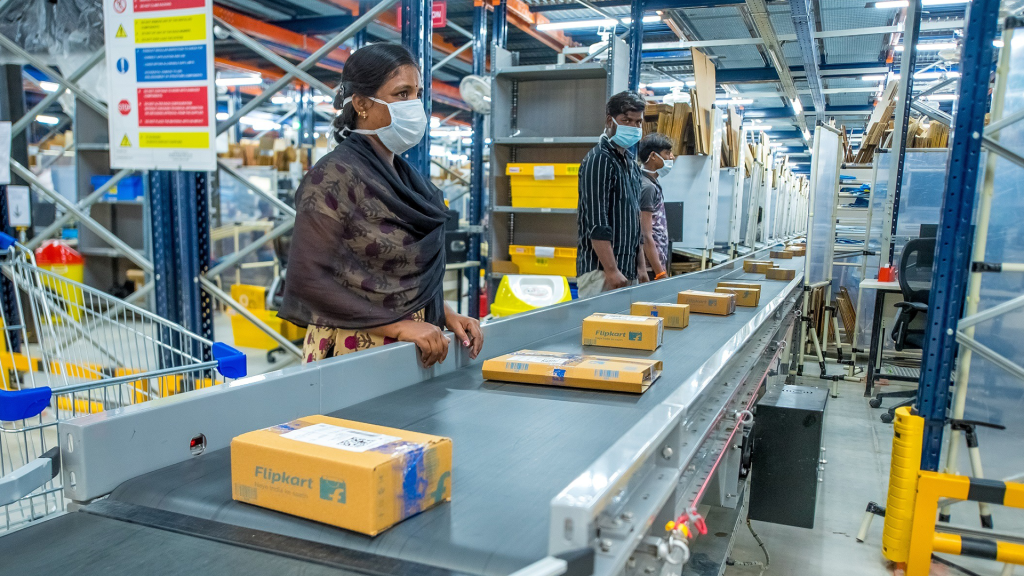
The infrastructure problem
The food delivery experiment
Stay ahead in Asia’s tech landscape
This is premium content. Subscribe to read the full story.
While the firm is burning US$31 million a month on quick commerce, it is also targeting food delivery with its “original restaurant price” strategy.
We know this is not ideal. ⌛ Sign up in 20 seconds. Cancel anytime.
Our subscriber community includes professionals from these companies:





Stay updated on the go with our mobile app.
Get latest insights with smoother, more personalized experience through TIA mobile app.









📅 Upcoming Events
22 October 2026
Payoneer x CSPN Summit 2026