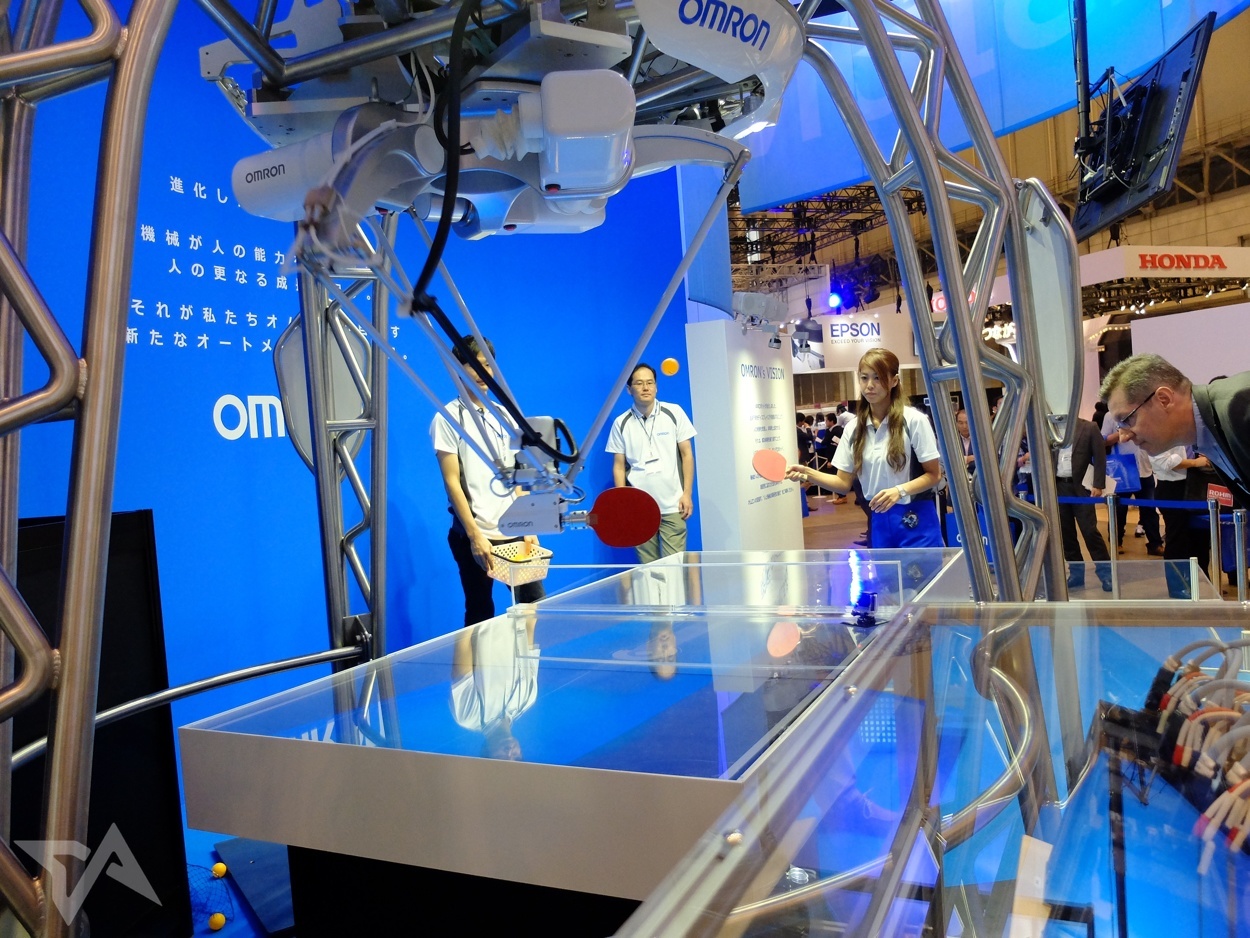
The idea of a 2.7-meter tall, 800-kilogram intelligent robot might freak some people out. If images of Terminator or the ED-209 from Robocop spring to mind, relax. Omron’s huge new robot only wants to challenge you to a game of ping pong – and it wants you to win.
Omron, the Japanese electronics maker best known to the general public for its medical equipment, unveiled version 2.0 of its “table tennis robot” at CEATEC Japan earlier this week. The original debuted last year, but it’s gotten bigger – and smarter – since then.
The ping pong robot uses an array of cameras and sensors to track and respond to the moving ball. Its “arm” uses five five-axis motors to line up return hits, and its movement controller operates at 1/1,000th of a second.
Omron's upgraded #pingpong #robot @ #CEATEC2015 #Japan
AD. Remove this ad space by registering for a free basic account. Enjoy an ad-free experience when you're logged in.
The robot that doesn’t want to crush you
The instant a human player strikes the ball, the robot’s computers begins calculating its response based on 80 factors a second. A pair of cameras in the upper portion of the robot track the three-dimensional position and speed of the ball. Sophisticated new algorithms also measure the rotational speed and “orbit curvature,” so the robot can even estimate where the ball will land when a player puts a spin on the serve or return. Omron says that the robot has a margin of error that’s just 10 centimeters from the anticipated return position. To put that into context, the average ping pong paddle is 17 centimeters long and 15 centimeters wide.
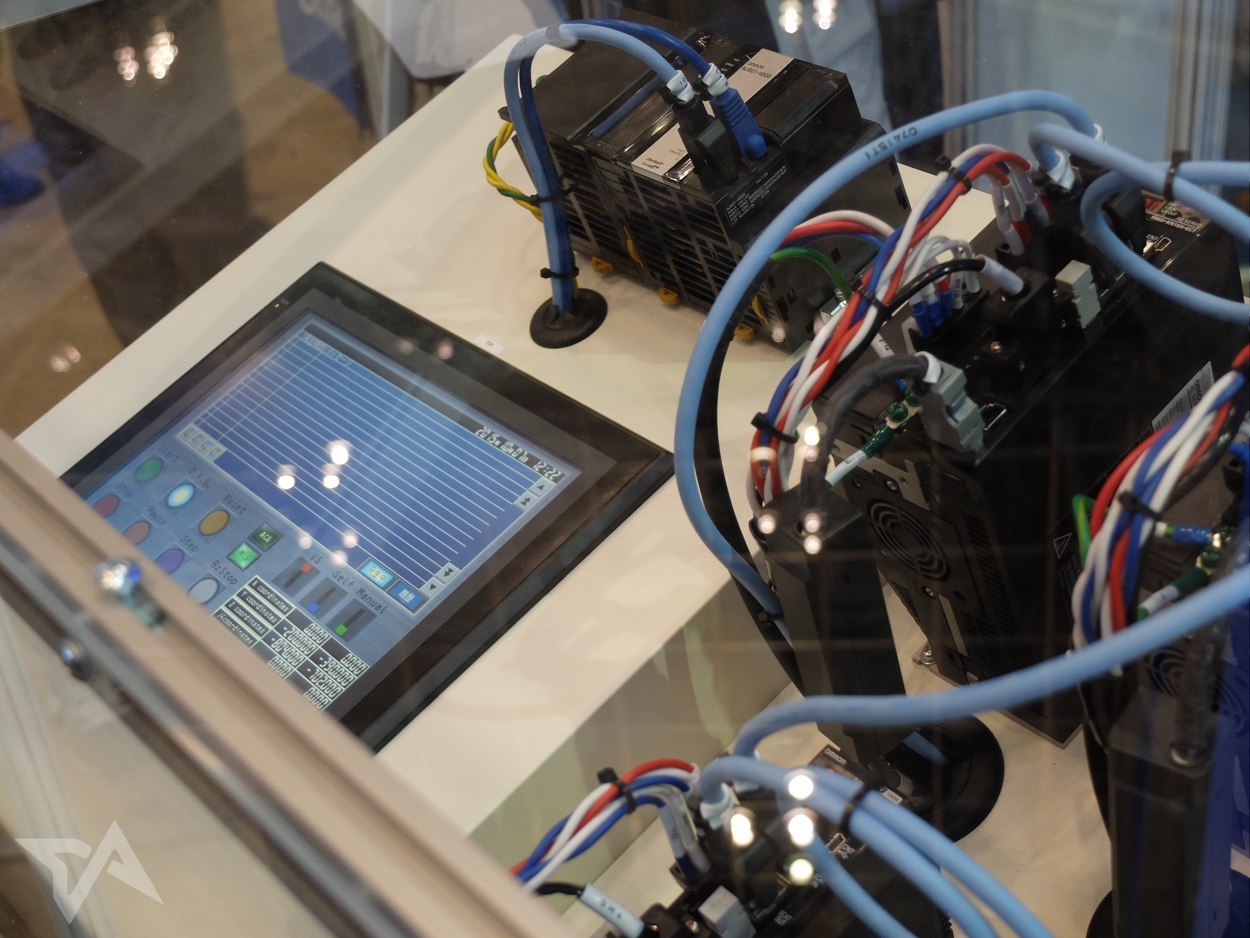
Table tennis robot’s “brain.”
Omron designed a special ping pong table for its upgraded robot, which is equipped with an assist mode that’s designed to help puny human players beat it. Omron’s robot thinks so fast that as soon as an opponent hits the ball, a spot appears on their half of the table indicating where the return ball will land.
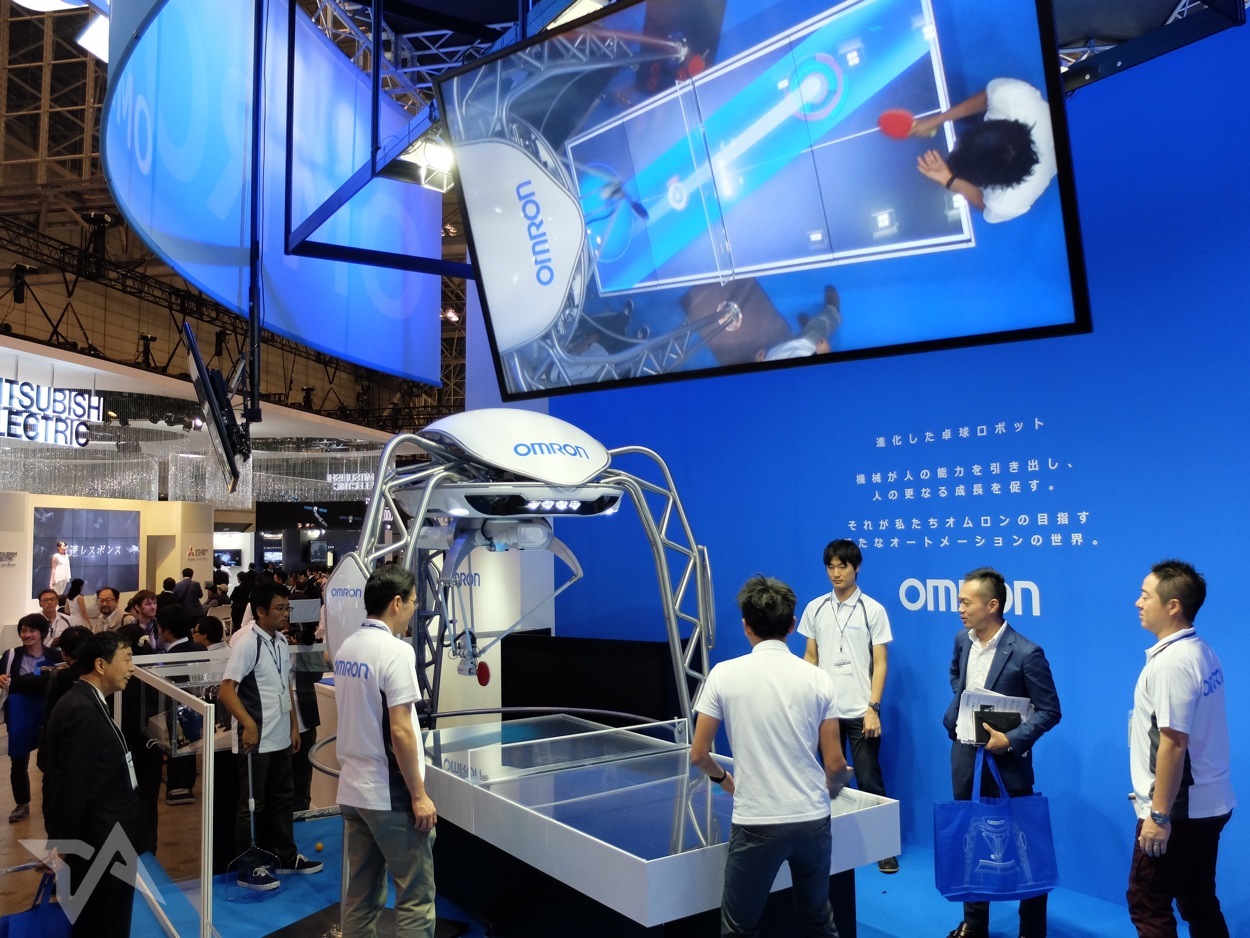
It almost feels like cheating, but Omron says the assist function is designed to increase the human player’s motivation. The company’s press release paints a much less apocalyptic vision of our future with robots than Hollywood would have you believe:
Until now, machines primarily served as a ‘replacement’ for work done by humans, but are now transitioning to ‘cooperation’ […] By evolving the relationship of harmony in which machines increase human potential and assist their growth, a new world of automation can be envisioned.
Omron doesn’t plan to commercialize its sporty robot, and its development cost is undisclosed, but the tech that powers it will certainly find its way into Omron’s lesser known industrial automation systems. The only question that remains is, if Omron builds second table tennis robot with identical specs and puts them head-to-head, would they play forever?
Stay updated on the go with our mobile app.
Get latest insights with smoother, more personalized experience through TIA mobile app.
Recommended reads
 How AI agents will be the new software buyers
 ‘Good morning, Dave’: The new world of physical AI in daily life
 AI uses pilot-style checklists to help doctors decide safely
 When AI meets human nature
 Is India ready for an AI wearable that is always listening?
 Ex-ByteDance exec bets cameras beat chatbots in $3m AI play
 Inside OpenAI’s public-first bet on medical AI
 Kung fu robots steal the show
 A real-time verification engine that rewards truth-finding
 IBM on AGI: bad math, wrong science





Editing by Steven Millward
(And yes, we’re serious about ethics and transparency. More information here.)




📅 Upcoming Events
22 October 2026
Payoneer x CSPN Summit 2026