Pranav Balakrishnan · · 10 min read
Nvidia’s rally is about Huang, not AI
Welcome to The Prompt, your guide to the biggest issues and developments shaping AI, with Asia front and center. Want full access to all our AI reporting? Subscribe here.
Hello reader,
Where were you when Nvidia announced it was reappointing Jensen Huang as CEO?
I was in the middle of a conversation with Chris Miglino, CEO of Nasdaq-listed neocloud Axe Compute, when the news broke. He was chuffed.
“Last week, it was looking very tough,” Miglino said. “Everything was very negative, so I think him coming back could help save the market here for all of these stocks.”
Huang’s comeback did the trick. Nvidia, neoclouds like CoreWeave, and memory chipmakers like SK Hynix all rallied. Axe Compute’s shares jumped 20% on Monday.
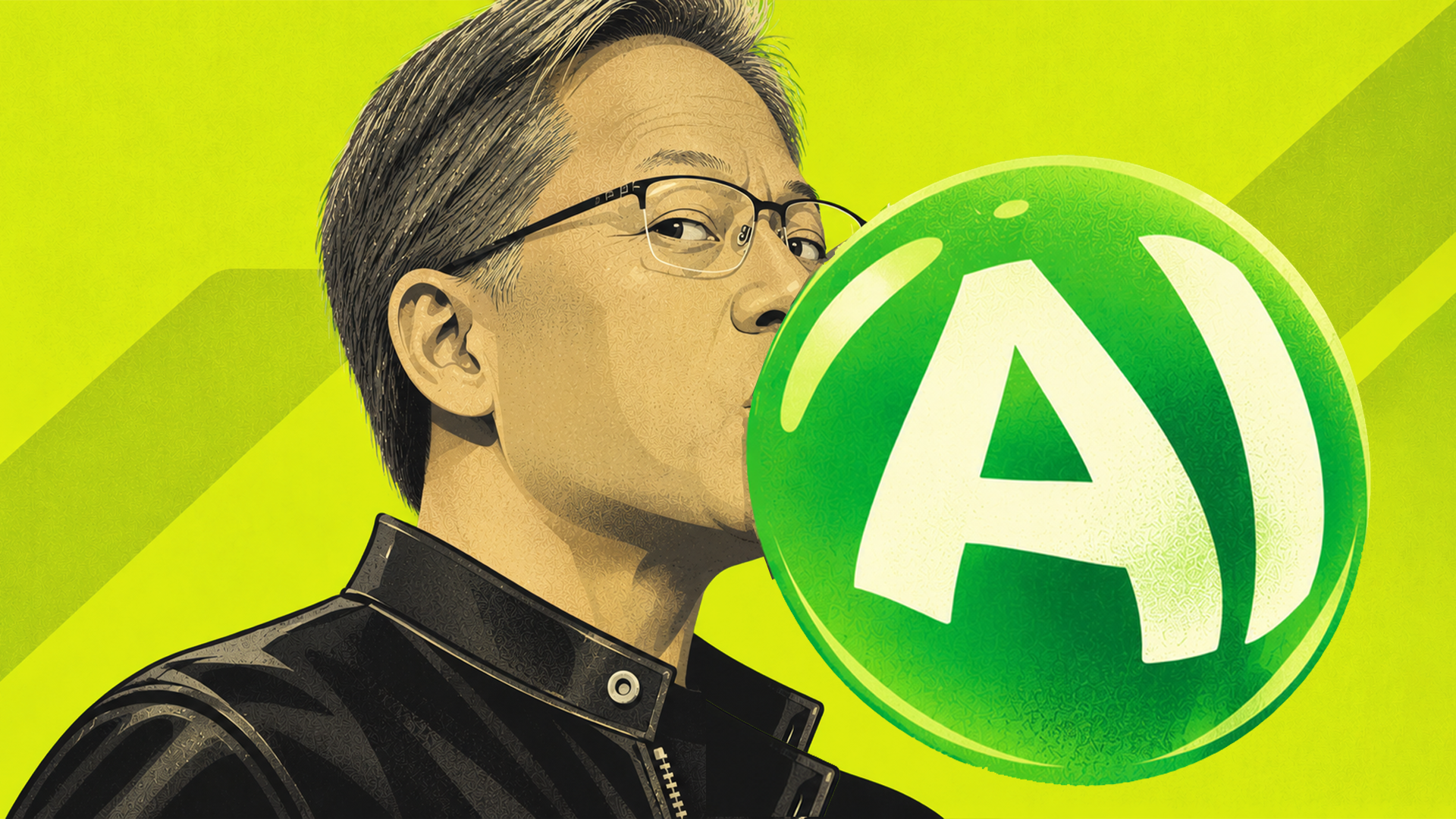
Image credit: Made by Ulla/Tech in Asia with the help of AI
Anthropic’s IPO last week was supposed to boost the AI trade. It didn’t. The Trump administration seems to have decided that bringing Huang back was the surest way to keep the AI correction from turning into a crash.
So Huang’s comeback fixes everything, right? But his return doesn’t answer the question investors were asking before his departure: Will AI and the data center buildout ever make money?
Investors are changing how they view AI as an investment. The criteria that they used to evaluate AI are no longer good enough. Now, they want to see who actually makes money from it.
Last week, US investment management firm Vanguard said it now finds more opportunity in reasonably valued AI adopters than in AI producers.
“The greater risk lies in the transition from building AI to broad adoption,” says Joe Davis, Vanguard’s global chief economist.
Earlier this month, Morgan Stanley MUFG Securities dropped Sumitomo Electric, which it calls an AI builder, from its Japan focus list to cut AI exposure. It added Nomura Research Institute as its top AI adopter pick.
Even models launched last week point to a similar line of thinking. GPT-6.2 and Gemini 4 Neon were both marketed on cost per task, making it more cost-effective for end users to drive up adoption.
TOP AI READS FROM OUR DESK
WHAT ELSE WE’RE THINKING
FOUNDER FOCUS








📅 Upcoming Events
30-31 March 2027
Upskill Fest