 Grace Priscilla Teo · · 5 min read
Nvidia CEO thinks US AI export limits are backfiring
This article summarizes an episode of Dwarkesh Patel’s video series featuring Jensen Huang, CEO of Nvidia.
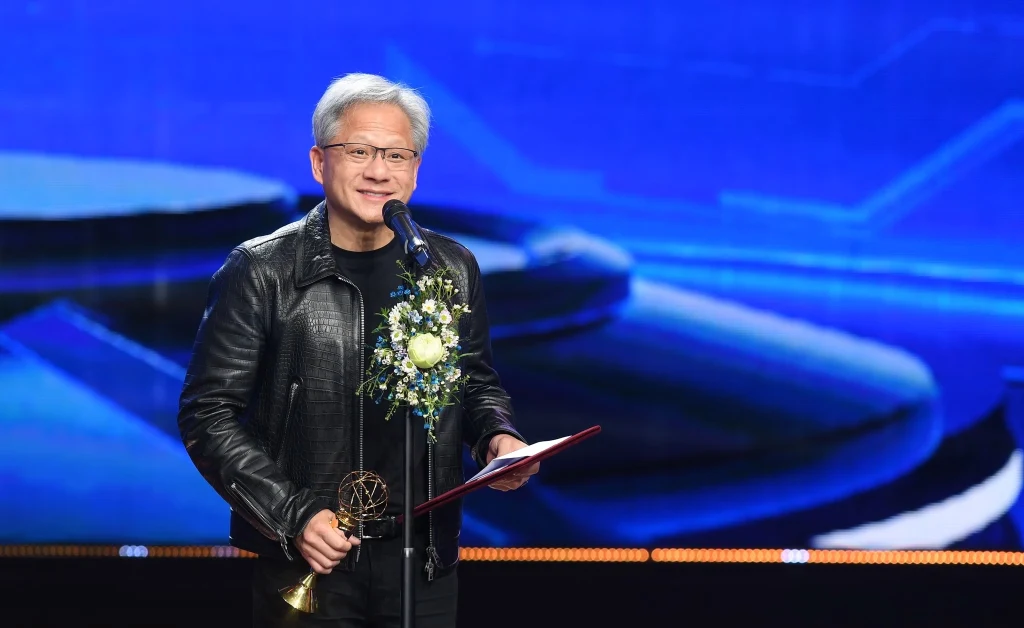
Jensen Huang, CEO of Nvidia/ Photo credit: VinFuture
Limiting AI exports threatens American technology leadership. Jensen Huang, CEO at Nvidia, warns that political rules meant to weaken foreign rivals actually force them to build independent systems.
He views the global technology race as a fight over energy grids and software ecosystems rather than a battle over who prints the fastest microchip. Trying to regulate advanced hardware like a physical weapon misunderstands how modern computing works.
Changing hardware for automation
Understanding modern computing requires shifting focus away from individual parts. People mistakenly view Nvidia as a standard hardware company. This narrow view misses the current transition from simply writing code to generating automated outcomes.
A winning strategy treats computing as a complete process from start to finish. Instead of bragging about individual chip speed, companies must focus on how entire systems work together to save energy while delivering results.
Huang describes the input as electricity and the output as valuable data. He says Nvidia sits in the middle, doing only what is necessary to enable that transformation. He adds that the deep science and invention behind this process is often not well understood.
The truth about automation
This transformation will heavily impact the human workforce as well. The idea that automation will simply replace human workers misses how software usage will expand.
Huang expects smart programs to multiply rapidly. “Today we’re limited by the number of engineers. Tomorrow, those engineers are going to be supported by a bunch of agents.”
Using buyer demand
Building the physical foundation for this automation requires massive financial promises. Suppliers demand proof of future sales before building new factories.
“We’ve made enormous commitments upstream,” Huang explains. “The fact is that Nvidia’s downstream demand is so large, [suppliers] are willing to make the investment upstream.”
The limits of custom chips
Even with strong supplier backing, hardware dominance faces constant threats from within the tech industry. Large cloud companies often believe they can replace Nvidia with their own custom-designed processors.
Stopping this threat requires maintaining extreme flexibility because specialized chips cannot keep up with the frantic pace of software updates. Staying ahead means dealing with an endless cycle of new computing methods.
The need for flexible chips
The failing power of hardware bans
The fight for developer loyalty





Stay updated on the go with our mobile app.
Get latest insights with smoother, more personalized experience through TIA mobile app.












📅 Upcoming Events
22 October 2026
Payoneer x CSPN Summit 2026