Xavier Kong · · 2 min read
NTU scientists develop fabric that gets energized as you move
Scientists at Nanyang Technological University (NTU) Singapore have developed a type of fabric that converts body movements into electrical energy.
The key component is a polymer that, when pressed or squeezed, converts the mechanical stress into electrical energy, according to a statement. The fabric can stand up to washing, folding, and crumpling, which were primary challenges faced by previous tests.

NTU professor Lee Pooi See (left) and student Jiang Feng / Photo credit: NTU
“There have been many attempts to develop fabric or garments that can harvest energy from movement, but a big challenge has been to develop something that does not degrade in function after being washed, and at the same time retains excellent electrical output,” said Lee Pooi See, who led the study.
The fabric uses spandex as a base layer and is integrated with a rubber-like material for strength, flexibility, and waterproofing. It also continued to produce continuous and stable electrical output for up to five months.
As a proof of concept, the team showed that tapping on a 3-centimeter by 4-centimeter piece of the fabric generated enough power for 100 LEDs.
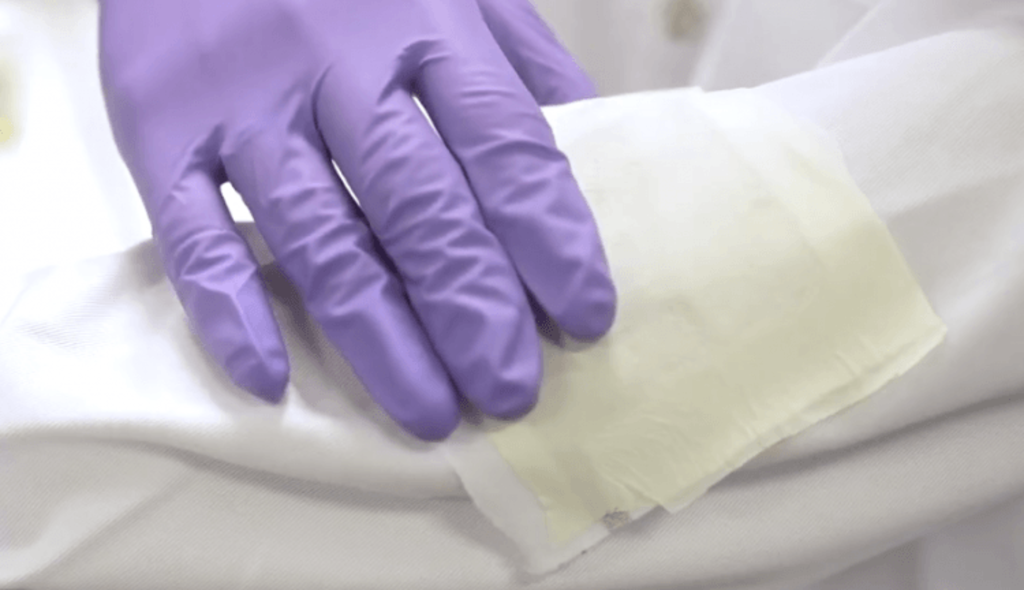
The fabric can generate a charge even when placed at different parts of the body. / Photo credit: NTU
The fabric has also shown that it is capable of working when tested against various parts of the body. The research team believes it can be woven into t-shirts or integrated into soles of shoes, with the electricity gathered being used to power wearable devices.
See also: A successful IPO gives hope to Singapore’s deep-tech ambitions
Editing by Miguel Cordon and Lorenzo Kyle Subido
(And yes, we’re serious about ethics and transparency. More information here.)





Stay updated on the go with our mobile app.
Get latest insights with smoother, more personalized experience through TIA mobile app.