Food scientists from Nanyang Technological University (NTU) have made an antibacterial gel bandage using husks of the tropical fruit durian.
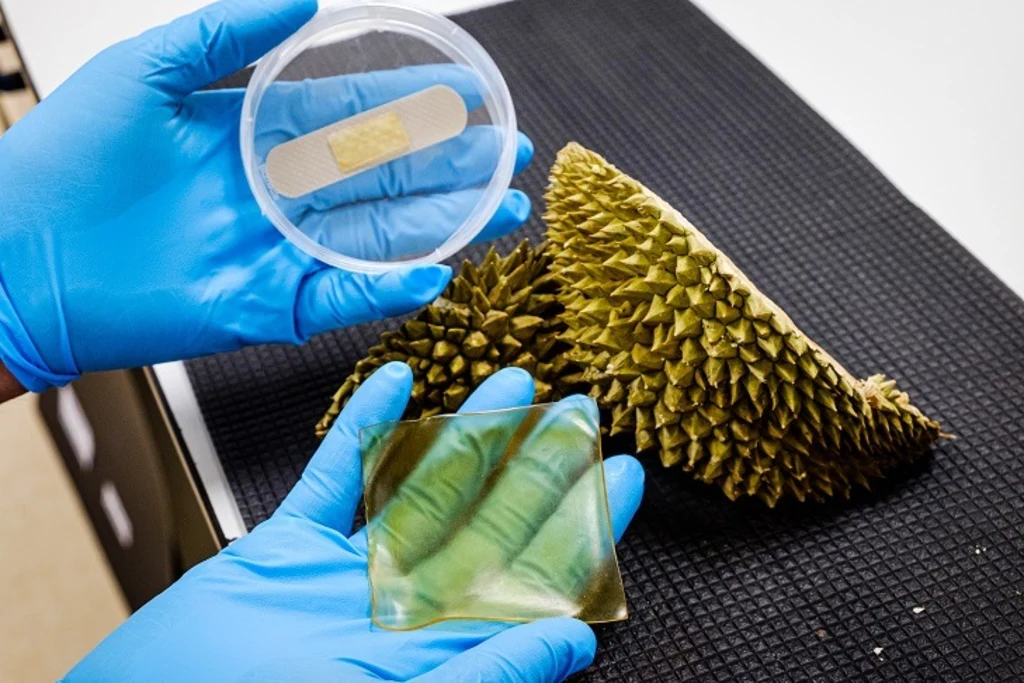
Photo credit: Nanyang Technological University
By extracting cellulose from durian husks and combining it with glycerol, NTU scientists have created a soft gel that is similar to silicon sheets and can be cut into bandages of various shapes and sizes. They then added organic molecules produced from baker’s yeast – known as natural yeast phenolics – to make the bandage deadly to bacteria.
The innovation was developed by William Chen, director of NTU’s Food Science and Technology Program. The team behind the technology is currently looking for industry partners to take their product to market, according to NTU’s press release.
Wounds linked to chronic diseases are expected to become a more common concern, with bacterial infection of skin wounds posing serious health risks.
The market for wound dressing is estimated to be worth US$11.4 billion annually. Conventional hydrogel patches are usually used to cover surgery wounds to minimize the formation of excessive scar tissue, resulting in softer and flatter scars.
Chen said these types of patches are made from synthetic materials, and those with antimicrobial properties also use metallic compounds such as silver or copper ions. Synthetic materials approved for use in biomedical applications are more costly compared to the new hydrogel, which is made from natural waste materials, according to the press release.
Editing by Miguel Cordon and September Grace Mahino
(And yes, we’re serious about ethics and transparency. More information here.)





Stay updated on the go with our mobile app.
Get latest insights with smoother, more personalized experience through TIA mobile app.