 Tracy Qu · · 4 min read
What you need to know about 5G on the Guangzhou-Shenzhen-Hong Kong Express Rail Link
China’s commercial 5G network development plans are off to a fast start, as the next-generation mobile system will be deployed on the high-speed rail link connecting Guangzhou and Shenzhen to Hong Kong.
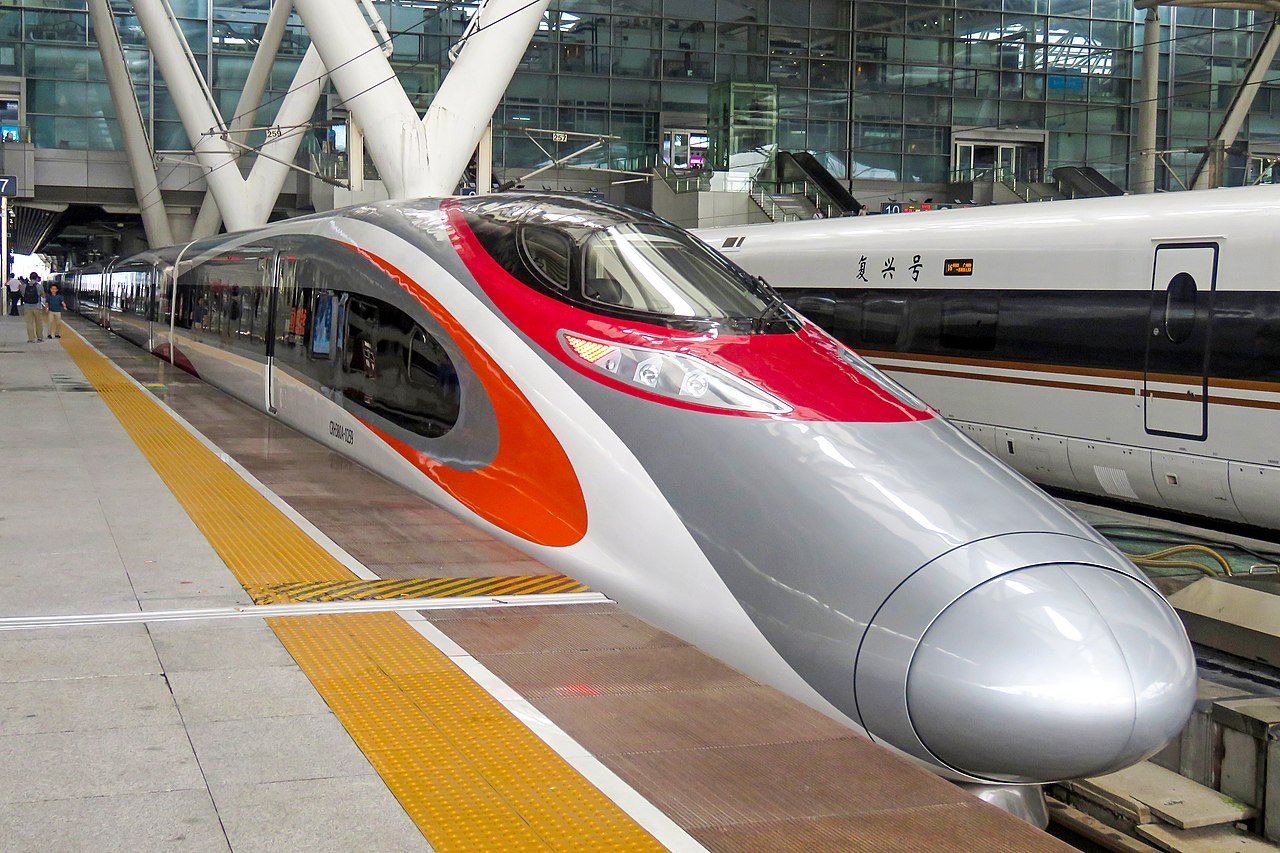
Photo credit: N509FZ
That infrastructure project was announced by China Mobile, the world’s largest wireless network operator by subscribers, at an event in Hong Kong last week as a joint initiative with its main telecommunications equipment supplier, Huawei Technologies.
The plan to provide ultra-fast 5G mobile service on the Guangzhou-Shenzhen-Hong Kong Express Rail Link, a line that stretches 142 kilometers and serves seven stations, comes several months after China Mobile and Huawei said they will deploy 5G network coverage at Shanghai’s Hongqiao Railway Station by the end of this year. Hongqiao would become the world’s first railway station to allow passengers to experience mobile data speeds up to 100 times faster than what current 4G networks provide.
In separate telephone and WeChat inquiries, representatives from China Mobile and Huawei did not immediately provide details on the cost or timetable of 5G coverage for the high-speed rail link.
Efforts to quickly introduce commercial 5G services in China mark the country’s attempt to move ahead in the global race to roll out advanced telecoms networks that will help power the industrial internet, autonomous driving, and smart cities.
In an interview, 20-year industry veteran Zhang Wei, technical director at telecoms events organizer InfoEX-World Services, provided a brief rundown on what 5G will mean to commuters on the Guangzhou-Shenzhen-Hong Kong Express Rail Link and potentially, to the broader high-tech industry in China.
How will 5G help maximize the mobile experience for commuters?
Since the high-speed rail link’s opening in September last year, many commuters have complained about how 4G network coverage invariably slowed down when the trains go through a tunnel. That meant unsteady use of social media and messaging services, smartphone games, and news and video apps for train passengers.
5G mobile service – which will offer faster data rates, reduced latency, energy savings, cost reductions, higher system capacity and massive device connectivity – is expected to solve that problem even as the trains travel at a top speed of 350km (217 miles) per hour.
Commuters who use 5G smartphones will be able to send high-resolution 4K video within a few seconds, and both video games and apps based on augmented and virtual reality technologies will be seamless.
Major Chinese Android smartphone makers, including Huawei, Xiaomi and Oppo, have started introducing their 5G handsets this year. Greater China – which covers mainland China, Hong Kong and Taiwan – is projected to make up 34% of global 5G smartphone shipments in 2023, according to research firm Canalys.
Ultra-fast 5G networks will also be able to support the growing number of connected devices used by commuters, from fitness-tracking watches to laptops and tablets.
Will 5G mobile data plans cost more to use during a trip than current 4G packages?





Stay updated on the go with our mobile app.
Get latest insights with smoother, more personalized experience through TIA mobile app.












📅 Upcoming Events
22 October 2026
Payoneer x CSPN Summit 2026