 Soham Adwani · · 8 min read
Is the Moto G the perfect contender to bring Motorola back into Asia? (REVIEW)
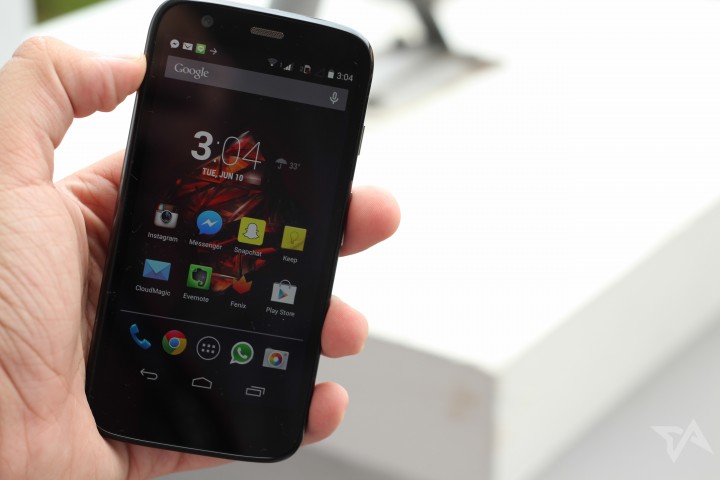
A couple of years back, if you were to buy a sub-$200 smartphone, you wouldn’t really get much. Performance would be terrible, build quality would have been unbearable, and the touchscreen nearly unusable. Lately, however, things have changed. With smartphones becoming the norm and component prices getting cheaper, it’s been getting easier for manufacturers to make good phones at ridiculous prices. From the $300 Nexus line to the sub-$200 Nokia Lumia 520, many phones now offer a great experience at an even greater price. The latest phone to try and take on that mantle in Indonesia is Motorola’s Moto G.
The Moto G was released in America in late 2013 to largely positive reviews. Half a year later, the phone has finally made its way to Indonesia, where the Motorola team along with members of Lazada held an official launch event on June 5. Since then we’ve been working on a hands-on review of the Moto G.
The phone is being sold exclusively online through Lazada, with the 8GB variant shipping now and the 16GB one coming in late June. The Moto G variants cost IDR 1.949 million (US$163) and IDR 2.249 million (US$189) respectively. Essentially it’s the same Moto G that launched last year in Brazil, with a few changes to adapt to the Indonesian market.
The Moto G is equipped with a 4.5-inch 720p HD LCD display, a 5MP shooter, a quad-core Snapdragon 400 processor, 1GB of RAM, and dual-SIM support. Motorola is also throwing in 50GB of Google Drive storage which is valid for two years. The back of the device is removable, and Motorola has seven different colours you can choose from, which retail for IDR 104,000 (US$8.80) each on Lazada. One thing that’s surprising is that the Indonesian model comes with a wall charger and a USB cable, whereas the ones shipped internationally only come with a cable.
Note that there’s no micro-SD card slot on this Indonesian model. The first variant of the Moto G did not have support for external storage, but last month Motorola updated the phone with SD card support. However, it is left out of the Indonesian Moto G in favour of a second SIM slot.
Feels solid

The first thing you will notice about the Moto G is the build quality. From the moment you pick it up, you’ll be convinced that this phone is worth more than its price-tag. Everything about the design of the phone, from the way it fits snugly in your hand to the comfortable soft touch material on the back, gives it a premium feel. Although the back is removable, it doesn’t really feel that way as the cover blends seamlessly with the overall aesthetic of the phone. It’s heavier than most other phones, but it isn’t the bad kind of heavy – it feels like it’s solid and well built. The size of the phone is similar to that of the iPhone 5, but because the screen is 4.5 inches and the side bezels are so slim, it feels much more immersive. Speaking of the display, it’s one of the best in its class. While it’s not 1080p HD, the 720p display comes in at 329PPI (pixels per inch) and is clear and crisp for most things. That is, when you have nothing to compare it to. Putting it side by side with the three-year-old Samsung Galaxy Nexus, which has the same resolution and a lower PPI due to its larger size, you can see that the colours on the Moto G look muted and less saturated, the blacks are more of a light gray, and when you push the brightness up to maximum everything just tends to look washed out.
Of course, for a phone to reach such a low price point, there are bound to be some compromises resulting in issues with the hardware. In this case, some are not so annoying, but others are unbearable. One of the major problems I had with the Moto G during my testing was with wi-fi. More often than not, the phone would randomly disconnect from wi-fi networks and would refuse to connect again, with the only remedy being switching off the wi-fi and then switching it on again. This could be attributed to the lower quality wi-fi chip found in the device. Another gripe about the wi-fi chip is that it doesn’t support 5GHz bands, but if you don’t know what that is, it probably doesn’t matter to you.
The phone also lacks an NFC chip, so if you use Google Wallet or any other similar services, this probably isn’t the device for you.
See: 15 new Asian smartphone makers hoping to crush Samsung and Apple
The speakers on the back of the Moto G are louder than you’d expect, especially since they’re on the back. It sounds fine for calls on the speakerphone but listening to music on the thing is painful. The sounds are tin-like and sharp, while the lows are overly distorted and the mids are nonexistent. One problem that I personally have with the phone’s design is that the headphone jack is on the top, which always causes the cable of my headphones to get in the way when I’m trying to use it.
Tiny engine, massive roar
Indonesia’s homegrown challengers
Moto G conclusion





Stay updated on the go with our mobile app.
Get latest insights with smoother, more personalized experience through TIA mobile app.








📅 Upcoming Events
22 October 2026
Payoneer x CSPN Summit 2026