- Premium Content It takes our newsroom weeks - if not months - to investigate and produce stories for our premium content. You can’t find them anywhere else.
 Nicole Jao · · 8 min read
WeChat vs. Alipay: The heated battle between China’s super apps
In China, mobile apps are deeply embedded in people’s everyday lives. You can access a variety of “local services” – shop for groceries, order takeout, get a taxi, settle bills, and book your travels – with just a single app.
Leading the market is WeChat, a social platform owned by Chinese gaming giant Tencent. Mobile payment app Alipay, operated by Alibaba affiliate Ant Financial, is a close contender.

These so-called super apps have become so ubiquitous in the country that at the peak of the Covid-19 crisis, the government had to rely on them to host health status apps to keep track of all its citizens.
The pandemic has led to a surge in demand for local services, and it could be making these super apps even more relevant. Alipay recently decided to up the ante by adding on apps from Alibaba’s ecosystem, such as food-ordering app Ele.me, travel-booking platform Fliggy, and movie-ticketing service Tao Piao Piao.
Alipay’s recent move was prompted by the escalating competition with fellow super apps WeChat and Meituan-Dianping. Some believe that it’s also aimed at gaining a tighter grip on data generated by users’ daily consumption, which could fuel Alipay’s financial, ecommerce, and advertising services.
Going local
In March, Ant Financial announced a three-year-plan to further open up Alipay to stores, restaurants, and merchants as well as to bring 40 million service providers in China into its ecosystem through marketing and operational support.
Ant Financial’s ambition is to turn its mobile payment app into a “one-stop digital lifestyle platform,” CEO Simon Hu said at this year’s Alipay Partners conference.
Alibaba has been eyeing the local services market for some years now, building its ecosystem mostly through mergers and acquisitions. In 2018, the ecommerce titan merged its Ele.me unit with online-to-offline platform Koubei to further consolidate its local services business.
Expanding local services and integrating them into the Alipay app makes a wide range of options more accessible to users, an Ant Financial spokesperson told Tech in Asia.
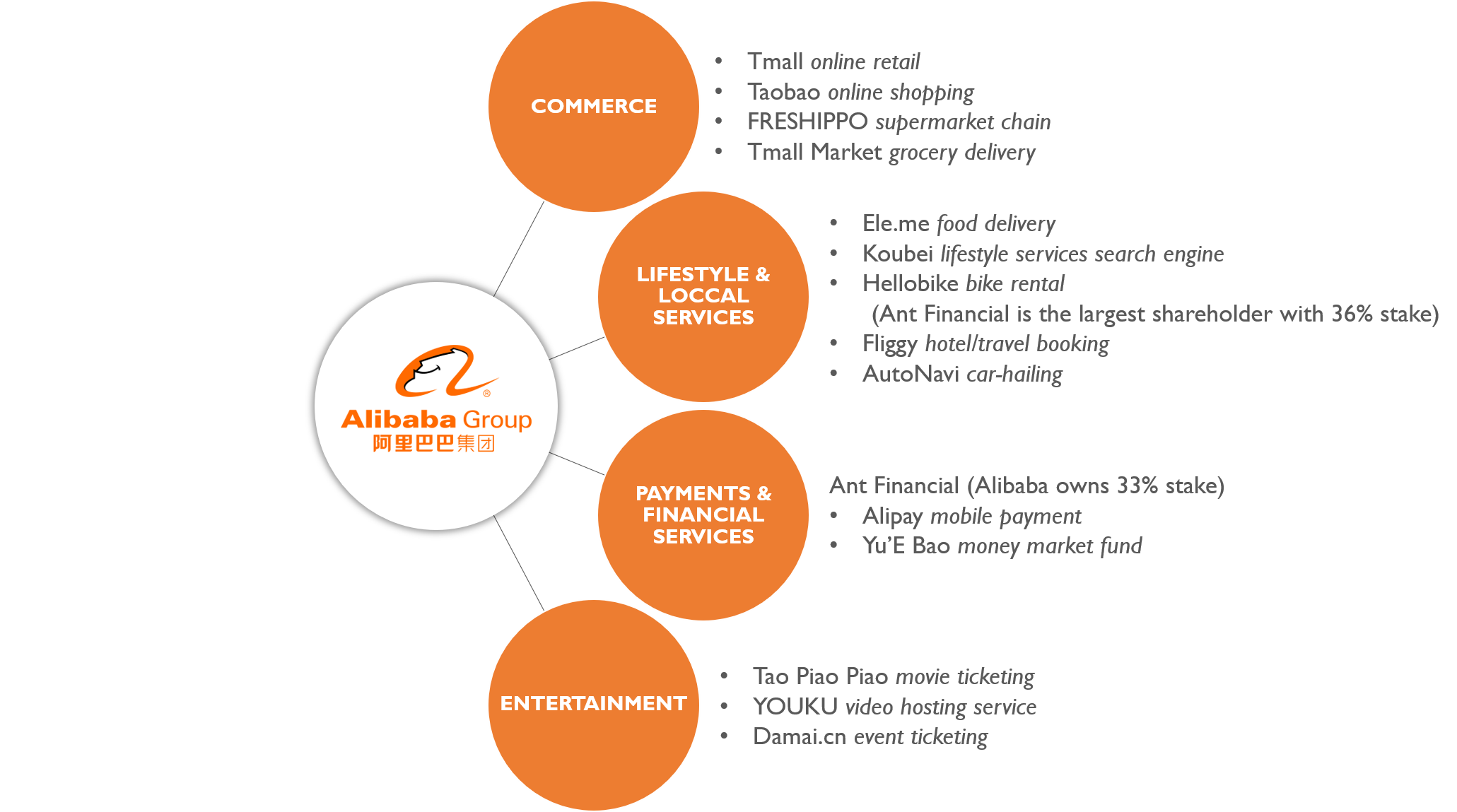
Alibaba’s lifestyles services ecosystem.
While Alipay has attempted several major transitions over the years, moving into the lifestyle segment and local services is proving to be a more successful effort. Covid-19 has given Alipay a good reason to launch this initiative, according to Huang Dazhi, senior analyst from Suning Institute of Finance.
Alipay and online shopping platform Taobao are the two main traffic funnels within the Alibaba ecosystem. But compared with Taobao, local services are more compatible with Alipay’s core of mobile payments and financial services, says Huang.
Giants go head-to-head
Super rivals
Everything’s up for grabs
Stay ahead in Asia’s tech landscape
This is premium content. Subscribe to read the full story.
Leading the market is WeChat, a social platform owned by Chinese gaming giant Tencent, while Alibaba’s mobile payment app Alipay is a close contender.
We know this is not ideal. ⌛ Sign up in 20 seconds. Cancel anytime.
Our subscriber community includes professionals from these companies:





Stay updated on the go with our mobile app.
Get latest insights with smoother, more personalized experience through TIA mobile app.