- Premium Content It takes our newsroom weeks - if not months - to investigate and produce stories for our premium content. You can’t find them anywhere else.
 Emmanuel Samarathisa · · 5 min read
What Malaysia’s latest policies mean for the tech scene
Dan Lain-Lain (Malay for “and others”) is a weekly column by TIA journalist Emmanuel Samarathisa that dissects the goings-on in the Malaysia tech scene but with a heavy mix of current affairs, policy and politics. Click here to read past articles.
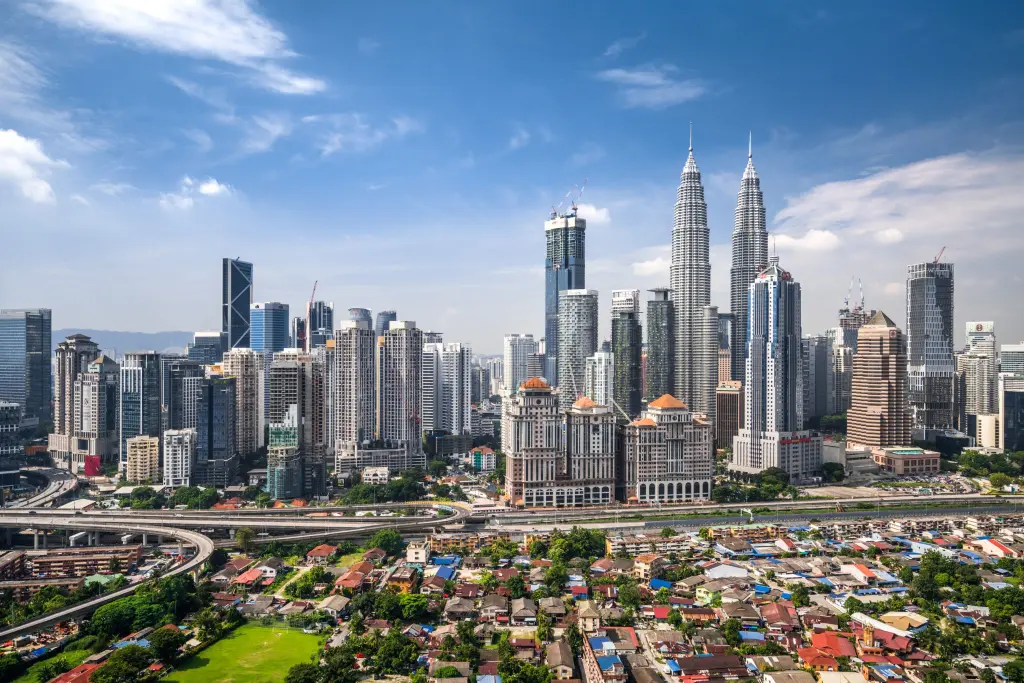
The Kuala Lumpur cityscape / Photo credit: Wikimedia Commons
It’s that season again where there are a number of political maneuvers and public policies that will have some bearing on the Malaysian tech scene. Good or bad, you be the judge. But let’s get to it:
Politicians appointed to tech-related agencies
At the time of writing, there are two agencies that have politicians – more precisely, members of parliament (MPs) – as their non-executive chairperson.
The Malaysian Digital Economy Corporation (MDEC) appointed Syed Ibrahim Syed Noh, an MP of the Ledang constituency, as chairperson, while state-owned tech financier Malaysia Debt Ventures picked Wong Chen, who’s from the Subang constituency, to be on the chair.
Both men hail from Parti Keadilan Rakyat, the political party led by Prime Minister Anwar Ibrahim.
For what it’s worth, Anwar’s men also command the key portfolios when it comes to government tech and startup funding: finance (Anwar himself); science, innovation, and technology (Chang Lih Kang); economic affairs (Rafizi Ramli); and communications and digital (Fahmi Fadzil).
In Malaysia, despite the possible conflict of interest, there isn’t an explicit clause that bars politicians from being on the board of government agencies. This is an old practice, anyway.
Why this is frowned upon is because of conflict and all the other negative things associated with such an appointment: patronage, corruption, and so forth.
Further, the country’s anti-graft agency is also under the control of the prime minister. It isn’t an independent body in the sense that it reports to the parliament.
While these appointees are vetted by the anti-graft agency, the process has been more of a performative measure since it’s not up for public scrutiny.
You could argue there are merits to appointing yes-men. Those politically affiliated with the prime minister, for instance, may have the ability to execute mandates or reforms.
But with very little oversight, who watches over the chiefs?
I’m concerned about one thing though: whether we can break away from the status quo.
Kuala Lumpur to be a regional startup hub
Digital nomads in a pinch
Stay ahead in Asia’s tech landscape
This is premium content. Subscribe to read the full story.
Digital nomads may not be able to enjoy short-term rentals in Penang.
We know this is not ideal. ⌛ Sign up in 20 seconds. Cancel anytime.
Our subscriber community includes professionals from these companies:





Stay updated on the go with our mobile app.
Get latest insights with smoother, more personalized experience through TIA mobile app.











📅 Upcoming Events
22 October 2026
Payoneer x CSPN Summit 2026