Osman Husain · · 4 min read
How a love for mangos spawned a portable air conditioning startup
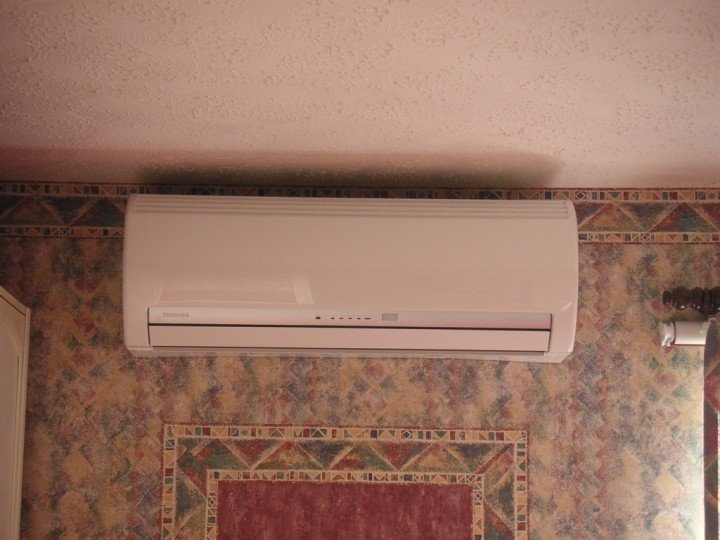
Photo credit: Lee Haywood
James Tevelyan is a professor of mechanical engineering at the University of Western Australia and a self-confessed “mango addict.” To cater to his addiction, James spends six to eight weeks in Pakistan every summer, on a quest to snarf them down when they’re at their ripest. He’s been doing this for decades.
Unfortunately for James, his summer journeys also coincide with the hottest time of the year in Pakistan. Electricity demand is at its peak, and the antiquated power generation and distribution system isn’t able to keep up. This results in forced outages, also known as “loadshedding.” In soaring temperatures of over 40 degrees Celsius, consumers have to bear with electricity shortages that can last several hours at a stretch.
Of course, elite segments of society get by on expensive alternate sources of power generation, helping them run their air conditioners and refrigerators. Others install battery-powered units that run things like fans and tube lights. But a vast segment of society can afford neither of these and are left to fend for themselves.
“One night, I was lying in bed, sweating profusely and seeing the mosquitoes aim for me. I thought to myself that there has to be a better solution, one which uses less power. This was the genesis of the idea,” James tells Tech in Asia.
What James conceptualized is Close Comfort, a small, portable airconditioning unit which uses a fraction of the power that regular devices do.
World-changing tech
James says that one of the primary motivators behind his project was witnessing firsthand the suffering of people around him. Sweltering summer heat coupled with electricity breakdowns meant that people couldn’t get a restful night’s sleep. Hence their productivity would drop to almost zero.
“If you look at the history of the US, air conditioning is recognized as one of the fundamental inventions that helped people live their lives. It made half the country liveable 12 months a year, and there was a fundamental improvement in the economy,” he asserts.
But, according to James, the same concepts of heating and cooling cannot necessarily be applied to the developing world. Differing climates mean there is less propensity to build insulated structures – quite different from homes in the West, for example. What this means is that buildings in the developing world are usually roomy, airier, and require larger amounts of energy consumption to cool down in the blisteringly hot summer.
“Running an air conditioner in Pakistan is extremely expensive – about US$120 a month. If you run it on a generator you’re looking at US$250 a month. We don’t have energy resources in the whole world to do it for everyone, so my vision is to provide technology that everyone can use within the planet’s resources,” asserts James.
Photo credit: Nick Page
Not so fast
However, coming up with the solution was the simple bit. James, who previously concentrated on robotics, had to “transform himself,” and learn how to engineer the solution. He initially thought it’d be a project his university students could handle, with a bit of oversight from himself, but those assumptions turned out to be incorrect. The tech behind the gizmo took a long time in research and development and came after several failed experiments.





Stay updated on the go with our mobile app.
Get latest insights with smoother, more personalized experience through TIA mobile app.