- Premium Content It takes our newsroom weeks - if not months - to investigate and produce stories for our premium content. You can’t find them anywhere else.
 Nikki Natividad · · 5 min read
A gyroscope-powered glove that steadies trembling hands
Over 10 million people in the world suffer from Parkinson’s disease, a neurodegenerative disorder that affects a person’s motor and cognitive functions. Its most debilitating symptom: hand tremors that get in the way of ordinary, everyday tasks like eating and drinking or turning a key in a lock.
Recent medical graduate and Singapore-born Faii Ong witnessed the effects of the disease firsthand during his medical training in London, when he cared for a 103-year old woman who struggled to eat a bowl of soup. That experience determined his decision to come up with a solution to help those who live with Parkinson’s, which has no cure.
But instead of looking to medicine, he turned to physics and created the GyroGlove.
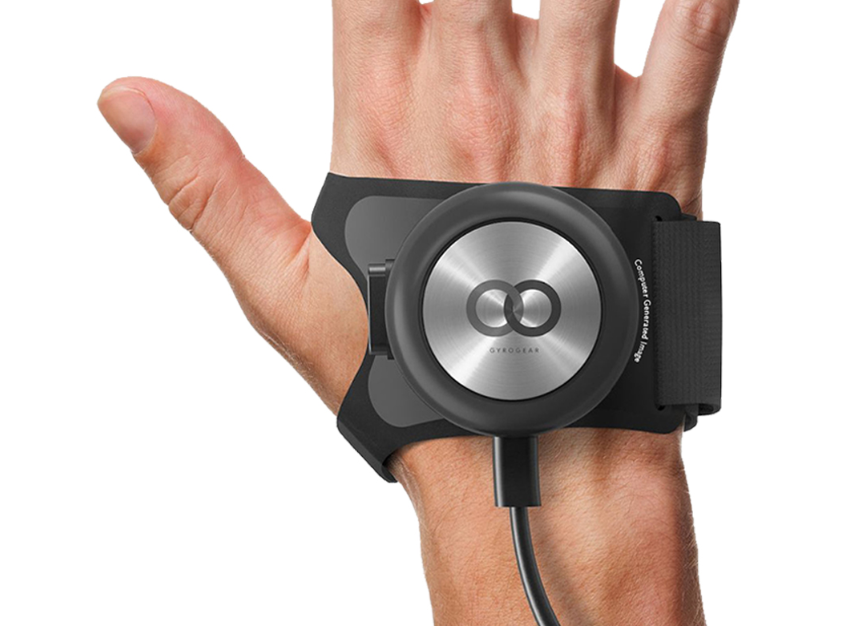
Photo credit: GyroGlove
As the name suggests, the GyroGlove is a wearable device that makes use of gyroscopes – contraptions used for maintaining balance – to steady the hands.
GyroGlove users liken the sensation to dipping their hands in molasses, where movement is slowed but noticeably steadied. According to Ong, the device reduced tremors by up to 90% in benchtop tests.
The GyroGlove was just one of many ideas that Ong considered. Together with an engineering friend at the Imperial College London, he studied and toyed with over 40 other potential solutions such as mechanical dampers, springs, electrical stimulation, and the like.
After extensive testing, it turned out that gyroscopes offered the best combination of response, size, efficiency, and power, which Ong claims is the best way to mitigate the effects of Parkinson’s disease. Meanwhile, other common movement disorders like essential tremor usually requires costly and invasive treatments such as surgery. Also, medications often have side effects like nausea or drowsiness, and they lose their efficacy over time.
There are also gadgets in the market such as Gyenno and Liftware – spoon-and-fork sets with stabilizing handles to help people with tremors eat – but that’s their only use.
Other companies such as Cala Health have explored non-invasive wearable solutions for those with movement disorders, which involve using electricity to stimulate and control the nervous system. While it doesn’t cause significant adverse reactions, the company’s method is offered as a monthly subscription, which means costs can mount up.
The most similar device to the GyroGlove right now is a product from Canada-based Steadiwear that’s also still in development. Called Steadi-One, it’s a battery-free tremor stabilizing wrist glove that uses a ball joint damper made up of “smart material” to resist the shaking while still allowing voluntary motion. On its website, the company claims its product can reduce tremors by 80%, based on lab tests. However, Steadi-one has a downside: it contains a small magnet, which makes it unsuitable for those with cardiac pacemakers or other implantable medical electronic devices.
Ong claims that the GyroGlove has no major side effects. The only complication is that it’s battery-operated. It needs to be charged after 18 hours of use, and the device itself needs to be replaced after three years or so.
Part of the reason why GyroGlove needs batteries is because it uses sensors to track the progress of the disease, which can be useful data for healthcare research.
On the road to commercialization
The company behind the GyroGlove is GyroGear, which Ong leads alongside a team of 15 engineers and doctors. Some of his advisors include Lester Cohen, who helped develop the James Webb Space Telescope, professor Ludy Shih, a neurologist at Harvard Medical School, and professor Alison McGregor, who specializes in musculoskeletal biodynamics at Imperial College London.
Six digits to get a certificate
Stay ahead in Asia’s tech landscape
This is premium content. Subscribe to read the full story.
According to the founder, the device reduced tremors by up to 90% in benchtop tests.
We know this is not ideal. ⌛ Sign up in 20 seconds. Cancel anytime.
Our subscriber community includes professionals from these companies:





Stay updated on the go with our mobile app.
Get latest insights with smoother, more personalized experience through TIA mobile app.










📅 Upcoming Events
22 October 2026
Payoneer x CSPN Summit 2026