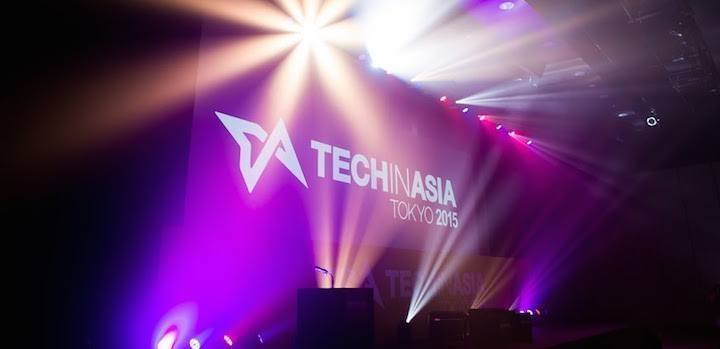
We’ve scoured the region to bring to you the best startups. And now at Arena, the much awaited segment of Tech in Asia Tokyo’s conference, we’re bringing to you the showdown between Asia’s top startups – live.
Joining us on stage today, we have (in order of appearance) :
- Fast Media from Japan
- Collegedunia from India
- Yoyo Holdings from Philippines
- Dot Incorporation from Korea
- Yukai Engineering from Japan
- Playbasis from Thailand
- Mana.bo from Japan
- Vibease from Singapore
- Shakr from Korea
Each startup will have just five minutes to impress our panel of judges, audience and investors with their pitch. Following which, a Q&A session will ensue.
Who will take home the grand prize of US$10,000 on top of bragging rights? Stay tuned to find out.
3.15pm: Judges announced. They are: Shinichi Iwata, partner at Atomico Japan; James Riley, head of 500 Startups (Japan); Batara Eto, co-founder and managing partner at East Ventures; and Akio Tanaka, managing partner at Infinity Venture Partners.
3.19pm: Fast Media from Japan kicks off their pitch by introducing their product Yappli, a simple app builder.
3.20pm: Yappli claims they only take an hour to create a simple app – and will even submit it to Google and Apple on your behalf.
3.21pm: A few months ago, there were only three founders on the team. Yet in a short span of time, they’ve successfully raised USD $2.7 M in their series A round.
3.22: The Q&A starts. What is the competition like in this space? Yappli’s answer – worldwide, there are many companies that can create mobile apps without any code. They target the higher-end users in Japan as they can create higher quality apps.
3.26pm: Next up on stage is Collegedunia from India.
3.27 pm: Founder Sahil Chalana argues that there are a plethora of questions to be answered when selecting a college – the main motivation for Collegedunia’s creation. They have closed a million dollars in revenue for this financial year because of their focus on the user.
3.28pm: They didn’t want to be the Tripadvisor of education, but rather, the personal admission assistant in college selection.
3.30pm: The three main roles Collegedunia takes are: 24/7 friend, doting mother and pocket encyclopedia.
3.31pm: In the Q&A, they comment that their revenue comes from lead generation for colleges. While 80% would come from lead generation, the rest would be from affiliate marketing. However, revenue isn’t their current focus.
Plans for the future? Collegedunia cites studying abroad as the next opportunity they wish to work on. They plan to help students make more informed decisions with alumni’s input.
3.35pm: We have Yoyo Holdings from Philippines next on stage. Yosuke Fukada introduces his product Popslide by building his case on the notion that everyone uses smartphones because of its affordability and its prevalence in our life. He paints the scenario of a couple text-messaging lovingly – only to have their conversation interrupted by internet instability. He received cheers from crowd for suggesting that the internet should be one of Maslow’s hierarchy of basic needs.
3.39pm: Popslide plans to utilize this by creating a reward platform for mobile data plans. It has reached the top spot in several Southeast Asia markets, thanks to an unobtrusive data lock screen and data partnerships with many top ranked telecommunication firms. And Popslide aims to change people’s lives via free mobile internet.
An evident hot favourite with the crowd thanks to his humorous presentation style, they erupt into applause with his conclusion.
3.45pm: Ju Yoon Kim of Dot Incorporation has just entered the stage and introduced his product – a Braille smartwatch for the visually impaired.
3.48pm: The visually impaired market is 95% illiterate, with only 1% with access to Braille. In addition, existing devices are big and heavy, making it difficult for the blind to read with convenience. Ju Yoon hopes to solve this problem with their product so that the visually impaired can read on the go.
3.50pm: What’s the future of Dot? They next plan to create a Braille Kindle, hopefully in collaboration with Amazon.
3.51pm: “How practical is it?” James Riney asked. He also questions the uptake of the product and why they chose to create the smartwatch and not the Braille Kindle first. Ju Yoon answers that they doesn’t want to enter an oversaturated market with a Braille Kindle, and opted to capture the niche market instead.
3.52pm: James feels that the candidate isn’t answering his question.
3.55pm: From Japan, Yukai Engineering prepares to pitch. He introduces his latest product, Bocco the robot, which according to him, is the future of the smart home.
3. 58pm: They project 2016’s revenue from their top 3 products to dwarf this year’s and hopes to change how people perceive connective devices.
4.00pm: Akio asks about the cost – USD$ 240. He further questions, what Bocco would do if someone sets his house on fire.
4.06pm: Playbasis is up next. Robert Zepeda, the startup’s founder, wants to introduce collaboration, connectivity and reduce workforce turnover. An effective strategy thus becomes of paramount importance in engaging today’s workforce. Originally from the gaming industry, Robert plans to gamify online and offline activities for greater production and sales.
4.08pm: He shares five ways Playbasis can help businesses – by building your app, motivating your users, monetizing your users, managing your app with analytics & CRM and a new technology to arrive soon – a growkit to multiply users.
While their service is free for startups to use, most of their business comes from large enterprises.
4.11pm: In response to the judges’ question, Rob elaborates on the company’s deep involvement in the creation of games. They vary their gamifcation strategy to deliver different outcomes.
4.16pm: Mana.bo is the third last startup to come on stage. Koichi Tsunoda, their CFO, calls themselves the Uber of education.
4.18pm: The only company in Japan with handwriting recognition, Mana.bo can store data from past sessions and generate automated recommendation.
4.20pm: “What’s really exciting for us is that we’re creating a new market with our products,” says Koichi. They currently operate on two models – a B2C one, in which they charge student users, and a B2B2C model where they charge entities for teaching children with their product.
Koichi clarifies in the Q&A that their 60,000 tutors aren’t on the road all the time – just like how not all of Uber’s drivers are activated all the time. With regards to price, they charge two main plans – a few hundred dollars per month, or ten dollars for a 30 minutes session.
4.26pm: They screen tutors based on education and the institutions they are from. In the near future, they hope to open the process to anyone who can teach and will by then use a rating system to assess the quality of tutors.
4.30pm: From Singapore, a startup that has caught the attention of many event-goers at the conference – Vibease. Founder Dema Tio launches straight into the topic of sex, with a bold ambition to convert all sex toys in the market to smart ones. Vibease believes that most products right now are heavily influenced by the porn industry, and they want to change that.
4.32pm: After delving into the factors of a female orgasm, they demonstrate a video of the product vibrating violently on the table.
They end their pitch with the hope that women can have orgasms as much as men do.
4.34pm: A pressing question from the judges – when will the male application come out?
4.35pm: A common issue among the all-male panel of judges seems to be a lack of understanding of the product, which is targeted at females.
4.37pm: The last startup to pitch today is Shakr from Korea. Their main proposition? Video is growing really, really fast.
4.38pm: David Lee, founder of Shakr displays a Mazda ad he claims would cost about US$50,000 – made for US$50 on Shakr. That’s 1,000 times less expensive, and all done under 15 minutes, he claims.
4.41pm: With 1,200 templates available and over 500 designers contributing to their database, David says it’s as easy as click, drag, and drop.
4.43pm: Aiko’s impressed with Shakr’s presentation, but expressed his concern on how small businesses, with a large proportion of old demographics, would use the platform.
We’re going for a break now as we tally the results to crown the winner.
5.09pm: After a fun quiz game with the audience, we’re ready to announce the winners.
- Yappli won a Kindle Fire HDX from Amazon Web Services
- Yukai Engineering won the PR Times Award, which allows them up to one-year free usage of the news-distribution platform
- Popslide won an Entrepreneur Support Award with 50,000 air mileage on Japan Airlines sponsored for one traveller
- Shakr also won an Entrepreneur Support Award with 50,000 air miles on Japan Airlines for two travellers
- Mana.bo wins a cloud accounting system with JPY 400,ooo yen credit, sponsored by Freee
- In addition, they also won an Entrepreneur Support Award with 50,000 air mileage on Japan Airlines for three travellers
And the moment we’ve all been waiting for – the champion of Tech in Asia’s Arena.
Taking home a sweet USD $10,000, is again Mana.bo – undoubtedly the biggest winner of tonight’s show.
With the conclusion of Arena, Tech in Asia Tokyo 2015 comes to a close. Check out our integrated social media stream here for the day’s happenings!
Stay updated on the go with our mobile app.
Get latest insights with smoother, more personalized experience through TIA mobile app.
Recommended reads
 Tech in Asia’s 6th Product Development Conference, by the numbers (INFOGRAPHIC)
 SG comedian Mark Lee to launch NFT project
 One step closer to virtual reality for an anime metaverse
 Cake DeFi shines while firms crumble amid crypto winter
 Meet the judges of Startup Arena Pitch Battle 2022
 Why this ASX-listed gaming firm is sweet on Web3
 Singapore music festival to launch NFT collection
 Terra founder contests South Korea’s Bitcoin transfer accusations
 Vietnamese Web3 firm taps Polygon, Alpha Venture DAO for accelerator (Updated)
 Singapore’s co-living firms are on the rise













📅 Upcoming Events
22 October 2026
Payoneer x CSPN Summit 2026