 Joyce HUANG · · 8 min read
Web design for beginners: a crash course in appealing to the brain, eyes and heart
For online businesses, good web design helps you to stand out from a sea of competitors and adds great value to users.
Achieving good web design though, can be deceptively difficult.
It involves creating a design that is both usable and pleasing, delivers information and builds brand, is technically sound and visually coherent. All of which are key elements for founders’ to keep in mind when you are building your next website.
At our recent Design Series workshops, we were lucky enough to have Ester, a web and interaction design lecturer from Nanyang Polytechnic, share about the principles of good web design.
Here are some of the basic principles we’ve distilled from her talk.
1. Appeal to the brain – set direction and key goals for your web site
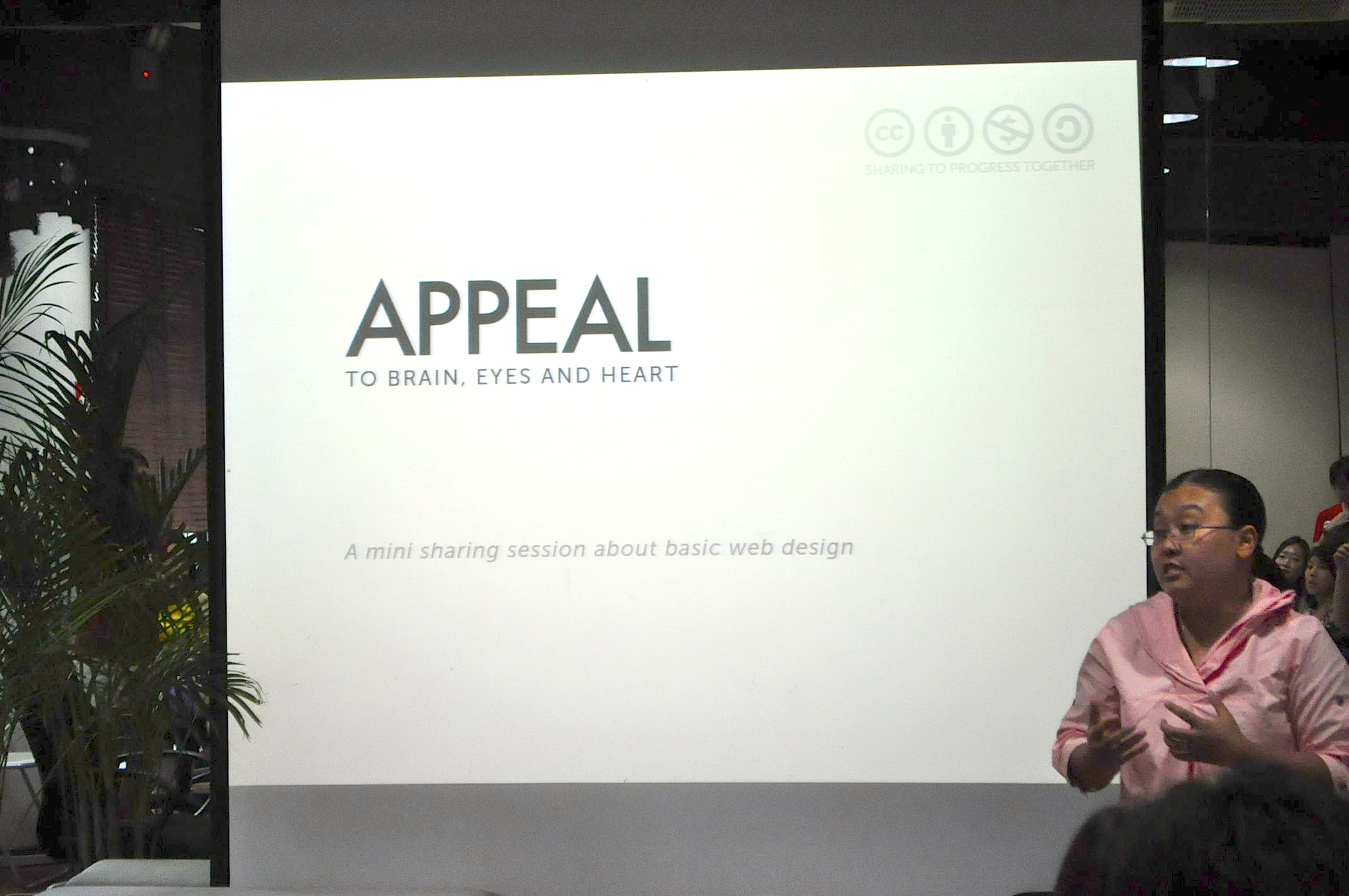
Ester joined us for a mini sharing session on what makes good web design
A pretty website without a clear value proposition and goals is just another pretty website. While design is important, it’s horseshit if you’re not actually creating something of value for your users. Just think of popular sites such as Craigslist that look simple but yet solves a clear problem.
Before you even start to prototype, start by writing a creative brief. The brief, in its different forms, represents the start of a project.
Writing down answers to basic questions such as
- What is your website about?
- Who is your target audience?
- Why will it be interesting for them?
- How are you going to make it happen?
.. helps you to better address the needs of your users and understand your own motivations for creating the site. I’ve seen some offline businesses who just needed some form of web presence run solely on their Facebook and Flavors.me pages, and have been wildly successful at doing so without investing thousands to create a web site. So do some deliberation before you create your site.
An example answering the “Who is it” and “What is it for” questions would be:
Amazon.com is an e-commerce (noun) website offering competitive products such as books, toys and movies (type of service) to clever / lazy / time-starved (use adjectives) adults (noun that defines target audience) who enjoy the convenience of shopping in their own homes for affordable products (address their needs and wants).





Stay updated on the go with our mobile app.
Get latest insights with smoother, more personalized experience through TIA mobile app.












📅 Upcoming Events
22 October 2026
Payoneer x CSPN Summit 2026