- Insights This article was written by a TIA community member. Insights pieces undergo the same rigorous editorial process that newsroom-produced articles have.
 Joel KO · · 4 min read
Opinion: Asia is poised to become an AI leader, and it’s not just because of China
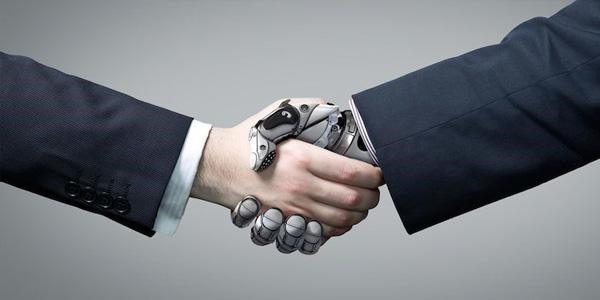
Photo credit: Techrevolution.asia
Joel is a TIA Star Contributor and publishes high-value content that serves the Asian tech community. Read more from TIA Star Contributors here.
There’s good news for those of us in Asia who are cheerleading homegrown innovation, especially in fields like AI that are so important for future industries. Countries like South Korea, Singapore, Japan, and Taiwan are hotbeds of AI innovation.
That’s important because the increasing sophistication of automated systems will have far-reaching implications for work and employment. While Taiwan has some work to do to catch up with its three Asian peers, I think it has all the ingredients to become an interesting AI hub in its own right. All four are representing Asia’s AI prowess to the world.
Japan
Japan’s government plays a major role in supporting AI research. The country boasts a world-leading innovation environment. This could be even better if it paid more attention to education policy, in particular to the promotion of soft skills and support for lifelong learning (something Singapore excels at).
I have observed through experience that Japan has advanced AI adoption and has very lively debates on the impact of AI to the economy and society. It is also trying to prepare feasible scenarios and solutions for future use cases, while other countries like Korea, Taiwan, and Singapore are still promoting basic knowledge and AI concepts.
Taiwan
Taiwan has some of the best talent around the region, and it comes cheap as well. If you want to establish a data center in Northeast Asia, Taiwan is a good choice. That’s why Google, IBM, and Microsoft, three of the world’s leading high-tech companies with big AI budgets, are all expanding there this year.
The country’s engineering talent is easy to train for cutting-edge fields like AI, and the government is looking for new high-tech fields to grow its GDP to a target of US$613 billion this year. Taiwan wants to move away from over-reliance on manufacturing, and AI development is one avenue.
South Korea
South Korea ranks first for innovation in an index by the World Economic Forum. The country set aside US$2 billion to bolster its AI R&D capabilities and also ranks high for its labor market policies targeting workforce transition.
The Economist Intelligence unit recently compiled their automation readiness index, and South Korea again ranks number one (with Germany, Singapore, and Japan close at its heels). This shows that South Korea has big potential to be the leader for an AI-driven economy.
However, while the country has a strong background in manufacturing and high tech, AI has become a controversial issue. In April this year, researchers boycotted the Korea Advanced Institute of Science and Technology, the country’s top university, after it opened what they called an “AI weapons lab” with one of South Korea’s largest companies.
Singapore
Singapore is pioneering many promising experiments in continuous education and labor market policy. The country offers adults credit toward training courses through individual learning accounts and encourages firms to invest more in lower paid workers. As a result, the country scores top marks for labor market policies, alongside South Korea.
I think Singapore’s strengths as a leading AI player reside in its ability to remain a neutral player that can invest in and incubate AI technologies and businesses (rather than being dragged into an overly nationalistic flexing match of the sort we see between the US and China).
Singapore also finds its own AI positioning aligned with its inherent strengths (e.g. its history as a maritime hub). This leads to questions about how Singapore can best work with the industries it has a natural advantage in and exposure to.
Asia’s Western AI counterparts





Stay updated on the go with our mobile app.
Get latest insights with smoother, more personalized experience through TIA mobile app.