 Josh Horwitz · · 5 min read
The cat facial recognition startup is real, and they’re totally serious about reading cat faces
Startups in consumer tech love solving first-world problems, and crowdfunding sites like Indiegogo and Kickstarter are playgrounds for high-tech products of dubious utility. Remote controls, smart kegel trainers, and sleep-optimizing LED lamps will regularly get featured on Indiegogo, and Kickstarter’s front page makes for great mindless entertainment alongside BuzzFeed and Reddit.
So it came as no surprise when Bistro, pet feeder that can recognize cats’ faces, zoomed passed its funding goals on Indiegogo and made headlines in mainstream online media. If crowdfund addicts love anything more than half-baked product ideas, cat videos would probably be it.
But Zillians, the 18-man team behind Bistro, doesn’t see the product as a pipe dream. In their eyes, it’s a natural extension of what the company has been working on since 2008 – building a comprehensive artificial intelligence platform. Moreover, if Bistro is successful, it might be the company’s ticket to an extremely lucrative market.
Fanciful feasts
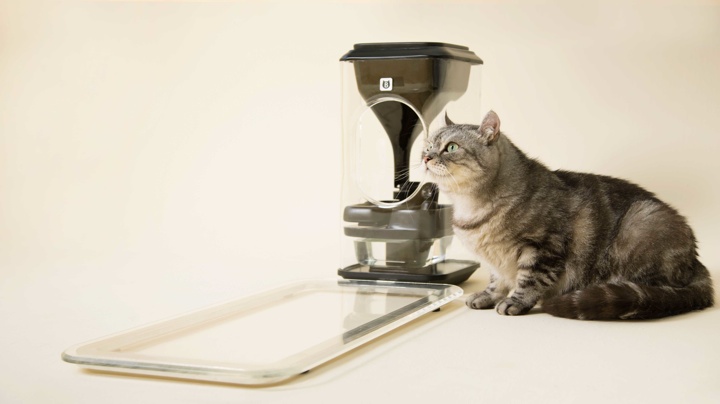
Bistro’s premise will sound familiar to anyone who’s been following the nascent smart home space. The mini-fridge sized device holds set quantities of dry cat food and water, and attaches to a digital scale. Each time a cat steps on to the scale to duck its head in for a bite, Bistro measures the cat’s weight and its food intake. If you’ve got multiple cats (most Bistro users probably should, as it’s quite easy to estimate food intake of a single cat), Bistro will automatically recognize the cat’s face to ensure that its measurements correspond to the correct cat. All the data goes straight to an iPhone app.
Putting aside the silly catchphrases – “quantified cat” and “cat recognition technology” – Bistro ought to serve as an appealing product for people that own multiple cats and care about them deeply. After all, cats don’t just walk up to their owners to tell them they’ve fallen ill – one of the few ways for the non-veterinarian cat owner to assess their pets’ health is to watch food intake. But giving out separate bowls to separate cats is a pain. Bistro lets owners keep food and water in one place that serves as the status-quo hub for cat health monitoring.
Bistro isn’t the only cat feeder on the market. LA-based PetNet received US$1.125 million in funding for its smart feeder, but it doesn’t measure weight, and uses portion control rather than scales to measure food intake. Gatefeeder uses smart ID collars to recognize which cat is which, but there’s no corresponding mobile app for tracking.
Zillians founder Mark Chu says he got the idea for Bistro when one of his own cats suffered an ailment.
“I have three cats. One of them hadn’t eaten for days, or for a week – well, I didn’t know actually, and that was the problem. They all ate out of the same bowl, and I didn’t know which ones were eating well and which one wasn’t until it was too late. This wouldn’t have happened if I had known about this cat’s appetite change. So I wanted a device for people like me, who had multiple cats.”
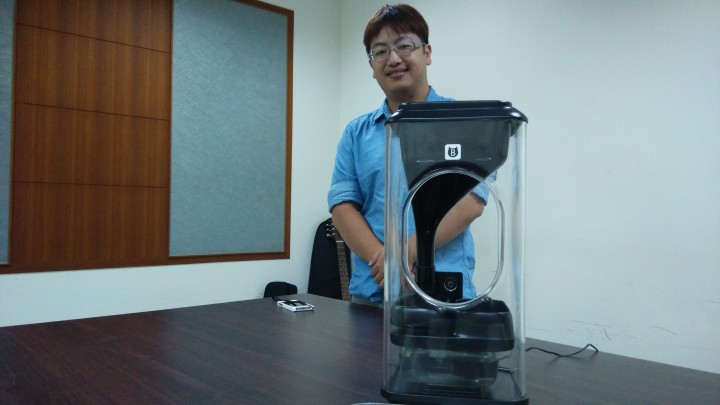
Of course, Bistro has its limits. As a feeder for many cats, owners can theoretically only put one specific type of food in it. So if Captain Whiskers needs to switch to rice-based kibbles in order to lose weight, you’ll still have to make some changes in your cat feeding regimen. It’s also a bit of an eyesore. No one’s going to mistake a cat feeder for a work of fine art, but most consumer hardware products these days aspire to reach some standard of attractiveness, and Bistro doesn’t quite cut it.
Supply chain intelligence





Stay updated on the go with our mobile app.
Get latest insights with smoother, more personalized experience through TIA mobile app.











📅 Upcoming Events
22 October 2026
Payoneer x CSPN Summit 2026