 Renhao Wong · · 6 min read
How Indonesia’s Telkomsel is staying ahead of tomorrow’s needs

Telkomsel, Southeast Asia’s largest mobile operator, is not taking its formidable position for granted.
As Indonesia’s incumbent telco, it was the digital gateway to some 173 million people in 2021, a marked increase from its 67% market share in Q1 2020. The 26-year-old corporation was also at the forefront of the archipelago’s transition from 3G to 4G and its more recent shift to 5G.
Despite its achievements, Telkomsel understands that “being a telecommunications company is not enough to provide meaningful transformations for both today’s and the future’s generations,” says Derrick Heng, the company’s chief marketing officer.
Listening to the winds of change
Telkomsel sees the rise of over-the-top services like Spotify, Netflix, and WhatsApp as proof of the inevitable: Digital channels have become our primary route for connecting and engaging with the world. In light of this, it became clear to the telco that it had to modernize ahead of its users.
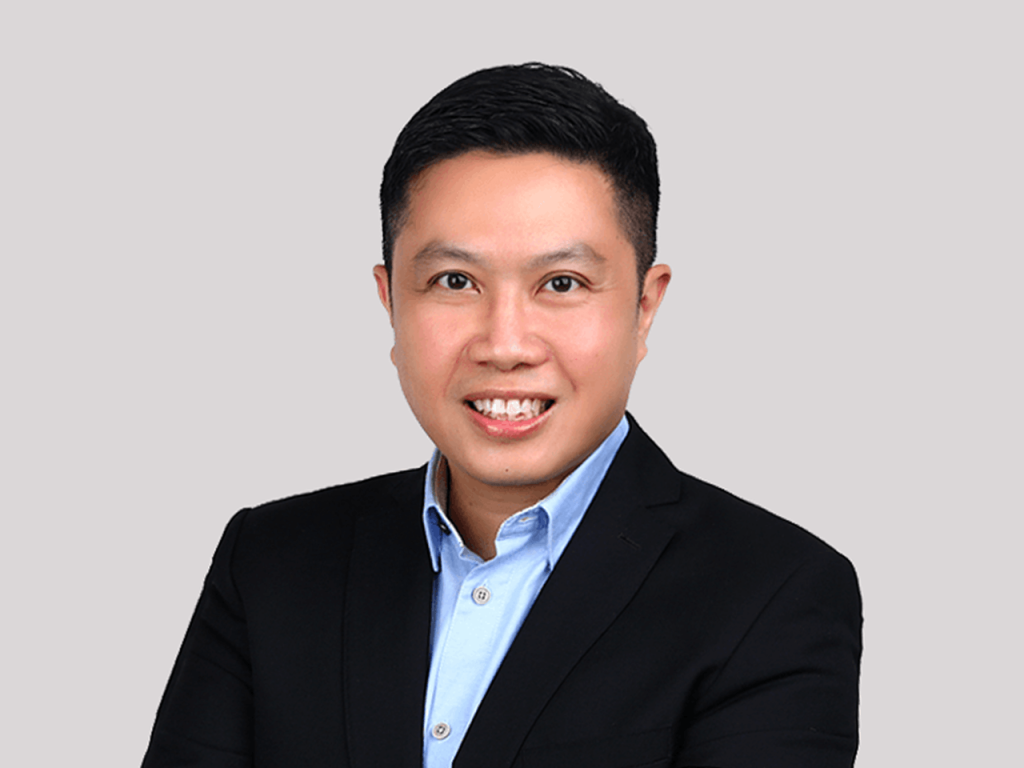
Derrick Heng, Telkomsel’s chief marketing officer / Photo credit: Telkomsel
Alongside the government’s push for the digital transformation of Indonesia’s businesses and citizens, Telkomsel has doubled down on its efforts to remain a key player in the country’s accelerating digital growth.
However, change can be intimidating and even be paralyzing for big corporations that serve millions of customers. To ensure that these large-scale changes were built and implemented holistically without impacting ongoing operations, Telkomsel worked with long-time partner McKinsey & Company and its advanced analytics arm QuantumBlack.
A team of interdisciplinary venture builders, data domain experts, and strategy consultants planned how Telkomsel could better enable its customers to fully embrace today’s digital lifestyle.
Knowledge as foundation
The first and foundational change involved major upgrades to Telkomsel’s data systems, which essentially involved building a new data analytics platform. Today, the company’s upgraded capabilities boast “more than 9,000 data points available per consumer, fully modular and reusable across all business units,” says Heng. Automatic, quality-checked data pipelines and a new suite of AI-driven tools have also produced “10x improvement in data quality.”
This gives Telkomsel a complete view of every customer, which can then be used to improve their experience across various touchpoints while also allowing for “more accurate and faster decision-making” at the company, adds Heng.
With its improved systems, Telkomsel was able to identify consumers who were still relying on 3G connectivity even as their data needs were growing. This was the company’s first step towards providing a better user experience (UX).
Meeting customers where they are
Updating its analytics also alerted Telkomsel to the fact that despite being the market leader, it lacked a digital-first brand association among younger users, who expect seamless digital experiences across multiple touchpoints and are very particular about which brands they choose to support. With Indonesia’s Gen Z segment already averaging 8.5 hours of data consumption a day, the telco’s second objective was to secure its relevance to these digital natives.

Photo credit: madebydubo/123rf
Telkomsel engaged experts from Leap by McKinsey, the consulting firm’s business building and scaling arm, in order to establish By.U, Indonesia’s first digital telco, from the ground up.
The team designed, built, and launched an all-digital customer experience – from onboarding and quota management to top-ups and payments – to reflect the spirit of the target consumers. That informed the development of By.U’s internal processes as well: a culture of agile processes that promotes collaborative working and a fit-for-purpose technological stack were put in place.
Heng notes how significant plays like this often come with unseen challenges. “The early stages of our collaboration were very challenging, but there were many interesting and new things that we could learn from and use as a basis for improvement and development.”
For By.U, the debate revolved around whether to build slowly, or to take a minimum viable product (MVP) to market faster and finetune the product-market fit afterwards.
Ultimately, the team chose the latter route, creating a series of social media tests to observe clickthrough rates on features, which allowed them to develop an MVP quickly. The service debuted to around 30,000 customers on the pre-launch waitlist and then hit its one-year customer acquisition goal in just six months. Fifteen months after launch, By.U has over 2 million subscribers under its belt, with market-leading net promoter scores.
The complex path to simplicity
Telkomsel’s third transformation goal revolved around making customer interactions with the telco “as seamless, convenient, and personalized as possible” – a simple mission, but one that’s hard to execute. After initial attempts to improve the user interface of its existing mobile app, one thing became clear: A completely new app – backed by an overhaul of supporting back-end systems – was needed to fulfill the needs of increasingly digital-savvy customers.
Telkomsel bit the bullet and made changes to its core technological backbone, transitioning to a cloud-based architecture while simultaneously planning product development and commercial strategies. Features included higher transparency of customer usage through real-time monitoring and alerts, seamless digital payment options, and more brand partnerships, which the company believes will be instrumental to “increasing Indonesia’s digital economy,” according to Heng.
As a result, Telkomsel reports that its new app has netted 20 million downloads within a year of its launch and now handles 80% of the telco’s transactions.
All hands on deck
Although transformation begins with technology, the journey involves far more than that.
“Without the right skills and talent in place, no data or digital platform – no matter how powerful – would perform to its potential or withstand technological evolution,” Heng emphasizes.
To that end, the company’s transformation process included efforts to ensure that employee mindsets were tuned towards prioritizing purpose and agility. An agile recruiting process was also created to attract, onboard, and train Indonesian talents from the data science, software engineering, product ownership, and UX fields. This required a fresh approach to talent management, including new perspectives in employer branding, career paths for newer roles, and establishing an in-house academy for upskilling.

Photo credit: ferli / 123rf
Heng credits the driving force of a fully aligned company for the success of this transformational push, along with shareholders, stakeholders, and strategic partners like McKinsey.
Constant vigilance
In a market like Indonesia, where wireless connectivity is necessary to ensure that wider territories have access to the internet, change and disruption will always be around the corner. The country’s digital economy to be worth US$125 billion by 2025, and competitors are already moving to claim as much as they can of that opportunity. Companies should expect disruption to be the new norm and constantly keep themselves ahead of the game – a lesson driven home by the Covid-19 pandemic.
Telkomsel’s transformation push allowed it to react with speed and agility when the worst of the pandemic hit, ensuring that staff and consumers alike were able to go about their lives remotely while offering newly tailored services to serve a freshly evolved set of needs.
Not only does this demonstrate how constant innovation is critical, but it also shows that no company can afford to rest on their laurels. Telkomsel has made itself more resilient in the face of an unknown future.
Leap by McKinsey works with established organizations to imagine, build, and scale new businesses – and develop the capabilities needed to do it again and again.
Learn more about how corporate business building works and the benefits it could provide to your organization at this link.
This content was produced by Tech in Asia Studios, which connects brands with Asia’s tech community. Learn more about partnering with Tech in Asia Studios.
Stay updated on the go with our mobile app.
Get latest insights with smoother, more personalized experience through TIA mobile app.
Recommended reads
 Building a human capital operating system for students
 Vietnam earned-wage access firm Gimo eyes profitability by 2028
 Crypto.com slashes 20% of global workforce
 These toys bring culturally rooted play to toddlers
 Sea says it will add over 2,000 jobs in Malaysia
 Amartha banks on grassroots strategy to drive financial inclusion
 AI on Android could improve fashion’s quality control
 An AI interviewer being built on interview data, not CVs
 Ex-Amazon VP breaks down how to win workplace politics
 AppLovin CPO on how renting AI can be a waiting game





Editing by Winston Zhang, Stefanie Yeo, and Eileen C. Ang
(And yes, we’re serious about ethics and transparency. More information here.)





📅 Upcoming Events
22 October 2026
Payoneer x CSPN Summit 2026