- Premium Content It takes our newsroom weeks - if not months - to investigate and produce stories for our premium content. You can’t find them anywhere else.
 Jofie Yordan · · 5 min read
In Indonesia, e-fulfillment rises as an ecommerce niche
For Indonesia’s major ecommerce marketplaces, one service that has become a fixture on their platforms is e-fulfillment. Tokopedia, Shopee, and Bukalapak all have this feature, which lets sellers hand over their warehousing and related services – such as packing and shipping – to the ecommerce platforms.
This is perhaps a natural development in Indonesia, where the geographical size and quality of infrastructure vary greatly between cities.
If Amazon is anything to go by, e-fulfillment holds plenty of promise: The US ecommerce giant’s Fulfillment by Amazon (FBA) service counts 85% of the firm’s top 10,000 global sellers as users, and it has also powered Amazon’s marketplace revenues over the years.
That said, several rising startups are also eyeing this space, offering a third-party, platform-agnostic option for ecommerce sellers. While many of these startups are already ecommerce enablers or logistics players, some are entering the space from seemingly unrelated industries.
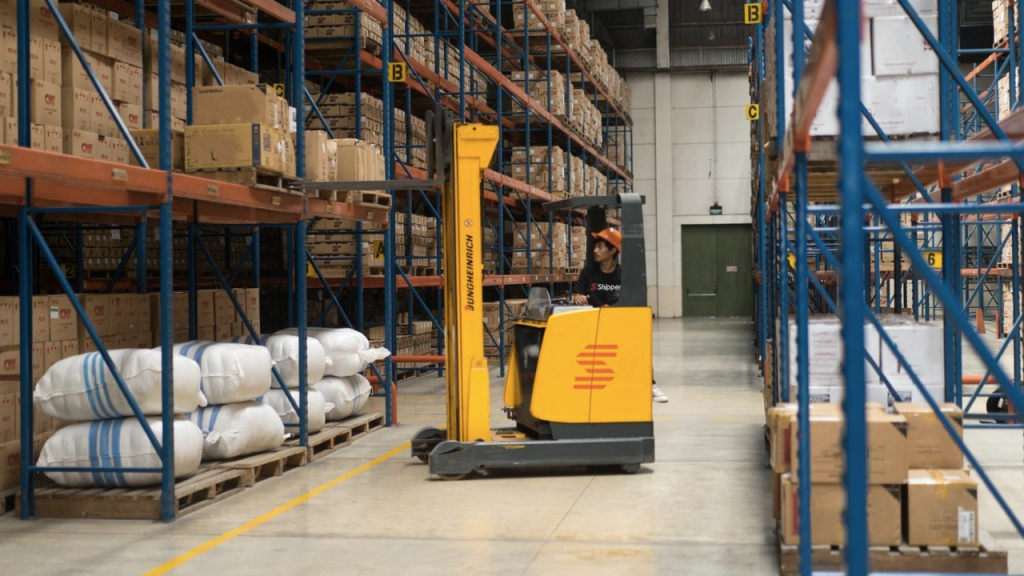
A Shipper warehouse / Photo credit: Shipper
Still, e-fulfillment is not necessarily the easiest space to enter. The warehousing part of the equation, for instance, is particularly capital-intensive. Meanwhile, margins are thin.
“Profitability may be difficult if you run it as a standalone business,” says a logistics CEO who declined to be named in this report.
A road to scale
Broadly speaking, e-fulfillment providers offer warehousing services in the form of the warehouse space and workers needed. Tokopedia’s fulfillment platform TokoCabang, for instance, takes care of everything from storing inventory all the way to packing orders and shipping them to customers via last-mile partners.
What’s even more attractive, however, may be location: Most players have a network of warehouses spread across the country, including lower-tier cities. Riady Kurniawan, founder of direct-to-consumer makeup brand Goban Cosmetics, says that leveraging e-fulfillment would easily let ecommerce sellers like him expand into other areas without incurring too much costs.
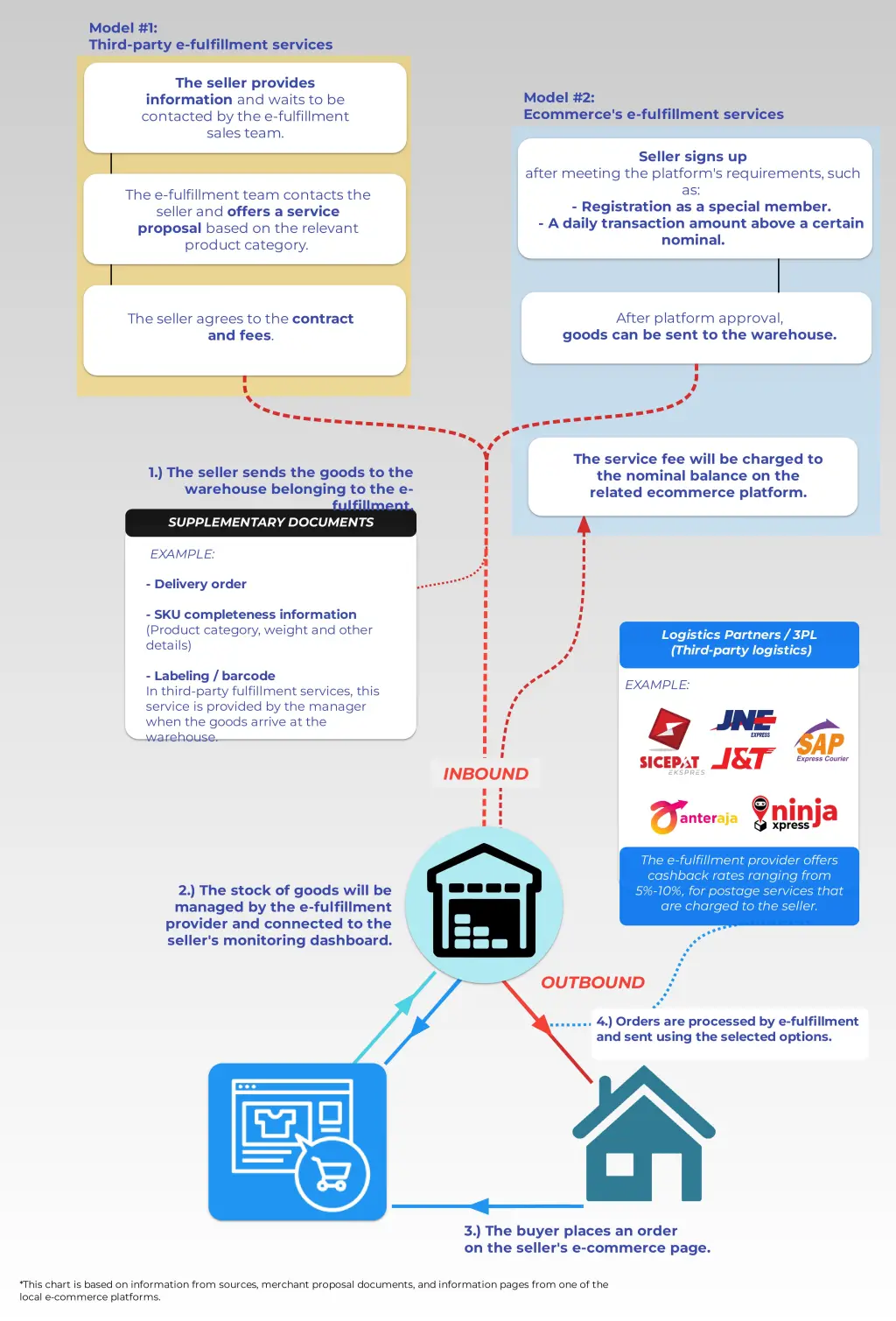
Fulfillment models in Indonesia / Photo credit: Rizqi Maulana
While online marketplaces are perhaps the pioneers in this space – Tokopedia launched its e-fulfillment service in 2019, with Shopee and Bukalapak following suit a year later – there appears to be room for third-party players. Like many others, Indonesian ecommerce sellers often do business on several marketplaces.
“The majority of marketplace warehousing fulfillment services are exclusive only to sellers on their platform,” says Budi Handoko, the co-founder and CEO of logistics firm Shipper. “This is where we can become a non-biased service provider.”
Marketplaces also typically have additional requirements that sellers must meet – like a special membership or a minimum daily transaction amount – before they can use the platform’s fulfillment services. Third-party players are usually more flexible.
Deep pockets needed
Stay ahead in Asia’s tech landscape
This is premium content. Subscribe to read the full story.
While ecommerce marketplaces in Indonesia already offer e-fulfillment as an in-house service, a rising crop of third-party players look to stir the pot.
We know this is not ideal. ⌛ Sign up in 20 seconds. Cancel anytime.
Our subscriber community includes professionals from these companies:





Stay updated on the go with our mobile app.
Get latest insights with smoother, more personalized experience through TIA mobile app.








📅 Upcoming Events
22 October 2026
Payoneer x CSPN Summit 2026