- Premium Content It takes our newsroom weeks - if not months - to investigate and produce stories for our premium content. You can’t find them anywhere else.
 Emmanuel Samarathisa · · 4 min read
Malaysia budget: Expect fewer goodies for tech and startups
Dan Lain-Lain (Malay for “and others”) is a weekly column by TIA journalist Emmanuel Samarathisa that dissects the goings-on in the Malaysia tech scene but with a heavy mix of current affairs, policy and politics. Click here to read past articles.
Malaysia’s budget for 2023 will be tabled on February 24. Let me break it to you from the get-go: Lower your expectations.
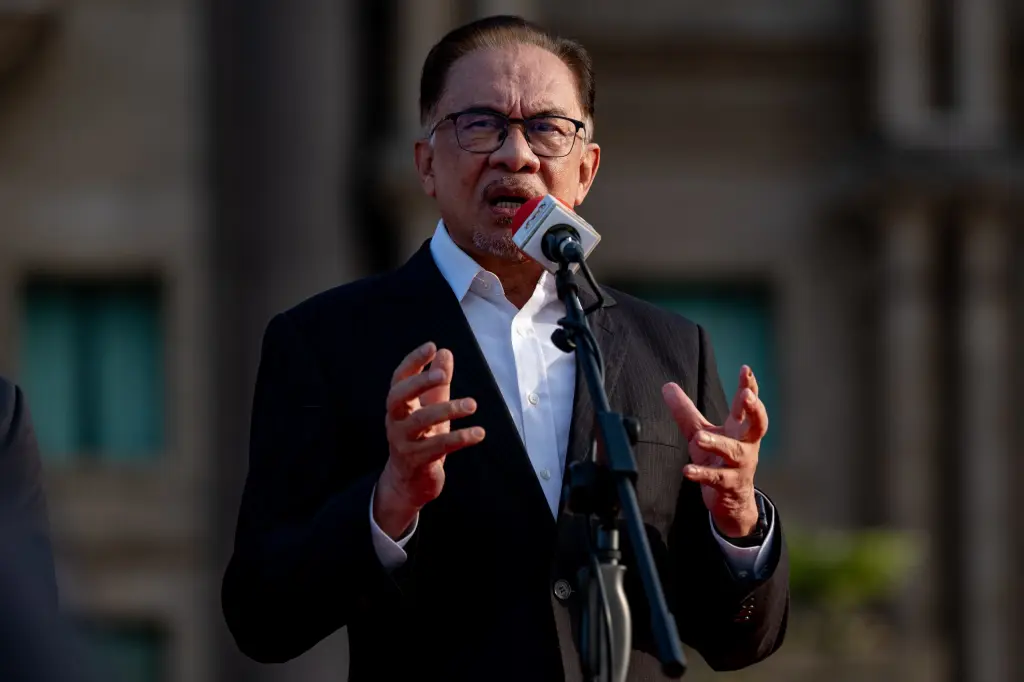
Prime Minister Anwar Ibrahim is expected to table this year’s federal budget on Friday, February 24. Pic credit: Sadiq Asyraf/Prime Minister’s Department
If you feel a sense of deja vu, I don’t blame you. Budget 2023 was tabled in November last year by a different government, which lost the general election shortly after.
And now we have a new budget under Prime Minister Anwar Ibrahim.
The new version will need to be tabled again. The bill will also need to pass through the lower and upper houses of Parliament for it to be gazetted.
Anwar isn’t compelled to follow his predecessor’s budget blueprint, so he can revamp the whole exercise however he sees fit.
While we wait for specifics, I’d like to make a call to manage expectations, since the budget also has some bearing on the tech and startup space.
Austerity on the horizon?
At the moment, we know that Anwar is not going to bring back the Malaysian version of the value-added tax, AKA the good and services tax (GST) – for now at least. The unpopular GST was abolished in 2018.
Anwar also wants to embark on fiscal consolidation. This is a policy that a government employs to reduce deficits and debt.
The signs point to Anwar turning on austerity mode. For instance, members of parliament recently woke up to the shocking news that their yearly allowance for their constitutions had been slashed from 3.8 million ringgit (US$884,000) to 1.3 million ringgit (US$302,000). This allowance is used by members of parliament and their staff for outreach programs and aid for their constituents.
Also, because taxes fuel government spending, even tech-related programs, such as the DE Rantau digital nomad visa, will now require expatriates to file their taxes in Malaysia. Previously, it was proposed that the visa exempted digital nomads from paying taxes during their one- or two-year stay in the country.
Smaller startup purse
Direct startup funding may take a back seat. In the previous version of budget 2023, the old government allocated 467 million ringgit (US$100.4 million) for that purpose. Here’s a recap of startup-related items in that version:
- 364 million ringgit (US$77.9 million) for research and development under the education and science, technology, and innovation ministries
- 50 million ringgit (US$10.7 million) for Cradle Fund, the coordinating agency of Malaysia’s startup ecosystem
- 10 million ringgit (US$2.1 million) for a VC fund to finance high-tech companies in the electrical and electronics industry as well as the renewable energy sector via equity injections
- 20 million ringgit (US$4.3 million) for Mranti Technology Park, the country’s research and innovation accelerator, to develop health technology and smart manufacturing
- 16 million ringgit (US$3.4 million) to state agency NanoMalaysia for the development and commercialization of nanotechnology
- 7 million ringgit (US$1.5 million) for Malaysia Techlympics 2023, a series of coding competitions for young Malaysians that tackle themes ranging from AI to sustainable innovation
Status quo government?
Stay ahead in Asia’s tech landscape
This is premium content. Subscribe to read the full story.
Founders may be in for an uphill battle in the hunt for opportunities.
We know this is not ideal. ⌛ Sign up in 20 seconds. Cancel anytime.
Our subscriber community includes professionals from these companies:





Stay updated on the go with our mobile app.
Get latest insights with smoother, more personalized experience through TIA mobile app.









📅 Upcoming Events
22 October 2026
Payoneer x CSPN Summit 2026