
Skye Vidur
Mumbai, India
In 2015, over US$7.7 billion was pumped into India’s tech startups. Here are the biggest funding rounds of the past year.
Paytm: US$890 million
Undisclosed round | Alibaba and ANT Financial Services
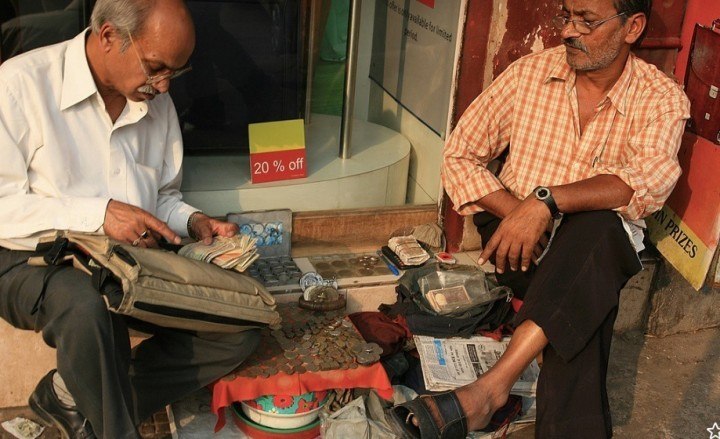
Photo credit: carol mitchell
Roadside banking in Chandni Chowk, Delhi
Mobile wallet and ecommerce site Paytm received US$890 million in funding this year from Alibaba and its finance arm, Ant Financial. Ant Financial has also taken a 25 percent stake in Paytm’s parent company, One 97 Communications. Paytm, an acronym for “pay through mobile,” was originally launched in 2010 as a site for topping up mobile phones. The Indian fintech landscape has changed a lot since then, and Paytm has watched these trends like a hawk.
Last year, those who had foreign credit cards were required to complete a two-step authentication process in order to use them in the country. Companies – Uber being the most famous example – relied on Paytm to operate. This was soon dismantled by the Reserve Bank of India (RBI), India’s central banking institution and authority on all things financial.
In August 2015, the RBI granted eleven startups – including Paytm – the power to act as “payment banks.” This meant that those approved would be able to set up payment accounts, issue debit cards, and offer net banking. The only thing that differentiates payment banks from conventional banking institutions is that they have a limit on the amount of money an individual can deposit (INR 100,000 or US$1511) and can’t give out loans or credit cards.
Because most of India operates on cash, this was a revolutionary move. Unlike the financially exclusive nature of conventional banks, payment banks would allow those with smaller budgets to create savings accounts and send remittances. It also opened up cashless payment options for transactions conducted by small and medium business owners.
Paytm crossed 100 million users in August.
It also launched a “zero commission marketplace” this year, meaning that buyers and sellers are not charged for using Paytm’s marketplace. The business model is similar to Alibaba’s Taobao, which, interestingly enough, only accepted Alipay as a form of payment for a long time.
Paytm also made several investments this year, including US$8 million in two rounds in Jugnoo, a startup that uses rickshaws for hyperlocal deliveries and transportation; US$50 million in Little, an app for people to find deals at local stores; and US$10 million in big data logistics startup Loginext. It also acquired a marketplace for services, near.in, in early December.
Flipkart: US$750 million
Series I | Tiger Global and Steadview Capital
Snapdeal: US$500 million
Ola Cabs: US$500 million
Quikr: US$150 million
Ecom Express: US$133 million
OYO Rooms: US$100 million
Pepperfry: US$100 million
ShopClues: US$100 million
Practo: US$90 million
Delhivery: US$85 million
Freecharge: US$80 million
Yepme: US$75 million
Zomato: US$60 million





Stay updated on the go with our mobile app.
Get latest insights with smoother, more personalized experience through TIA mobile app.











📅 Upcoming Events
22 October 2026
Payoneer x CSPN Summit 2026