 Leighton Cosseboom · · 5 min read
This satellite firm wants to be the ‘budget airline’ of the internet game in rural Indonesia
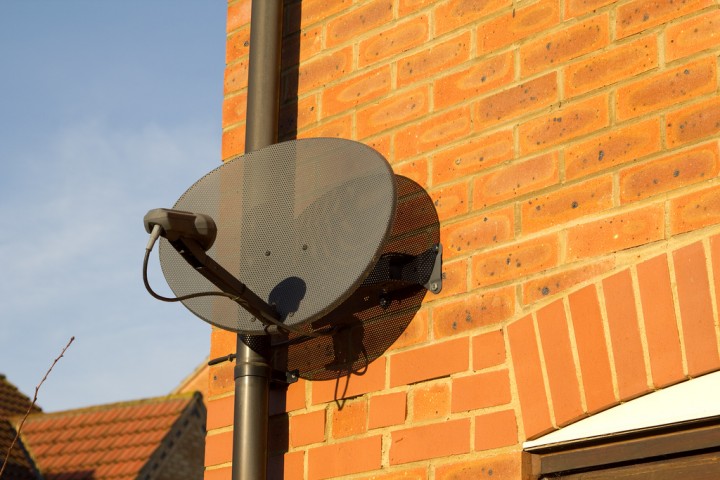
Satellite broadband is an option for people who live in rural areas where traditional fixed-line internet services aren’t available. It uses a satellite dish to provide two-way access, and connectivity speeds, which used to be lower, have improved. Download speeds via satellite hookup can now even reach up to 20 megabytes per second. In the US, people who live on farms, or well outside major cities, sometimes resort to satellite internet because fixed-line options don’t make sense.
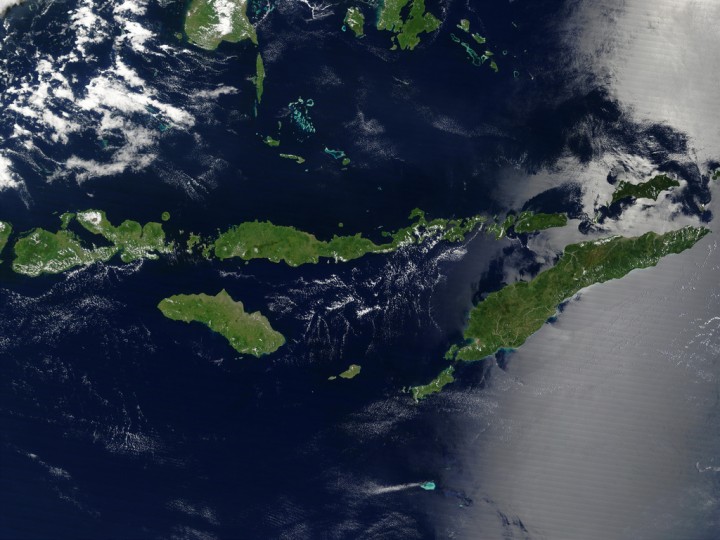
In countries with challenging geographies such as Indonesia – the nation is composed of more than 17,000 islands – satellite internet is an interesting variable to add to the mix. Arguably, there is no real benefit of building out physical broadband infrastructure or fiber optics networks in Indonesia’s rural areas. Usually, the population in such areas is thinly spread, and the average consumer spending power is low. With feasibility in mind, satellite broadband could be the only real way to furnish internet to the entire nation.
In recent weeks, Indonesian satellite service provider BigNet announced it signed a US$78 million deal with Singapore-based Kacific Broadband Satellites to bring satellite broadband service to the archipelago in 2017.
“Even with fiber optics, it’s impossible to cover all this ground,” Christian Patouraux, Kacific CEO, tells Tech in Asia. “It requires 50 to 200 times more capital expenditure, literally billions of dollars.” Patouraux adds that most broadband providers are simply not concerned with Papua and Sulawesi because dense and affluent areas of the nation, for instance cities like Jakarta and Surabaya, are better prospects.
See: Fiber-optics and smart cities: Indonesia gets aggressive with infrastructure modernization
Dishes don’t have to be ancient artifacts
Kacific and BigNet, on the other hand, will primarily target Indonesia’s rural areas. “We want to be sort of the low-cost airline of this industry,” says Patouraux. “We want to give them not just one hour, but maybe 15 or 20 hours of Skype or YouTube for their 10 dollars each month.”
According to Patouraux, satellite broadband came into existence about 15 years ago. In the 1970s, there were massive satellite dishes that people would place on their roofs for TV signals. In Indonesia, you can still see some of them, although now they’re basically just relics of a past era – ancient decorations. These days, you can install an antenna that’s about one-meter long and weighs about 10 kilograms on your roof to get satellite internet, says Patouraux. “Everything is now miniature, including the size of the antenna, but the power consumption too,” he explains, adding that the dishes can also run on solar power if set up properly.
To purchase a dish for home internet, users will need to pay around US$350. For a larger one that can be installed at a school or community center, for example, the cost would run somewhere from US$500 to US$1,000. One such installation could provide broadband to an entire Indonesian village.
There are those who will knock it, mostly people with 1st world problems
Some folks, like die-hard computer gamers, may criticize satellite broadband for its higher probability of signal latency, or “lag” as it’s often called. Latency is cited as the main difference between a standard terrestrial based network and a geostationary satellite network. Patouraux mentions “rain fade,” a type of interference caused by rainclouds as another common gripe about satellite broadband. In the past, heavy rainfall and thick clouds caused satellite internet to cut out. However, he says that with today’s modern equipment, the event of rain fade completely knocking out service is extremely rare.





Stay updated on the go with our mobile app.
Get latest insights with smoother, more personalized experience through TIA mobile app.











📅 Upcoming Events
22 October 2026
Payoneer x CSPN Summit 2026