Photo by Jurgen Appelo
Three young Indians have made it to MIT’s prestigious list of under-35 innovators. Rahul Panicker, Rohan Paul, and Saurabh Srivastava have been named among the 35 whose works “illustrate the most important emerging technologies of the moment.”
Rahul, 34, and Saurabh, 30, were named under the humanitarian category while 30-year-old Rohan Paul made it to the inventor category.
Rahul Panicker
A Stanford graduate, he came up with a way to keep premature babies warm, and it has been used in 15 countries to help nearly 200,000 babies.
“Humanity has known for over 100 years that keeping premature babies warm dramatically increases their survival rates. Yet most vulnerable babies around the world don’t benefit from this knowledge,” Rahul explains in the MIT Technology Review.
“So we came up with a prototype incubator that costs one percent as much as traditional solutions and can be operated by a non-expert. It uses phase-change materials to keep babies at the ideal temperature of 37 degrees for up to six hours without electricity. When heated with hot water or another source, a phase-change material melts, and it can release heat the baby needs at a constant temperature.”
He quit his job in 2009 and moved to Bangalore where, along with co-founders Jane Chen, Linus Liang, Naganand Murthy, and Razmig Hovaghimian, he started Embrace. They have come up with a hybrid for-profit/not-for-profit business model that lets them scale much faster than a charity, he says.
Rohan Paul
Rohan studied at Indian Institute of Technology (IIT) Delhi. That’s where he was inspired to create a smart cane for the blind that costs US$50 and has been used by 10,000 people.
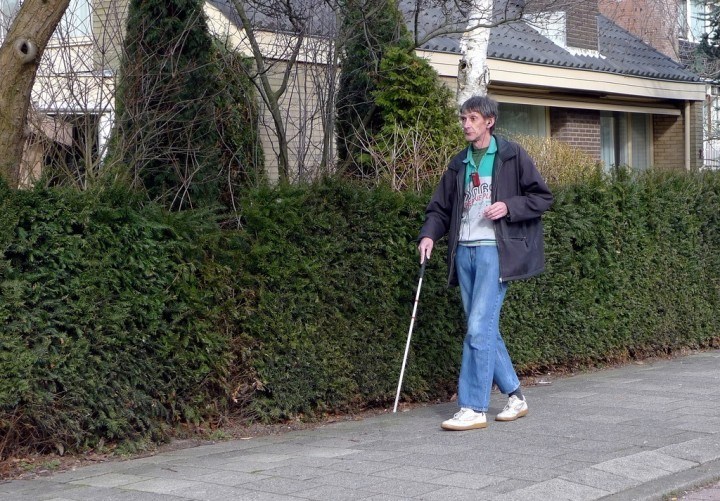
Photo by zoetnet
“As part of a course intended to design solutions for real-life challenges, we visited the National Association for the Blind in Delhi. We heard stories of how people with blindness get hurt when out walking—abruptly hitting open windows, tree branches, or vehicles,” Rohan says.
“We envisioned a sensing system on canes. By the end of the first year we had a basic prototype using ultrasonic ranging for detection and vibrations for feedback. You could see the users smile once they detected an obstruction; many refused to give back the prototypes!”





Stay updated on the go with our mobile app.
Get latest insights with smoother, more personalized experience through TIA mobile app.